






Manila Bulletin
 Business
The Stock Market
Gov't steps in with ₱3.6-billion loan to save LRT-1 partnership
Business
The Stock Market
Gov't steps in with ₱3.6-billion loan to save LRT-1 partnership
Business
The Stock Market
Gov't steps in with ₱3.6-billion loan to save LRT-1 partnership
Gov't steps in with ₱3.6-billion loan to save LRT-1 partnership
Published May 19, 2026 03:20 pm


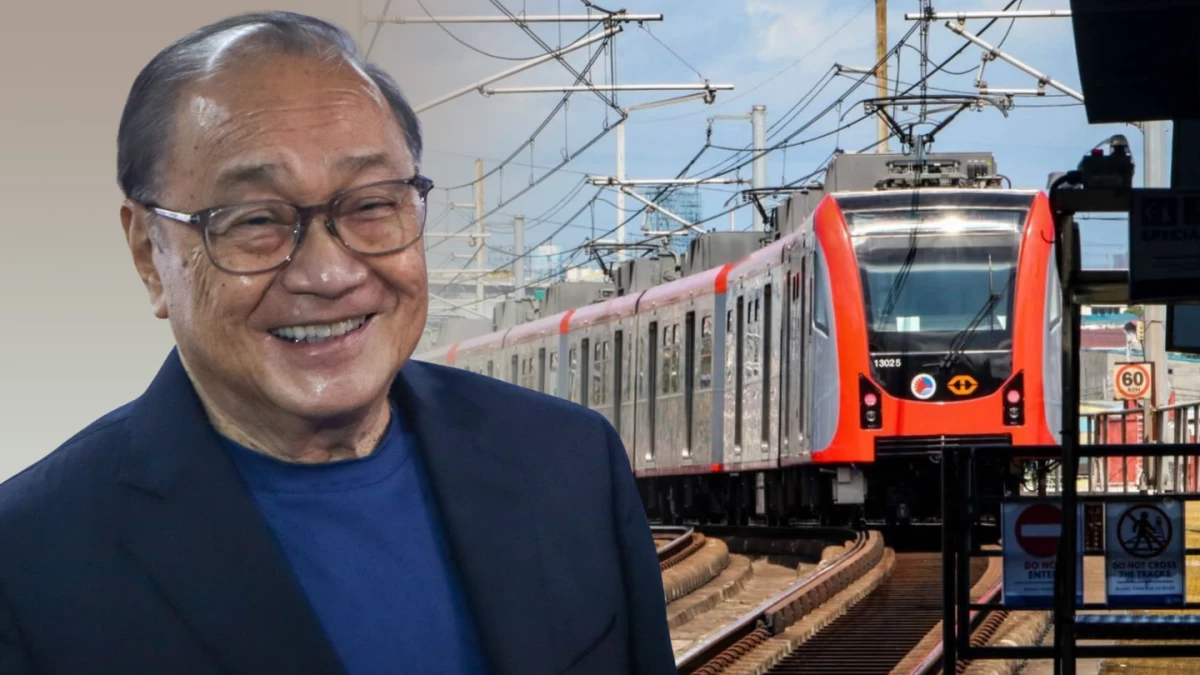
Manuel V. Pangilinan
The Department of Transportation (DOTr) has secured a loan from Land Bank of the Philippines (Landbank) to settle ₱3.6 billion in outstanding obligations to the private operator of the Light Rail Transit Line 1 (LRT-1), months after a major investor considered selling its stake.
Together with LRT-1 regulator Light Rail Transit Authority (LRTA), the DOTr said it has entered into a credit line agreement with Landbank to secure financing to cover the amount needed to pay off its years-long debt.
Acting Transportation Secretary Giovanni Lopez said honoring its financial commitments to Light Rail Manila Corp. (LRMC) would help ensure the continued improvement of services in the country’s oldest rail system.
“We hope that as we settle our obligation with the private concessionaire, we will see more improvements on their services, including structural upgrades, digitalization, and reliability of the rail line,” he said.
Lopez said securing the necessary financial resources from Landbank to address its obligations to LRMC is critical to fostering a “good relationship” with the operator.
The DOTr earlier said that it is exploring several options on how to pay off its debt to help LRMC cope with the investments it made in LRT-1 since taking over operations of the railway more than a decade ago.
In line its agreement with the government, LRMC has been busy upgrading the LRT-1, including working on new stations as part of the Cavite Extension project, which costs ₱39.57 billion based on initial estimates.
LRMC opened five new stations as part of the project’s first phase in 2024, increasing the number of stations in LRT-1 to 25.
Under its concession agreement, LRMC would be able to recoup some of its investments through fare adjustments once every two years.
However, the DOTr has only allowed the operator to increase fares twice since it assumed operations of LRT-1, resulting in a fare deficit of around ₱3 billion.
With such obligations left unfulfilled, business titan Manuel V. Pangilinan previously said he is considering selling the stake of Metro Pacific Investments Corp. (MPIC) in LRMC as investors flag mounting losses.
On top of this, Pangilinan said LRT-1 is unable to earn as much as it can because passenger volume has yet to return to its pre-pandemic level of 450,000 daily riders.
However, passenger traffic is slowly gaining momentum as more passengers take advantage of government programs and discounts, with LRT-1 expected to handle 450,000 passengers a day this year.
With this growing demand, LRMC is aiming to expand its presence in the country’s railway system by taking over the construction of the long-delayed Unified Grand Central Station.
Transportation Undersecretary Timothy John Batan said the DOTr has since held advanced discussions with LRMC regarding its unsolicited proposal for the project, which would first need the approval of the Economy and Development (ED) Council.
Once approved, he said the agency would then move to award the concession.
The Unified Grand Central Station would serve as a common station linking LRT-1, Metro Rail Transit Line 3 (MRT-3), and the under-construction MRT-7.