

ADVERTISEMENT

Foreign banks flag peso as Asia's 'weakest link,' worst-performing currency amid deepening stress from US-Iran war

Published May 19, 2026 06:00 pm  |  Updated May 19, 2026 03:04 pm

At A Glance

  • Japanese financial giant MUFG Bank Ltd. revealed that the Philippine peso emerged as the worst-performing currency in Asia since the flare-up of the deepening military tensions between the United States (US) and Iran.
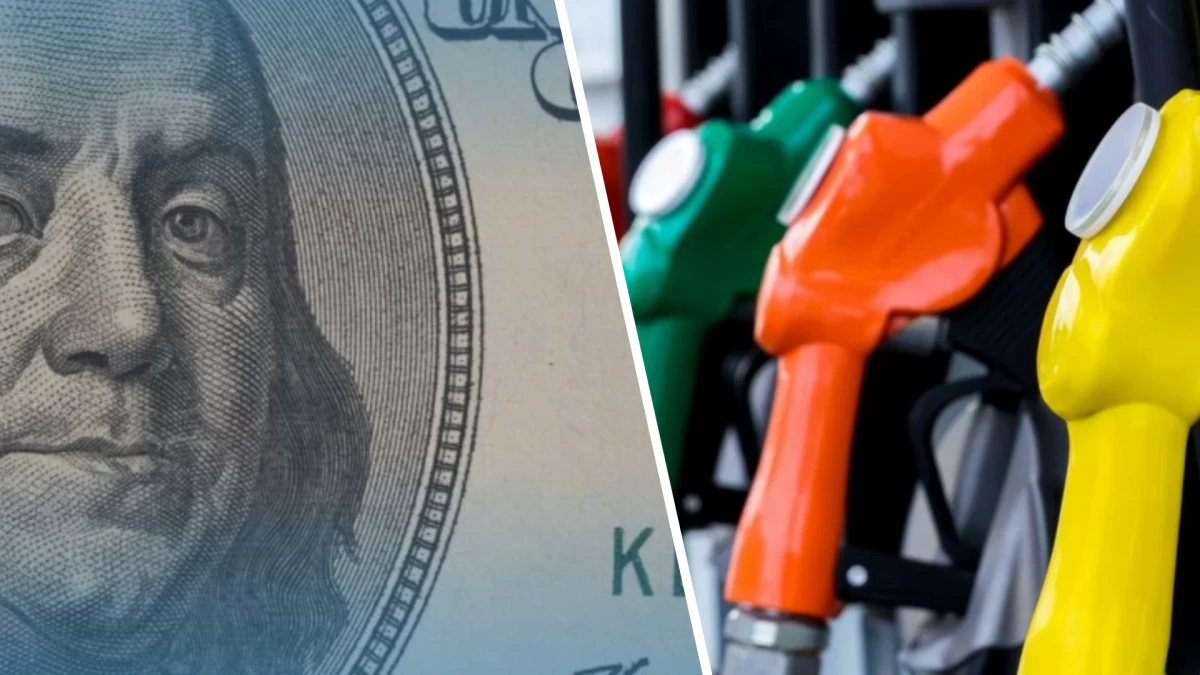
Japanese financial giant MUFG Bank Ltd. revealed that the Philippine peso has emerged as the worst-performing currency in Asia since the flare-up of deepening military tensions between the United States (US) and Iran.

According to data monitored by MUFG covering 11 Asian currencies, the peso has been the hardest hit by significant and deepening stress caused by a mix of geopolitical tensions and rising global interest rates.

MUFG Global Markets Research senior currency analyst Michael Wan reported on Tuesday, May 19, that the peso has declined by 6.6 percent against the US dollar since late February, suggesting that investors are retreating from riskier emerging market (EM) assets in favor of safe-haven currencies.

Among the 11 currencies, the peso posted a weaker performance than the Indian rupee, which declined by 5.6 percent, Indonesian rupiah (five percent), Thai baht (4.8 percent), and South Korean won (four percent).

Relatively more resilient currencies included the Malaysian ringgit, down 2.1 percent; Japanese yen, down 1.8 percent; Singapore dollar and Vietnamese dong, both down 1.1 percent; and New Taiwan dollar, which slipped by one percent.

The Chinese yuan, meanwhile, appreciated by nearly one percent over the past three months.

Last Monday, May 18, the peso slumped again to a new historic low of ₱61.75 versus the greenback, brushing the ₱62:$1 level amid strong demand for the US dollar and a local market that has become more sensitive to uncertainty.

In a May 18 report, Dutch financial giant ING Group also described the peso as the “weakest link in Asia,” reinforcing expectations of further increases in the policy interest rate from the current 4.5 percent.

This comes despite economic growth concerns, which intensified after gross domestic product (GDP) expanded at a five-year low of 2.8 percent in the first quarter.

ING Asia-Pacific research head Deepali Bhargava, South Korea and Japan senior economist Min Joo Kang, and Greater China chief economist Lynn Song said the latest Philippine data points suggest that risks tied to price movements are “now outweighing growth concerns.”

Against this backdrop, ING argued that weak output growth would not deter the Bangko Sentral ng Pilipinas (BSP) from hiking interest rates at its June 18 monetary policy meeting.

ING continues to expect the BSP to front-load hikes in key borrowing costs by a cumulative 75 basis points (bps) this year, supported by a measured approach to tightening. If realized, these additional hikes would raise the policy rate to 5.25 percent.

“While this could provide some near-term support to the Philippine peso, the currency’s trajectory will remain closely tied to oil price dynamics,” ING said, adding that pressure on the current account deficit is likely to persist if global oil prices average close to $100 per barrel in the third quarter.

A wider current account deficit puts depreciation pressure on the peso because it reflects greater demand for foreign exchange (forex) to pay for imports than the supply generated by exports and remittances. The Philippines is a net importer of the goods it consumes.

Beyond these headwinds, ING also pointed to risks tied to domestic developments. “Higher political uncertainty with the impeachment of the vice president can further push out reforms and growth recovery,” it warned.

Related Tags

MUFG Bank Ltd. ING Asia-Pacific PESO Bangko Sentral ng Pilipinas (BSP)
ADVERTISEMENT
.most-popular .layout-ratio{ padding-bottom: 79.13%; } @media (min-width: 768px) and (max-width: 1024px) { .widget-title { font-size: 15px !important; } }

{{ articles_filter_1561_widget.title }}

.most-popular .layout-ratio{ padding-bottom: 79.13%; } @media (min-width: 768px) and (max-width: 1024px) { .widget-title { font-size: 15px !important; } }

{{ articles_filter_1562_widget.title }}

.most-popular .layout-ratio{ padding-bottom: 79.13%; } @media (min-width: 768px) and (max-width: 1024px) { .widget-title { font-size: 15px !important; } }

{{ articles_filter_1563_widget.title }}

{{ articles_filter_1564_widget.title }}

.mb-article-details { position: relative; } .mb-article-details .article-body-preview, .mb-article-details .article-body-summary{ font-size: 17px; line-height: 30px; font-family: "Libre Caslon Text", serif; color: #000; } .mb-article-details .article-body-preview iframe , .mb-article-details .article-body-summary iframe{ width: 100%; margin: auto; } .read-more-background { background: linear-gradient(180deg, color(display-p3 1.000 1.000 1.000 / 0) 13.75%, color(display-p3 1.000 1.000 1.000 / 0.8) 30.79%, color(display-p3 1.000 1.000 1.000) 72.5%); position: absolute; height: 200px; width: 100%; bottom: 0; display: flex; justify-content: center; align-items: center; padding: 0; } .read-more-background a{ color: #000; } .read-more-btn { padding: 17px 45px; font-family: Inter; font-weight: 700; font-size: 18px; line-height: 16px; text-align: center; vertical-align: middle; border: 1px solid black; background-color: white; } .hidden { display: none; }
function initializeAllSwipers() { // Get all hidden inputs with cms_article_id document.querySelectorAll('[id^="cms_article_id_"]').forEach(function (input) { const cmsArticleId = input.value; const articleSelector = '#article-' + cmsArticleId + ' .body_images'; const swiperElement = document.querySelector(articleSelector); if (swiperElement && !swiperElement.classList.contains('swiper-initialized')) { new Swiper(articleSelector, { loop: true, pagination: false, navigation: { nextEl: '#article-' + cmsArticleId + ' .swiper-button-next', prevEl: '#article-' + cmsArticleId + ' .swiper-button-prev', }, }); } }); } setTimeout(initializeAllSwipers, 3000); const intersectionObserver = new IntersectionObserver( (entries) => { entries.forEach((entry) => { if (entry.isIntersecting) { const newUrl = entry.target.getAttribute("data-url"); if (newUrl) { history.pushState(null, null, newUrl); let article = entry.target; // Extract metadata const author = article.querySelector('.author-section').textContent.replace('By', '').trim(); const section = article.querySelector('.section-info ').textContent.replace(' ', ' '); const title = article.querySelector('.article-title h1').textContent; // Parse URL for Chartbeat path format const parsedUrl = new URL(newUrl, window.location.origin); const cleanUrl = parsedUrl.host + parsedUrl.pathname; // Update Chartbeat configuration if (typeof window._sf_async_config !== 'undefined') { window._sf_async_config.path = cleanUrl; window._sf_async_config.sections = section; window._sf_async_config.authors = author; } // Track virtual page view with Chartbeat if (typeof pSUPERFLY !== 'undefined' && typeof pSUPERFLY.virtualPage === 'function') { try { pSUPERFLY.virtualPage({ path: cleanUrl, title: title, sections: section, authors: author }); } catch (error) { console.error('ping error', error); } } // Optional: Update document title if (title && title !== document.title) { document.title = title; } } } }); }, { threshold: 0.1 } ); function showArticleBody(button) { const article = button.closest("article"); const summary = article.querySelector(".article-body-summary"); const body = article.querySelector(".article-body-preview"); const readMoreSection = article.querySelector(".read-more-background"); // Hide summary and read-more section summary.style.display = "none"; readMoreSection.style.display = "none"; // Show the full article body body.classList.remove("hidden"); } document.addEventListener("DOMContentLoaded", () => { let loadCount = 0; // Track how many times articles are loaded const offset = [1, 2, 3, 4, 5, 6, 7, 8, 9, 10]; // Offset values const currentUrl = window.location.pathname.substring(1); let isLoading = false; // Prevent multiple calls if (!currentUrl) { console.log("Current URL is invalid."); return; } const sentinel = document.getElementById("load-more-sentinel"); if (!sentinel) { console.log("Sentinel element not found."); return; } function isSentinelVisible() { const rect = sentinel.getBoundingClientRect(); return ( rect.top < window.innerHeight && rect.bottom >= 0 ); } function onScroll() { if (isLoading) return; if (isSentinelVisible()) { if (loadCount >= offset.length) { console.log("Maximum load attempts reached."); window.removeEventListener("scroll", onScroll); return; } isLoading = true; const currentOffset = offset[loadCount]; window.loadMoreItems().then(() => { let article = document.querySelector('#widget_1690 > div:nth-last-of-type(2) article'); intersectionObserver.observe(article) loadCount++; }).catch(error => { console.error("Error loading more items:", error); }).finally(() => { isLoading = false; }); } } window.addEventListener("scroll", onScroll); });

Sign up by email to receive news.