






Manila Bulletin
 Lifestyle
Youth
How The Grand Judiciary Tour is bringing the Supreme Court closer to a new generation of Filipinos
Lifestyle
Youth
How The Grand Judiciary Tour is bringing the Supreme Court closer to a new generation of Filipinos
Lifestyle
Youth
How The Grand Judiciary Tour is bringing the Supreme Court closer to a new generation of Filipinos
How The Grand Judiciary Tour is bringing the Supreme Court closer to a new generation of Filipinos
The courts uncovered
Published May 18, 2026 09:45 am


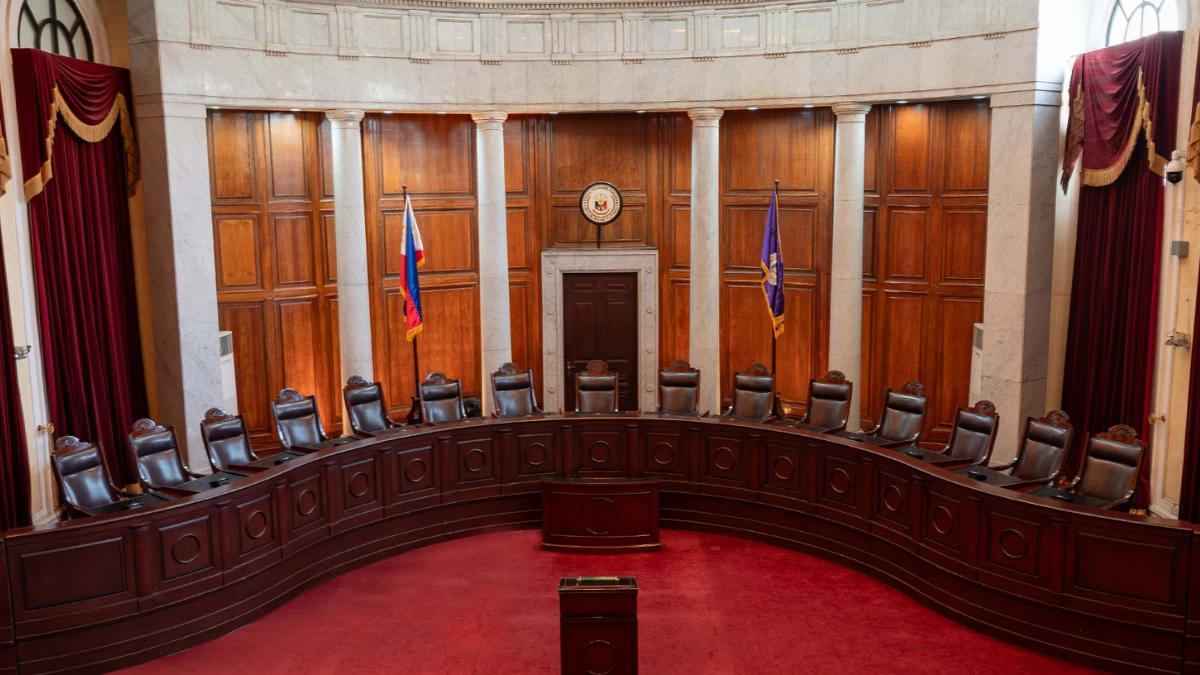
Supreme Court Session Hall (Photo: SC)
To understand the Philippines today is to understand the systems that keep the country running. For many young Filipinos navigating rising prices, heated political debates, and an increasingly uncertain future, the government can often feel distant and intimidating. Words like “judiciary,” “constitutional review,” and “separation of powers” sound more like textbook jargon than concepts connected to everyday life.
But what if learning about one of the country’s most important institutions felt less like attending a lecture and more like joining a walking tour through history? That is exactly what The Grand Judiciary Tour aims to do.
Organized by the Supreme Court (SC) Office of the Spokesperson in celebration of the 125th anniversary of the Supreme Court of the Philippines, the free guided experience transforms the often intimidating world of law into something immersive, visual, and surprisingly relatable. Instead of explaining the Judicial Branch through dense legal language, the tour allows participants to physically walk through the very spaces where Philippine justice evolved for more than a century. And for today’s generation that thrives on experiences, storytelling, and cultural exploration, it feels more like a heritage travel adventure than a civics lesson.
Travel back in time
The Grand Judiciary Tour retraces the institutional, architectural, and historical legacy of the Philippine Judiciary. Spanning the historically significant districts of Intramuros and Ermita, Manila each stop reveals a different chapter in the country’s legal history, from Spanish colonial rule to the foundations of the modern Philippine justice system.
The Intramuros leg immediately transports visitors into another era. Among the highlights is Fort Santiago, home to Museo ni Rizal or the Rizal Shrine. Inside the museum, visitors can view an actual bone fragment belonging to national hero Jose Rizal. But beyond the shock and fascination of seeing a physical piece of history, what truly leaves an impression is the explanation from the SC tour guide. Jose Rizal’s trial and execution become a tragic reminder of what can happen in a society without an independent and trustworthy judicial system that genuinely serves its people.
Another memorable stop is the roof deck of the Manila Cathedral, which offers a sweeping aerial view of former judiciary-related sites across Intramuros. From above, visitors can visualize the locations of historic institutions such as the former Real Audiencia Building, which served as the central office of the Supreme Court from 1901 to 1938 and now stands as an open parking space beside Palacio del Gobernador. The tour also revisits the Ayuntamiento de Manila, which became the Court’s main office from 1938 until its destruction in 1945, and the Araullo Building, Manila’s original Court of First Instance.
Welcome to Ermita
The second leg of the journey takes visitors to Ermita, the postwar home and present headquarters of the Supreme Court. Here, the tour highlights the adaptive reuse of buildings that once belonged to the University of the Philippines (UP).
Among the featured sites are Villamor Hall, now known as the SC Old Building, the Court of Appeals Main Building, and the Supreme Court New Building, which currently serves as the working seat of the country’s highest court. Participants also get access to important interiors, including the Memorabilia Hall, Dignitaries Lounge, Division Hearing Room, and the En Banc Session Hall.
One of the most anticipated stops is the Memorabilia Hall. Originally designed as a state-of-the-art auditorium for the UP Conservatory of Music, the space later served as the Supreme Court’s Session Hall from the 1950s until 1991. Today, it serves as a museum that houses important artifacts and memorabilia, including the original signed copy of the 1987 Constitution and its Filipino version.
The tour concludes inside the Supreme Court Session Hall itself, allowing visitors a closer look at the ceremonial and functional heart of the country’s judiciary. Here, guides explain how major decisions are discussed and how the hall plays a critical role in shaping Philippine law and democracy. One surprisingly memorable detail shared during the visit is that the hall’s majestic maroon curtains are actually fireproof.
What makes The Grand Judiciary Tour especially relevant today is how it encourages reflection beyond politics. It reminds participants that justice is not only found in legal documents or televised hearings, but also in the spaces, stories, and struggles that shaped the nation itself.
Whether you are a student looking to better understand Philippine history, a young traveler searching for meaningful local adventures, or simply someone curious about how the country’s justice system works, the tour offers something rare: the chance to experience law, history, architecture, and travel all at once.
To know more about The Grand Judiciary Tour and available slots, follow the Supreme Court’s official social media pages.