






Manila Bulletin
 Lifestyle
Arts and Culture
How Clark Manalo captures the echoes of a changing landscape
Lifestyle
Arts and Culture
How Clark Manalo captures the echoes of a changing landscape
Lifestyle
Arts and Culture
How Clark Manalo captures the echoes of a changing landscape
How Clark Manalo captures the echoes of a changing landscape
By S.C. Fojas
Published May 18, 2026 10:39 am


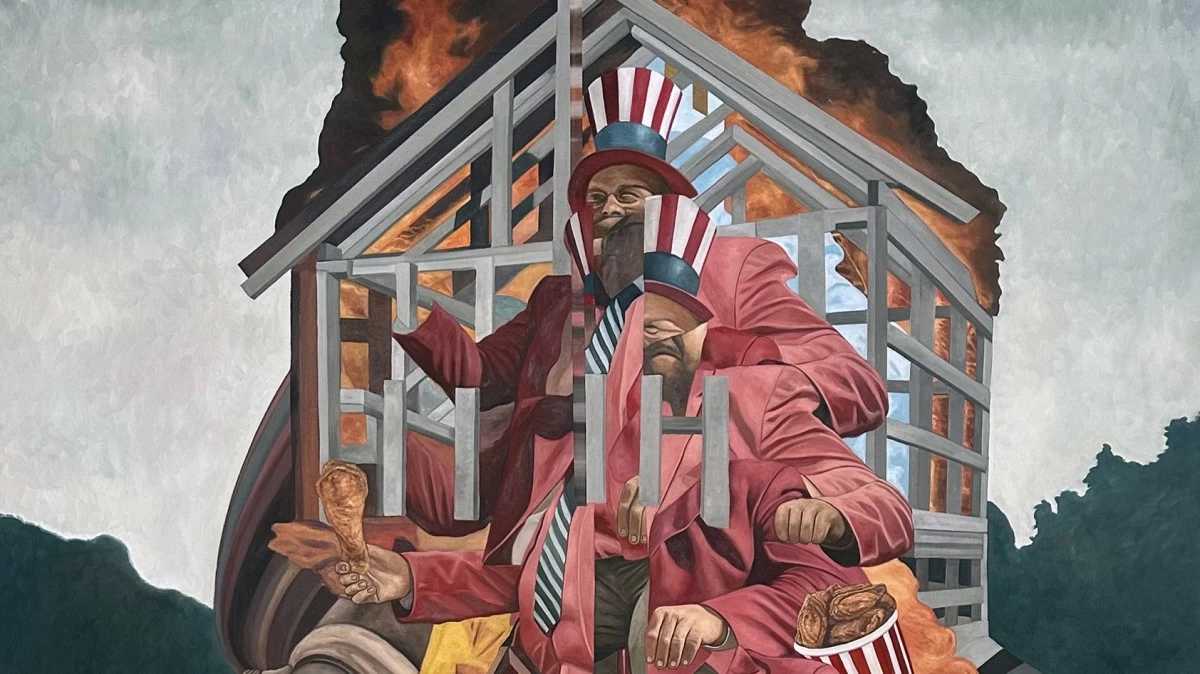
Once, a distinct line existed between the rural and the urban. Today, that boundary is rapidly blurring, as the countryside is steadily pulled into the concrete fold. In his latest exhibit, “Echoes Across the Barrier,” contemporary artist Clark Manalo reflects on this quiet, inescapable crossing.
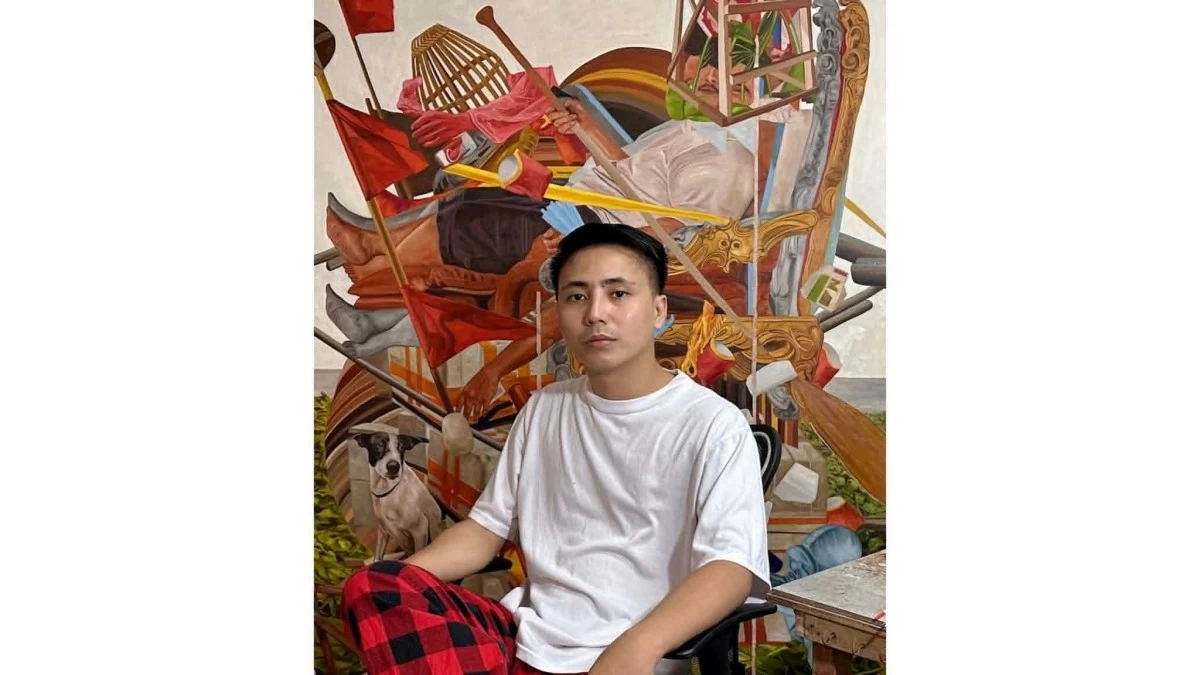
Clark Manalo
Ongoing at the Provenance Art Gallery in Makati City, the exhibit shows how urbanization brings growth, connection, and opportunity, while simultaneously leaving complex traces in its wake. Land is sold and transformed, familiar ways of life shift, and communities alter in ways that are not always visible. Through his canvas, Clark suggests this is not a simple story of progress or loss alone, but an intricate entanglement of both. As the physical barriers fade, their echoes remain, carried In the changing landscapes and the ordinary lives they are once separated.
A style born from the mundane
Clark describes his art as a fusion of social realism and contemporary fragmentation. His compositions are characterized by visual glitches, distortions, and repetitive body compositions—aesthetic choices that mirror the friction of modern life.
“It’s social realism that gives mundane life meaning,” Clark explains. “Every day, we struggle with the same scenario—an ‘everyday Monday.’ Common things happen in our lives, and even when society is busy, I always find something interesting in it.”
By elevating these ordinary, routine scenes, he infuses the daily grind with a profound contemporary appreciation. His pieces serve as a continuum of his previous collections, deeply rooted in acute observation.
In works like “Embracing the Mundane,” we see this philosophy in full scale. The sprawling diptych captures the chaotic harmony of survival—figures in makeshift boats, water-submerged landscapes, and the repetition of faces that suggest a collective, tireless endurance. It is a vivid representation of how he sees a story behind every individual, no matter where they come from.
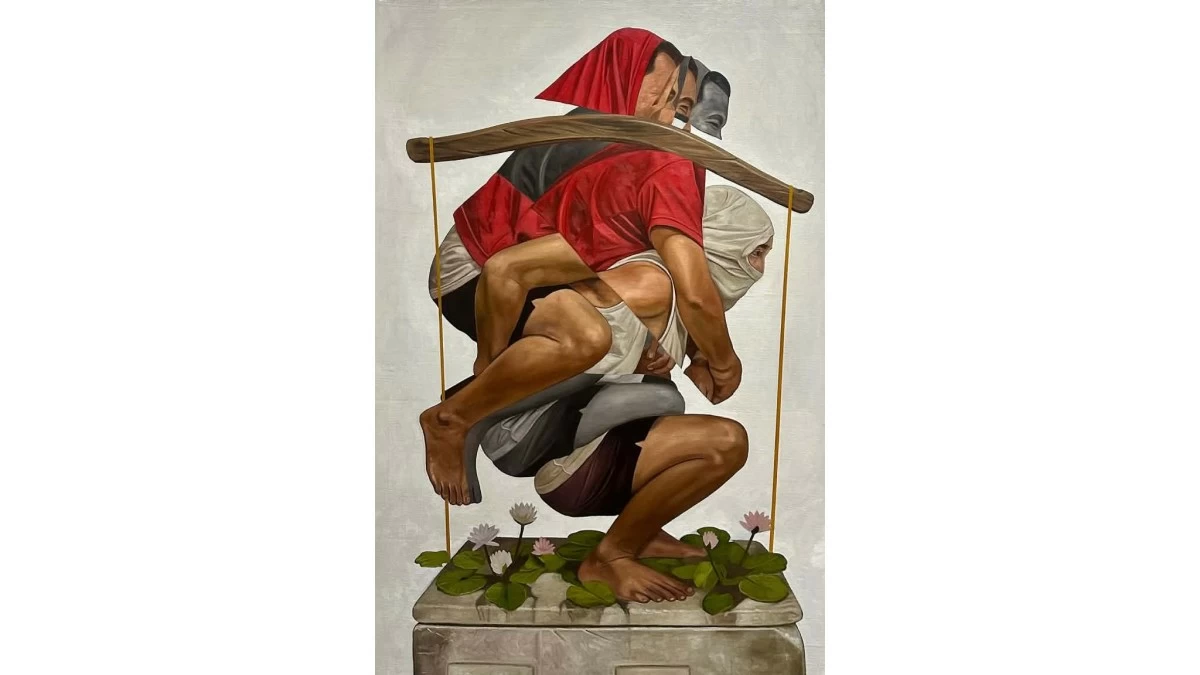
MIND THE GAP I, oil on canvas, 36x24 inches, 2026
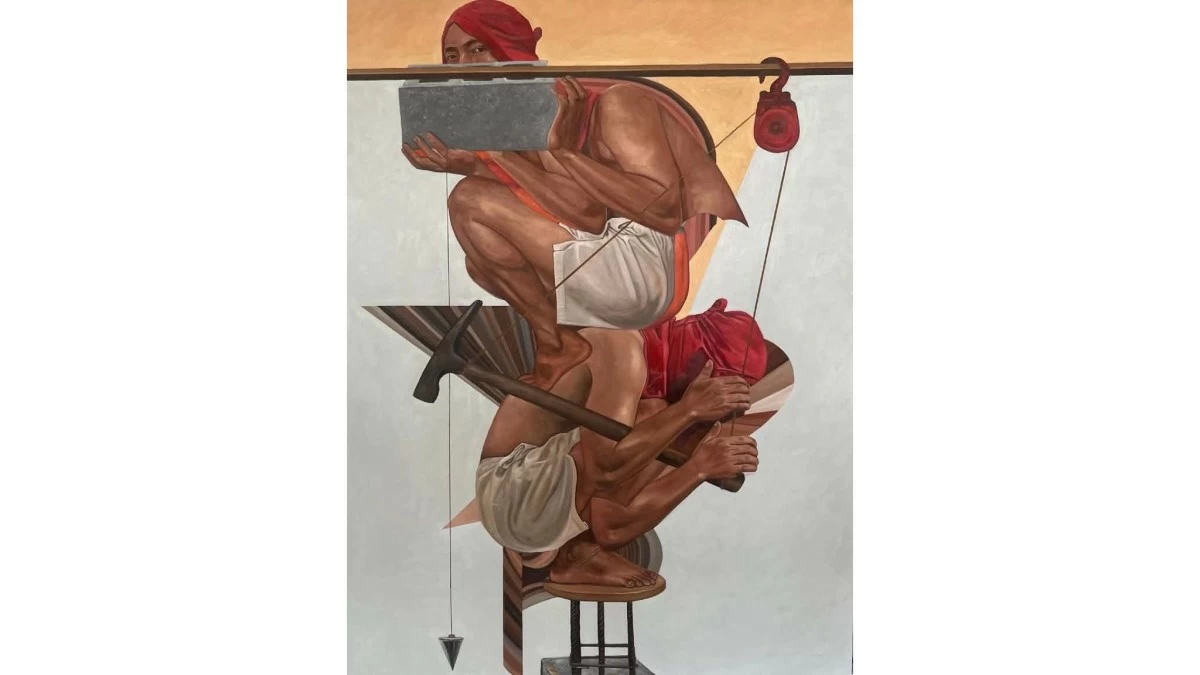
LABORER, oil on canvas, 45x33 inches, 2026
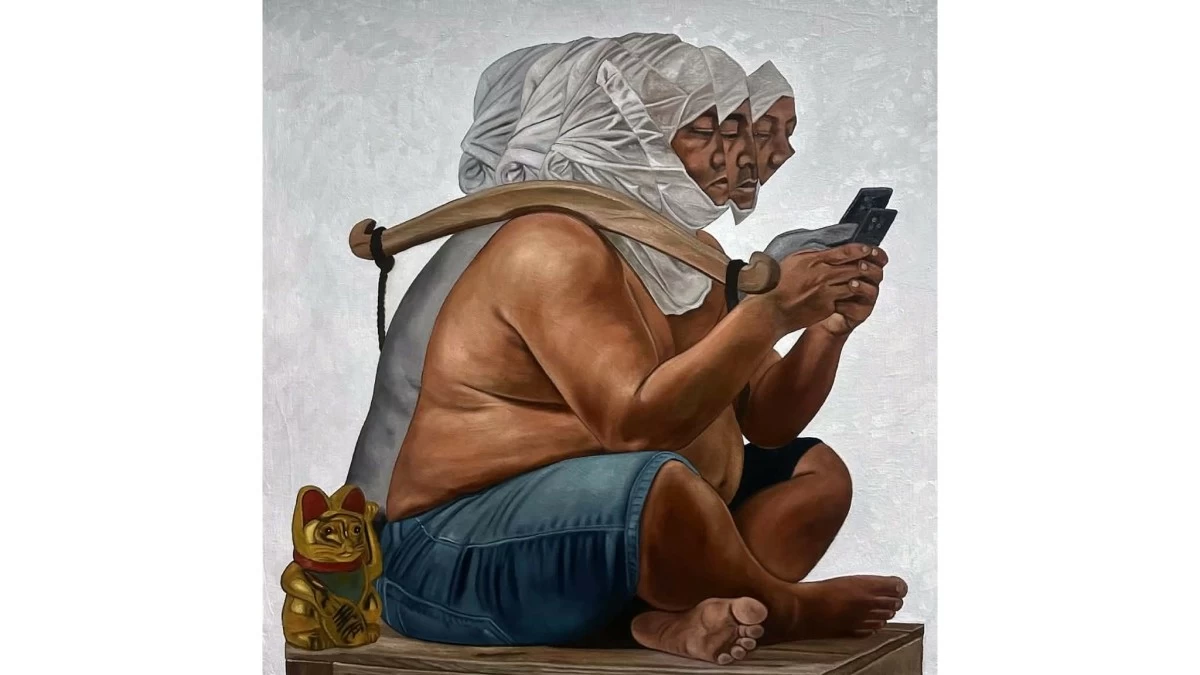
WHEN THE EFFORT SLEEPS, oil on canvas, 24x24 inches, 2026
From Navotas to Bulacan
The spark for “Echoes Across the Barrier” emerged from a personal relocation. Moving from the dense urban environment of Navotas to the province of Bulacan opened Clark’s eyes to the rapid geographical and cultural shifts happening outside the capital.
“I arrived at the topic of my show today because when I transferred from Navotas to Bulacan, I noticed that many Filipinos assume that if you’re not in Metro Manila, you’re living a ‘probinsyano’ life,” Clark shares. “But what I saw is that rural areas have also urbanized drastically.”
At the heart of this collection sits the anchor piece titled “The Silent Divide,” which grounds the exhibit’s broader themes in historical and socio-economic realities.
The “Silent Divide” tackles what Clark describes as the “silent colonialism of our past,” a lingering force that still dictates modern societal structures. In this painting, a towering figure in an Uncle Sam hat looms over a construction site, while a carabao, a rural symbol, is pushed to the periphery.
“We cannot see the invisible line between the rich and those on the margins, but there is a big barricade between the two that is a cause of the colonialism of our past,” he observes.
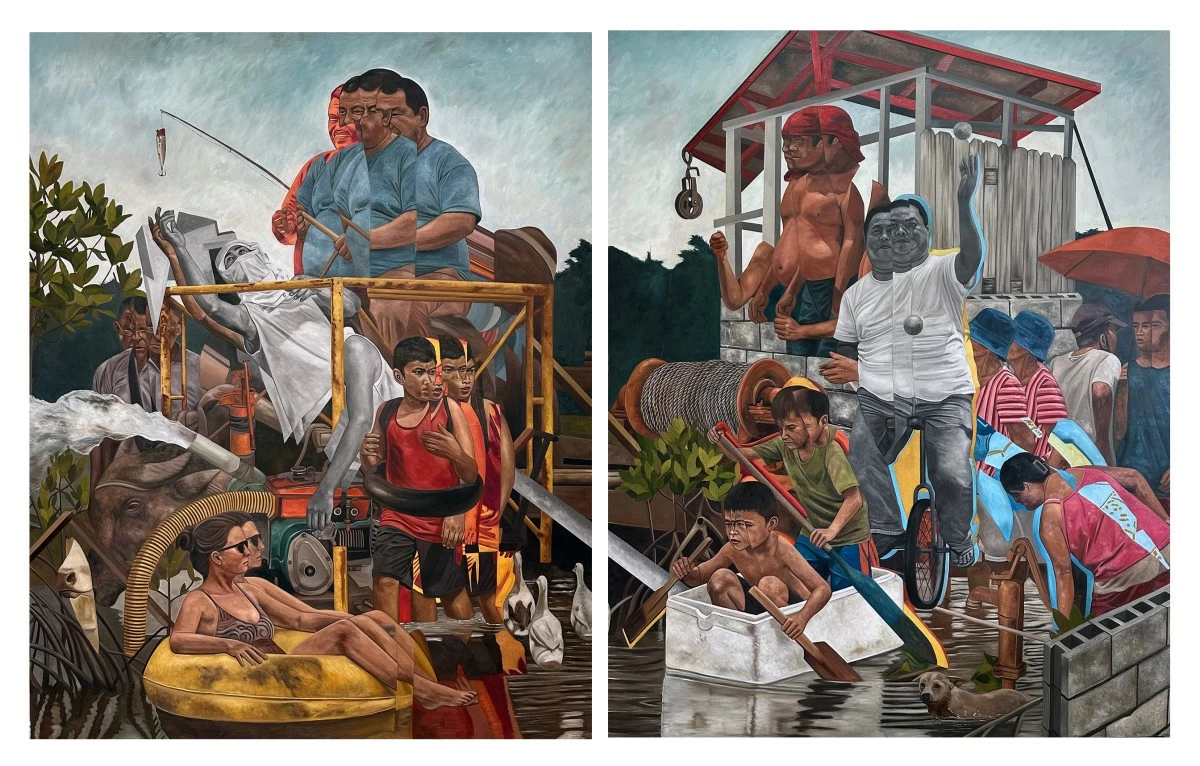
EMBRACING THE MUNDANE, oil on canvas, 60x96 inches, 2026
The architecture of labor
Clark’s work focuses on the physical toll of this transition. His “Mind the Gap” series and pieces like “Labor” utilize his signature “glitch” style to show the repetitive nature of work.
In these works, bodies are stacked and distorted, mimicking the very structure they are built to create. In “Laborer,” the figure is crouched upon a stool of rebar, holding a hollow block that seems to weigh down his entire identity. This fragmentation highlights the “daily struggle” Clark speaks of: The repetitive motion of those who build the urban dream while living in its shadows.
The garage studio
To capture the essence of the street, Clark chose to move his creative practice closer to it. Transitioning from an enclosed indoor studio, he converted his entire garage into an open-air workspace.
“Sunlight can enter, and I can breathe more during my artistic process,” Clark says. “I keep my bike inside so that if I ever need to take a breather or gather new images, it’s already ready to go. You’re outside in just one step. Sometimes, I hear my neighbors talking, and I get ideas from that too.”
This proximity to daily life results in pieces like “When the Effort Sleeps” and “Floating Hope,” which capture moments of respite and desperate optimism.
In “When Effort Sleeps,” a laborer takes a moment of digital escape, while “Floating Hope” depicts figures navigating rising tides in styrofoam boxes—a metaphor for resilience required when the “barriers” between the rural and urban eventually dissolve into a shared struggle.
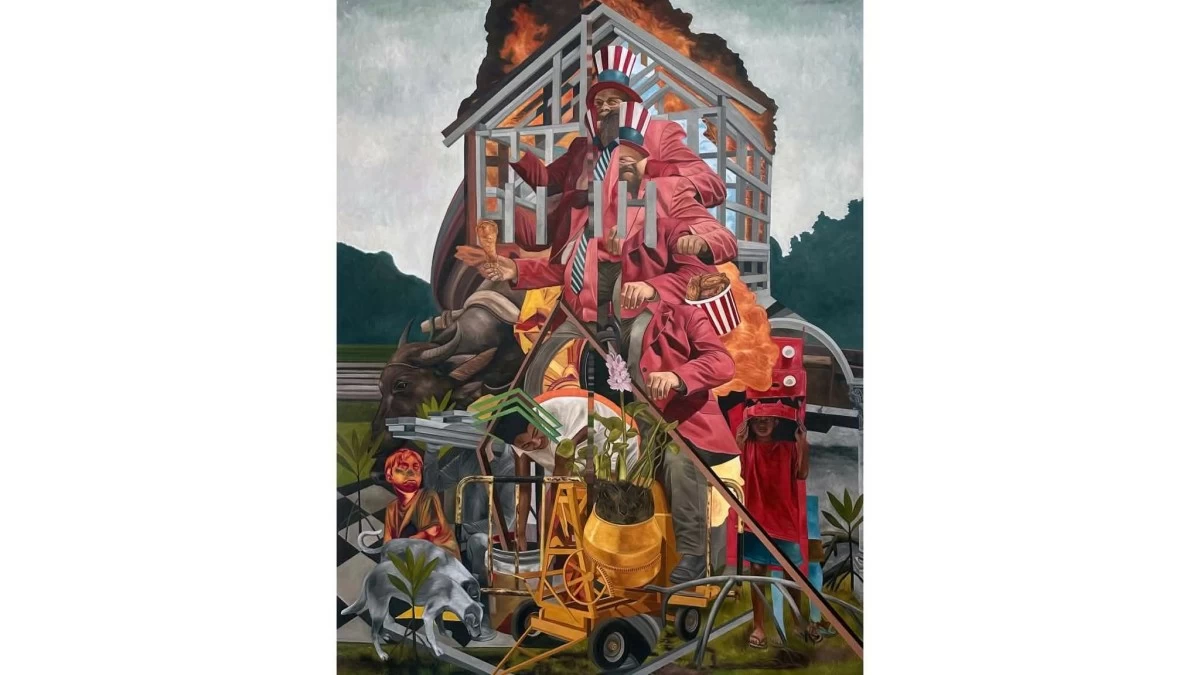
THE SILENT DIVIDE, oil on canvas, 67.5x54 inches, 2026
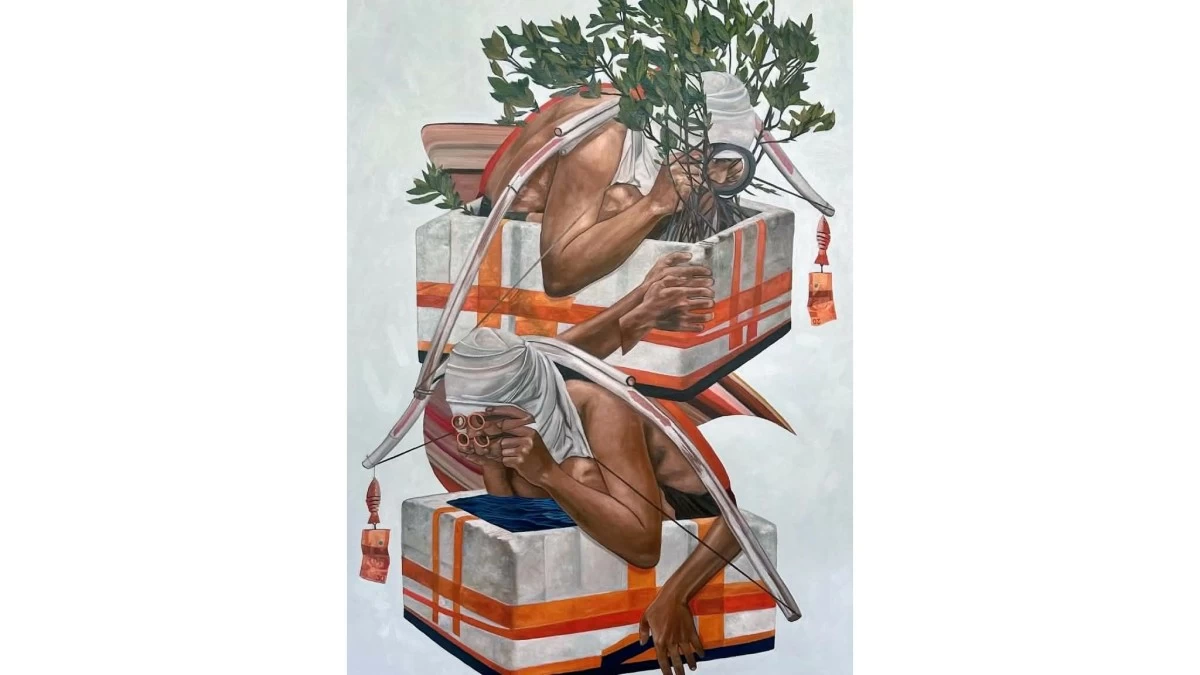
FLOATING HOPE, oil on canvas, 45x33 inches, 2026
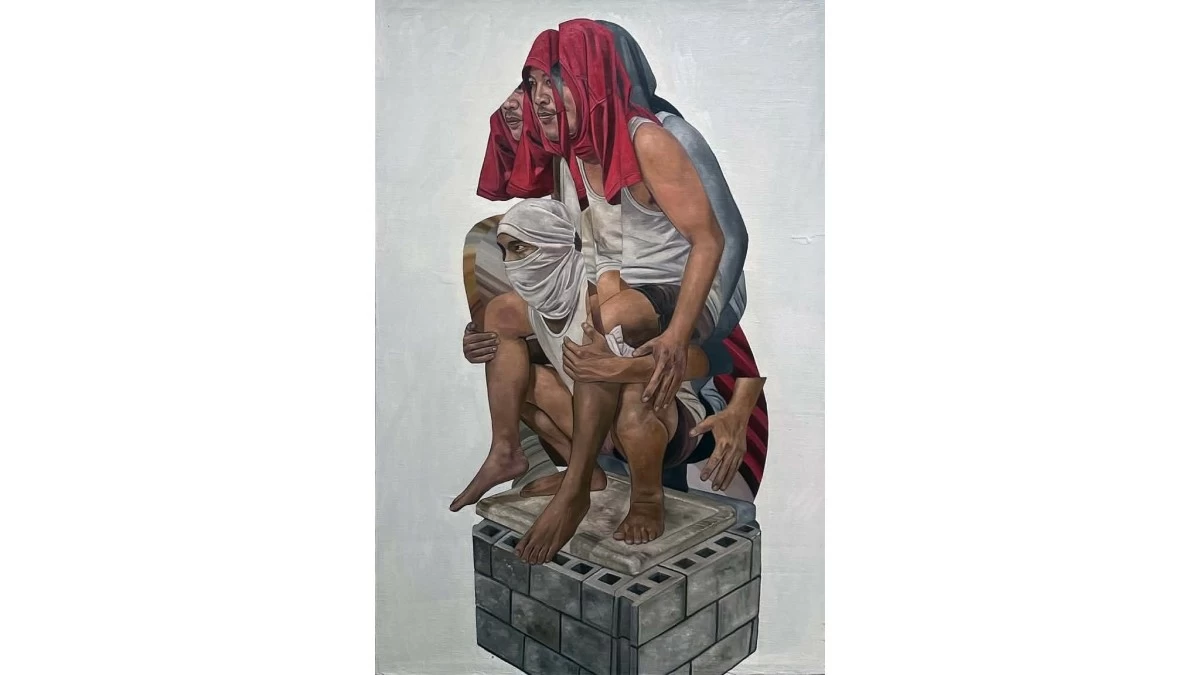
MIND THE GAP II, oil on canvas, 36x24 inches, 2026
A call to observers
Ultimately, “Echoes Across the Barrier” is an invitation to slow down and look closer at the world shifting right in front of us. Clark hopes that viewers walking through the gallery will leave with a heightened sense of awareness about their environment and history.
“Always be observant. Don’t just go with the flow,” Clark urges. “Sometimes we can examine our history and understand why all this happened to us. And even on ordinary days, we can always find a meaningful perspective.”
“Echoes Across the Barrier” by Clark Manalo runs until May 30 at Provenance Art Gallery, 2/F South Park Plaza, Paseo de Magallanes Commercial Center in Makati City.