






Manila Bulletin
 Embassies & Foreign Affairs
Europe Day reception highlights EU–PH ties amid growing strategic momentum
Embassies & Foreign Affairs
Europe Day reception highlights EU–PH ties amid growing strategic momentum
Embassies & Foreign Affairs
Europe Day reception highlights EU–PH ties amid growing strategic momentum
Europe Day reception highlights EU–PH ties amid growing strategic momentum
Published May 18, 2026 01:22 pm


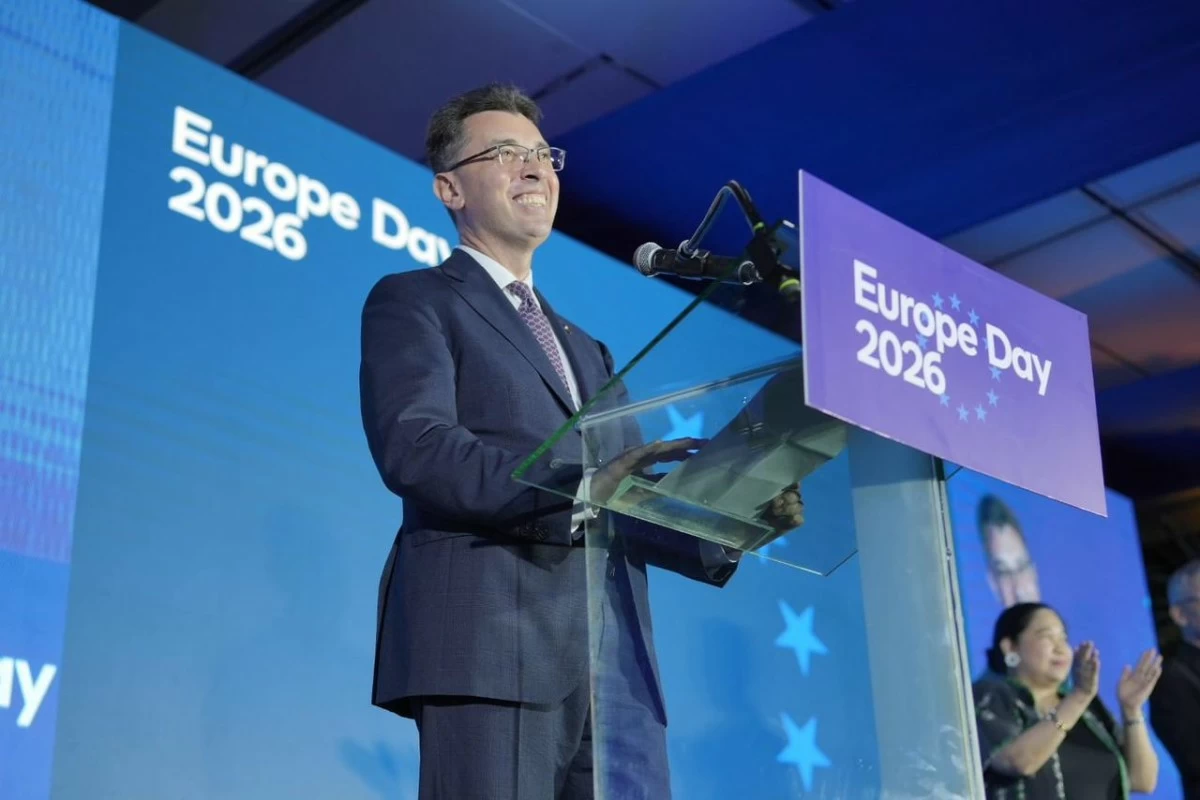
EU Ambassador Massimo Santoro at the celebration of EU Day at the Ayala Museum. The event served as the main diplomatic reception hosted by the EU Delegation in the Philippines.
The Delegation of the European Union (EU) to the Philippines marked Europe Day 2026 with a diplomatic reception at Ayala Museum on May 12, bringing together Philippine officials, ambassadors, business leaders, members of civil society, academe, and the diplomatic corps at a time when relations between the European Union and the Philippines continue to deepen across trade, security, and regional cooperation.
Hosted by EU Ambassador Massimo Santoro, the evening reflected a relationship that has moved well beyond traditional development cooperation and into broader strategic alignment.
“Today we celebrate Europe Day and we do so at a stage of real momentum in the relationship between the European Union and the Philippines,” Santoro said in his remarks.
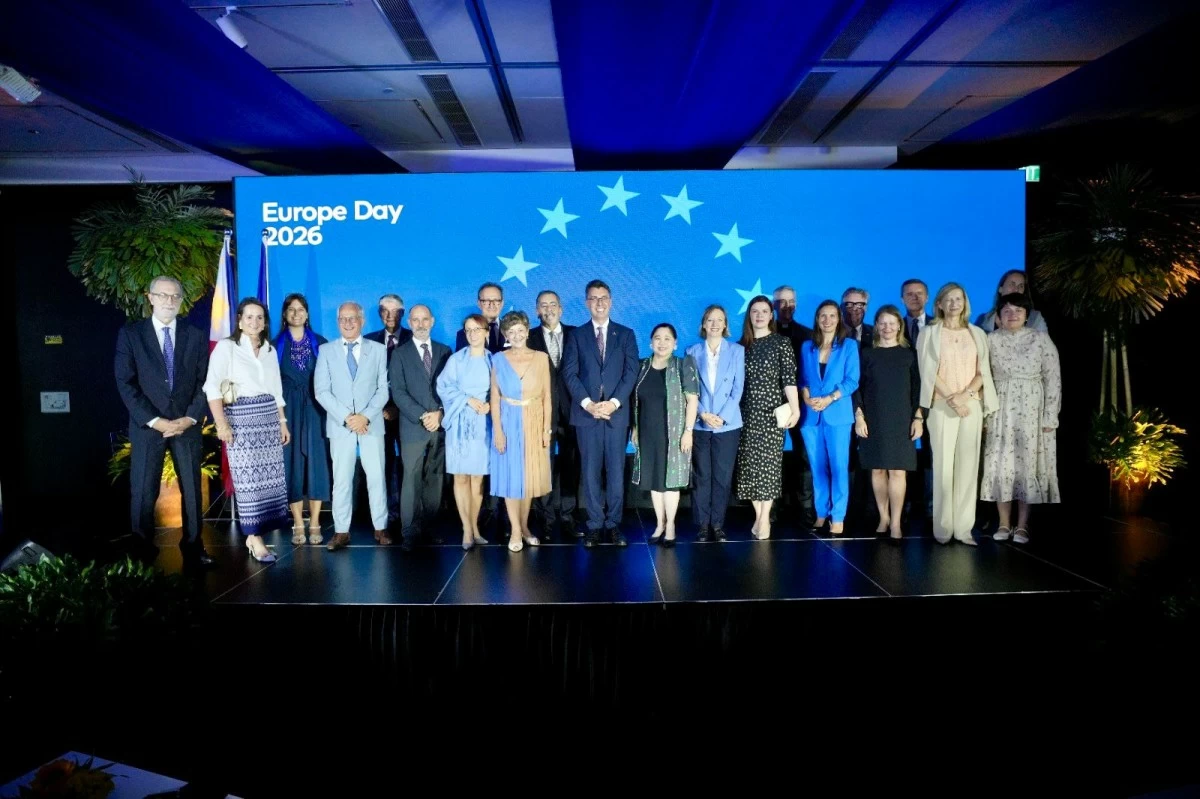
Team Europe composed of European ambassadors and their representatives together with DFA Usec. Ma. Theresa Dizon-de Vega, and Ukrainian Ambassador to the Philippines Yuliia Fediv.
Europe Day commemorates the 1950 Schuman Declaration, the proposal that laid the foundation for what would become the European Union. But throughout the evening, speakers framed the celebration less as a retrospective and more as a statement about the EU’s current role in a rapidly shifting geopolitical environment.
“Europe was built on a promise: freedom, equality and democracy,” Santoro said. “Today, in a world of rising conflicts and economic pressures, we must defend these values, at home and abroad.”
Much of the ambassador’s speech focused on the European Union’s positioning on global security issues, including Russia’s invasion of Ukraine, tensions in the Middle East, and the South China Sea.
“The European Union is consistent and clear in its support for UNCLOS and for the 2016 Arbitral Award,” Santoro said, reaffirming the bloc’s support for international law and freedom of navigation in the West Philippine Sea.
The message resonated strongly in Manila, where maritime security and rules-based order remain central foreign policy concerns.
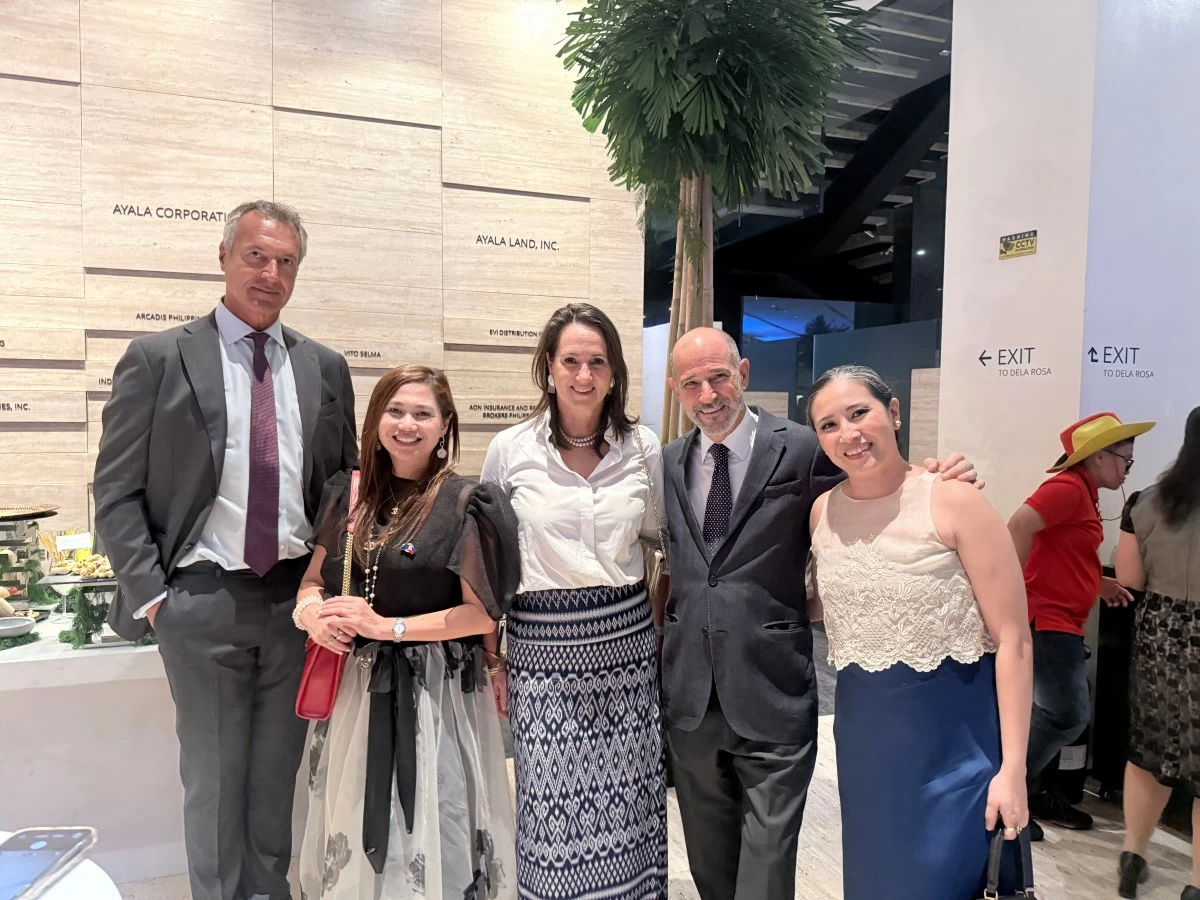
Pieter ten Bosch from the Netherlands, Helen Grace Baisa of the European Chamber of Commerce in the Philippines, Dutch Ambassador Marielle Geraedts, Spanish Ambassador Miguel Utray, and Michiko Quinto of the European Union’s Delegation to the Philippines
Representing the Philippine government, Department of Foreign Affairs Undersecretary Ma. Theresa Dizon-De Vega emphasized the increasingly multidimensional nature of EU–Philippines relations.
“The European Union remains one of the Philippines’ most valued partners,” she said. “Our cooperation continues to expand in development governance, maritime security, climate action, peace building, and of course economics, trade and investments.”
Part of that cooperation now extends into science and technology. During the broader Europe Day celebrations, the EU also highlighted its Copernicus programme, the Earth observation component of the European Union’s space initiative. Through satellite data and environmental monitoring, Copernicus supports areas such as disaster response, climate observation, agriculture, and maritime security—issues with direct relevance to the Philippines as one of the world’s most climate-vulnerable countries. Santoro cited the programme as an example of how EU partnerships increasingly combine policy, innovation, and real-world application.
The reception also unfolded against the backdrop of the Philippines’ ASEAN Chairship in 2026, which both sides framed as an opportunity for closer coordination.
“This year is particularly significant as the Philippines assumed the Chairship of ASEAN,” Santoro noted. “We attach great importance to continue working closely with the Philippines also in this role.”
Trade remained another major focus of the evening, particularly ongoing negotiations for a free trade agreement between the Philippines and the European Union.
“Trade plays a central role in our partnership,” Santoro said. “The Free Trade Agreement will unlock great opportunities for businesses and consumers on both sides. This is an important year for our negotiations.”
De Vega echoed the significance of the negotiations, while carefully avoiding specifics on timing.
“We are encouraged by the progress of negotiations towards the Philippines-EU Free Trade Agreement,” she said. “We do look for very substantial gains.”
Beyond geopolitics and economics, the evening repeatedly returned to culture, history, and people-to-people connections as foundational elements of the relationship.
De Vega referenced José Rizal’s years in Europe, particularly his time in Madrid, Paris, Heidelberg, Berlin, and Brussels, describing how Europe shaped many of the ideas that later influenced Philippine nationhood.
“His experiences in Europe helped shape the ideals of reform, dignity, patriotism and freedom that continue to inspire the Filipino nation today,” she said.
She also highlighted the growing visibility of Filipinos across Europe, from business and technology to fashion, sports, and the arts, citing personalities such as Eurovision winner JJ Pietsch, tennis player Alex Eala, and Filipino creatives building careers across the continent.
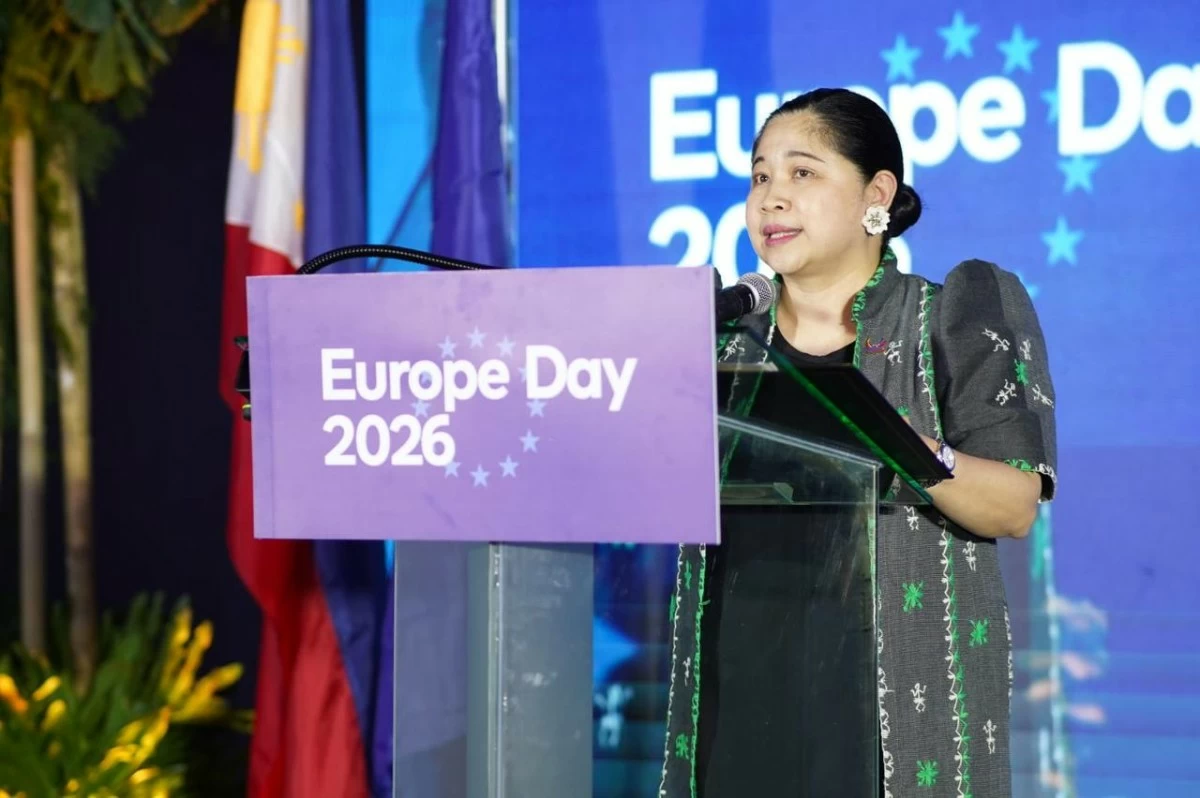
DFA Undersecretary for Administration Ma. Theresa Dizon-de Vega gave a speech on behalf of the Philippine government, ending it with saying “thank you” in several European languages.
At the same time, the evening reflected the scale of the Filipino presence in Europe today. According to De Vega, around 800,000 Filipinos now live and work across Europe in sectors ranging from healthcare and maritime industries to engineering, hospitality, and information technology.
The choice of Ayala Museum as venue also subtly reinforced the cultural dimension of the partnership. Surrounded by galleries dedicated to Philippine history and identity, the reception placed diplomacy within a broader conversation about heritage, exchange, and shared narratives.
And while the formal program centered on diplomacy and strategic cooperation, the underlying message remained clear: the EU increasingly sees the Philippines not simply as a regional partner, but as a country central to its long-term engagement in Southeast Asia