







Europe Day lights up Rizal Park
Published May 18, 2026 12:39 pm


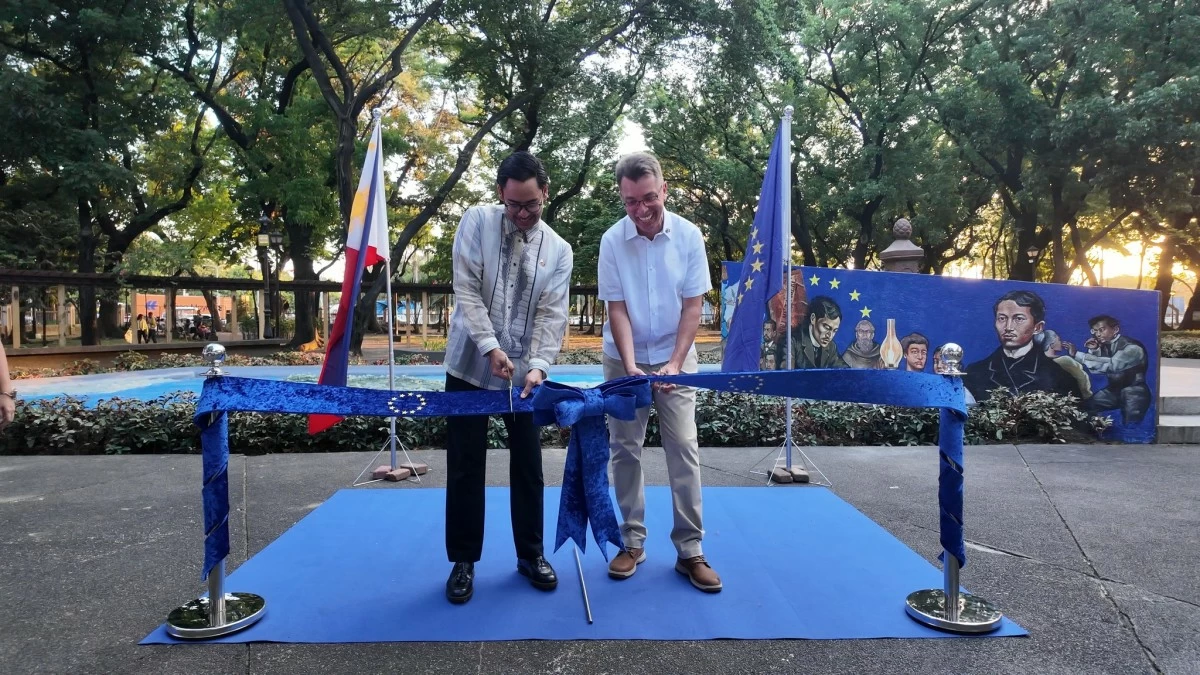
NPDC Deputy Executive Director Jezreel Apelar and EU Ambassador Massimo Santoro inaugurate the EU Mural in Rizal Park (Photos: EU Delegation in the Philippines)
On May 9, Delegation of the European Union to the Philippines brought Europe Day out of diplomatic halls and into one of Manila’s most symbolic public spaces: Rizal Park.
Held in partnership with the National Parks Development Committee, the celebration transformed the park’s European Garden—also known as the Noli Me Tangere Garden—into an open-air cultural gathering that blended diplomacy, history, literature, and public engagement.
At the center of the evening was the unveiling of a commemorative EU–Philippines mural and relief map installation, designed as a visual tribute to the long-standing intellectual and cultural connections between Europe and the Philippines. The installation now forms part of the park’s public landscape.
For European Union Ambassador Massimo Santoro, the choice of venue carried particular meaning.
“It is especially meaningful that we gather here at Rizal Park, a place that speaks to history, identity and the power of ideas,” Santoro said during his remarks.
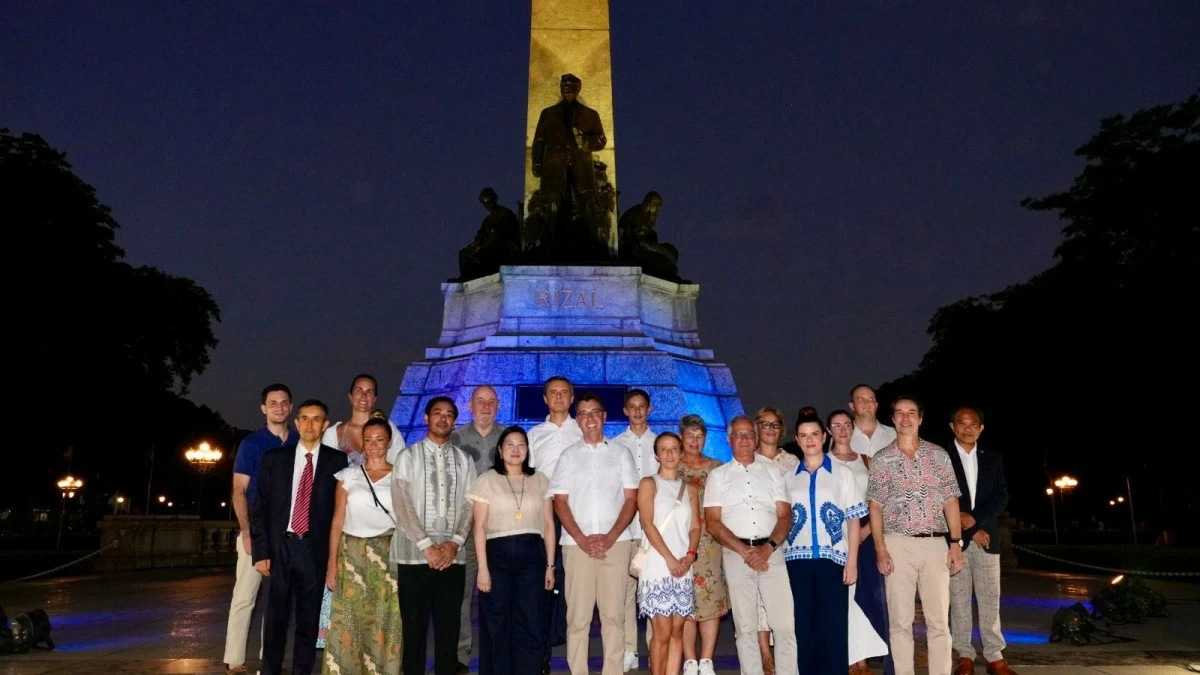
DFA Assistant Secretary for European Affairs Deena Joy D. Amatong, EU ambassadors, and NPDC Deputy Director Jezreel Apelar in front of the Rizal Monument, lit up in colors of the EU.
The annual celebration commemorates the Schuman Declaration of 1950, widely regarded as the foundation of what would eventually become the European Union. But rather than frame the evening solely around European integration, organizers rooted the program in shared exchanges between Europe and the Philippines—particularly through the legacy of national hero José Rizal, whose years in Europe shaped many of the political and intellectual ideas reflected in his writings and reformist work.
That thread of exchange ran throughout the program.
Santoro, who has been studying Filipino, surprised guests by reading Rizal’s poem Sa Aking mga Kabata in Tagalog, while NPDC Deputy Executive Director Jezreel Apelar delivered the English translation for international guests. The gesture drew warm reactions from the audience and reflected the evening’s broader emphasis on language, identity, and cultural connection.
“This is a way to recognize the importance of language, identity and love for one’s own culture,” Santoro said before the reading.
Apelar, meanwhile, drew parallels between the European Union’s origins and the ideals that shaped Southeast Asian regional cooperation.
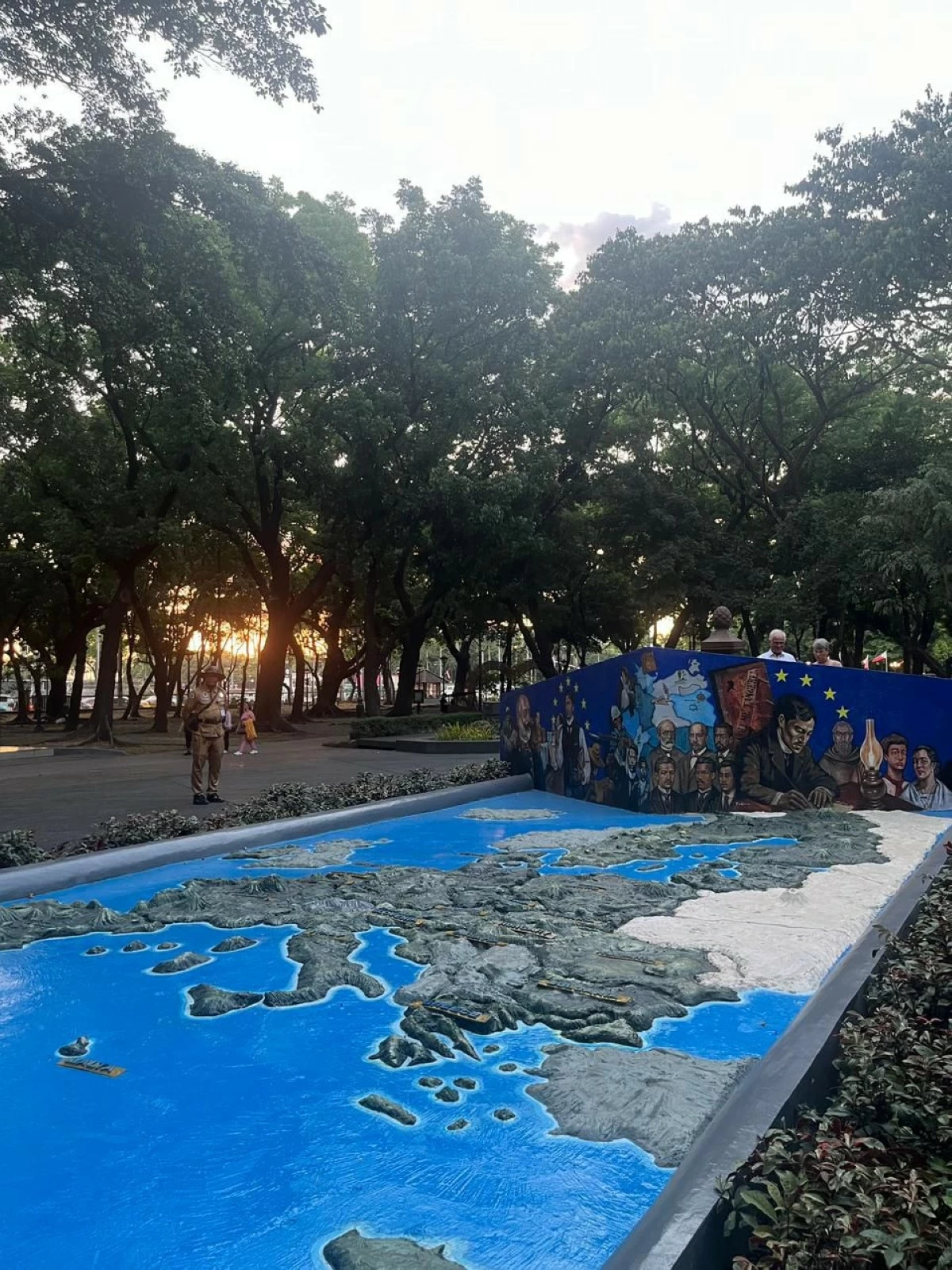
The EU Mural in Rizal Park showcases the long-standing relationship between the Philippines and EU member states.
“As we commemorate Europe Day, we remember how shared principles and ideals can lead to seemingly small acts that lay the foundation for something truly exceptional,” he said.
He also connected Rizal’s experiences in Europe to the formation of Filipino national consciousness, referencing the support and solidarity Rizal encountered during his travels and studies abroad.
“These seemingly small moments of peace, acts of kindness and shows of solidarity would allow Jose Rizal to blossom into the inspiration of an entire country,” Apelar said.
The public nature of the event marked a noticeable shift from the more closed diplomatic receptions often associated with Europe Day celebrations.
Visitors moved freely through the space, taking photographs at public installations and gathering around the newly unveiled mural as the sun set across Luneta. Later in the evening, the Rizal Park Musical Dancing Fountain and the Rizal Monument were illuminated in the blue and gold colors of the European Union.
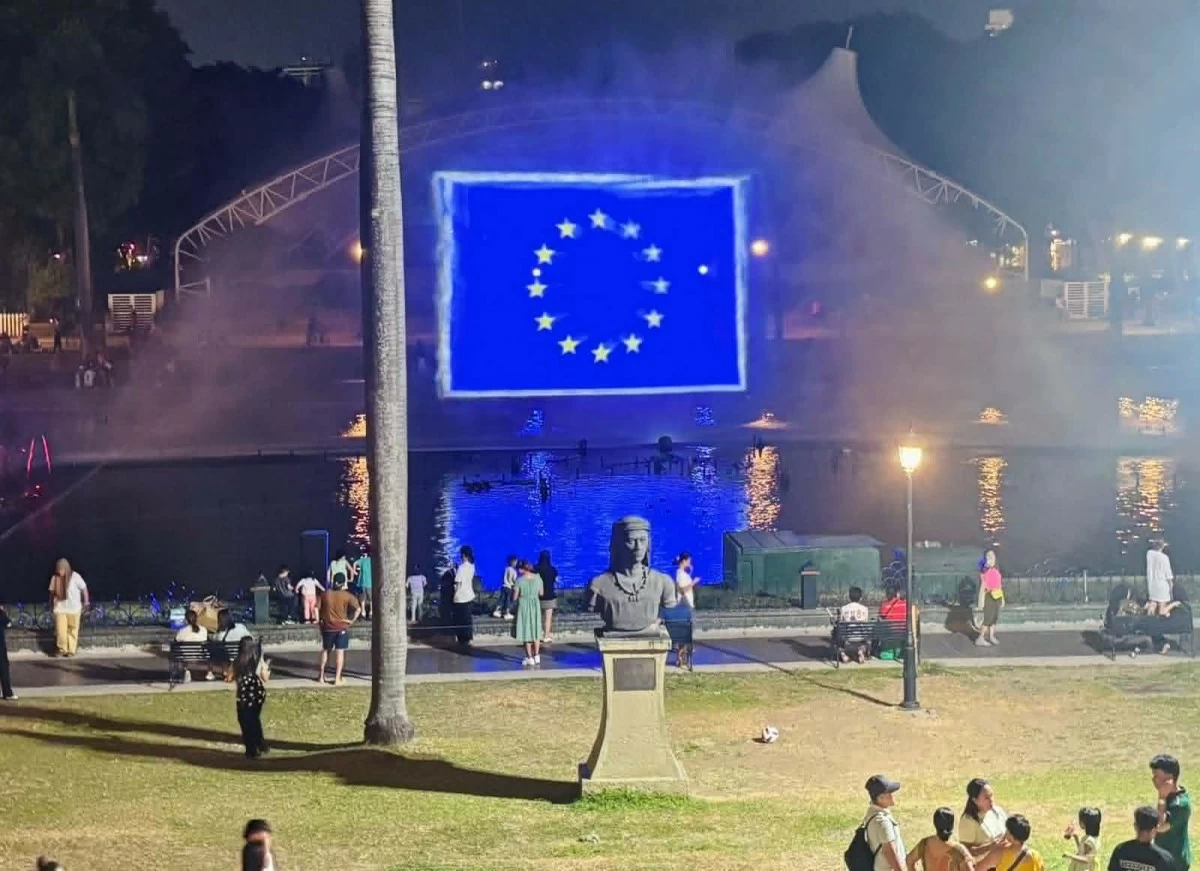
The EU flag depicted during the Rizal Park fountain show
“Europe Day is not only about institutions, but most importantly about people,” Santoro said.
That framing reflects how the EU increasingly approaches diplomacy in the Philippines: through cultural engagement, education, sustainability, mobility, and people-to-people exchanges alongside its political and economic partnerships.
The EU remains one of the Philippines’ largest trading partners and development partners, with cooperation spanning climate action, governance, higher education, disaster resilience, peacebuilding, and maritime security. But on this particular evening, the emphasis leaned less on policy and more on visibility—bringing the relationship into a public space deeply tied to Philippine identity.
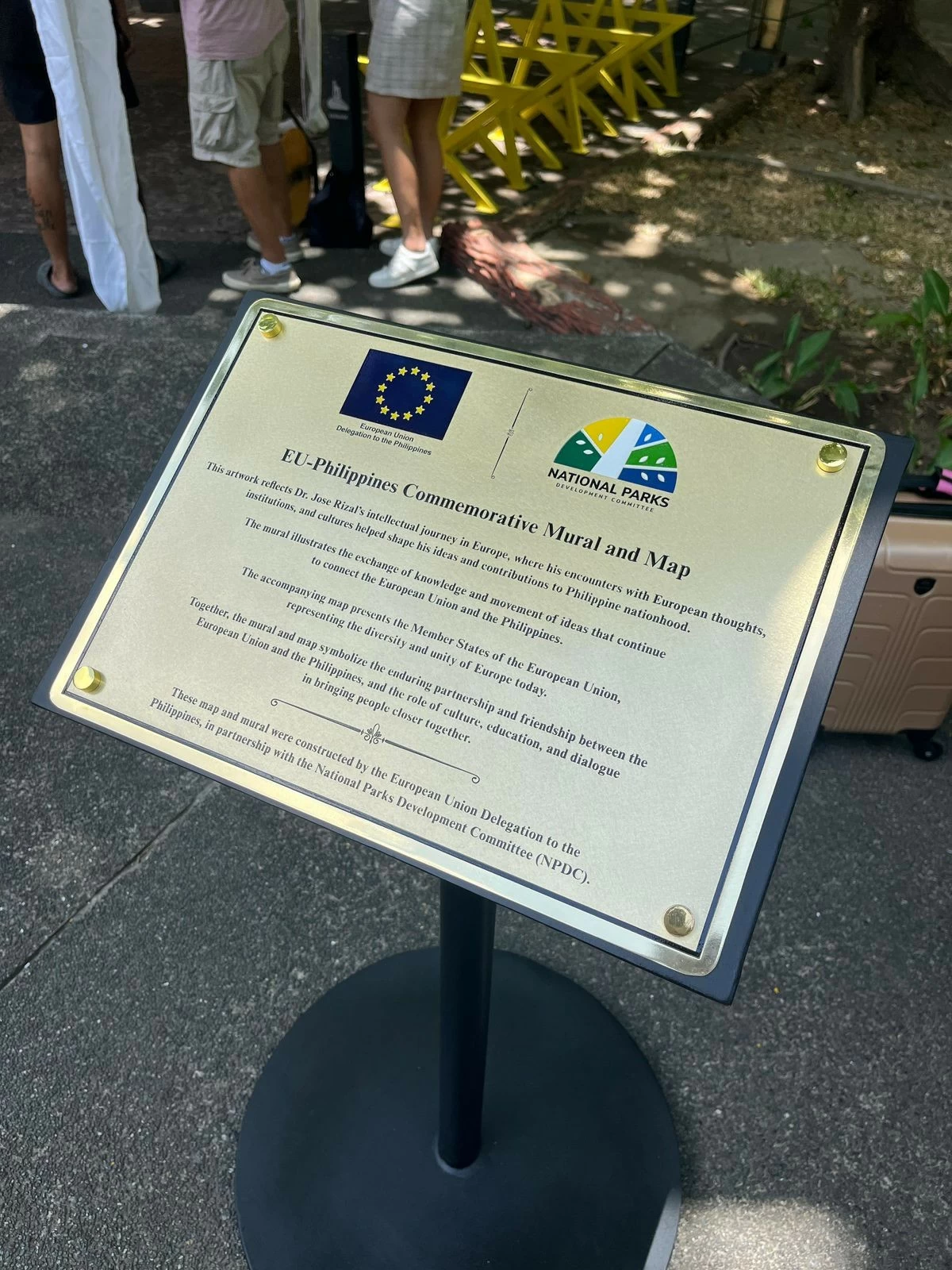
The brass marker for the EU Mural at Rizal Park’s European Garden
“Europe Day is a celebration of unity in diversity—of different cultures, languages and histories all coming together,” Santoro said.