ADVERTISEMENT

DA keeps pork import quota unchanged under revised MAV rules

Published May 18, 2026 12:00 am  |  Updated May 16, 2026 03:48 pm
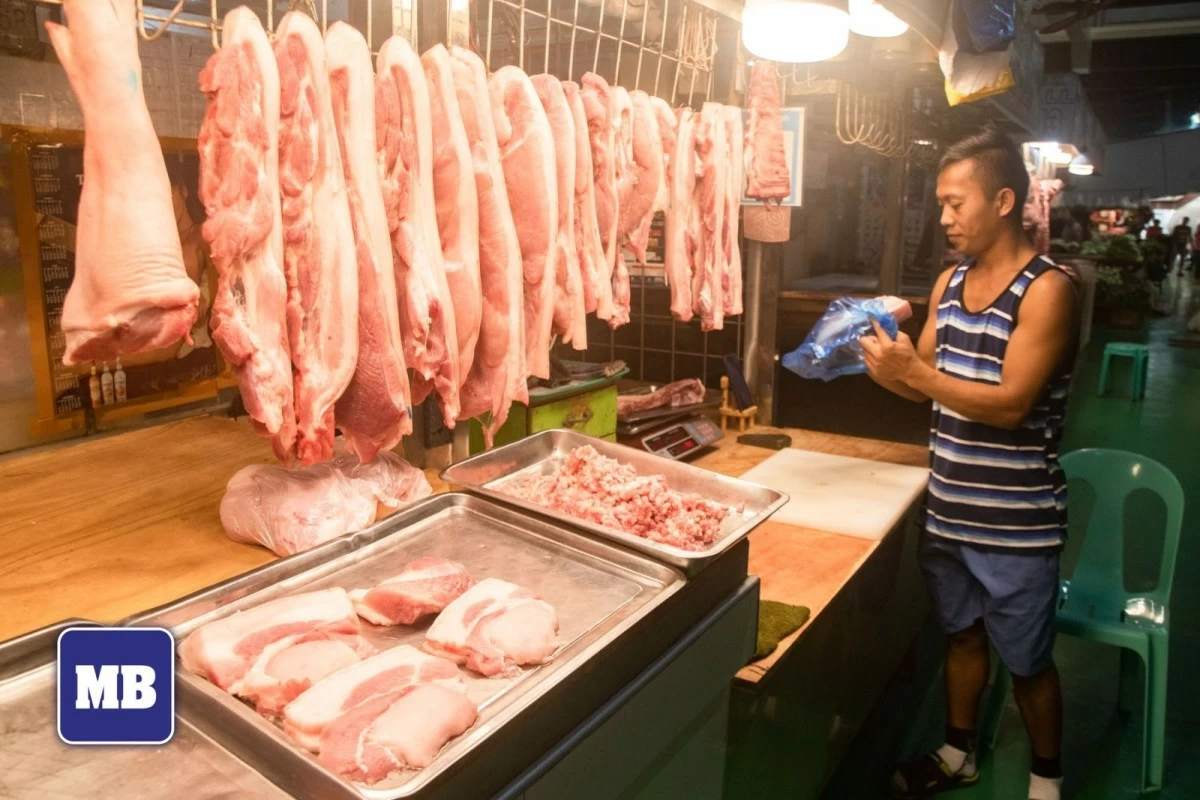
The Department of Agriculture sets a minimum farmgate price for live hogs to help local raisers recover from an influx of cheaper imports.

The Department of Agriculture (DA) is keeping the same volume of pork imports subject to a lower tariff rate under its revised minimum access volume (MAV) policy as it seeks to restore competitiveness in the market.

“All of our regular MAV quotas will be the same as last year. It’s just the distribution of who those quotas will go to,” Agriculture Secretary Francisco Tiu Laurel Jr. told reporters last week.

MAV is a mechanism that allows the entry of imported goods at a lower tariff rate within a specific quota allocation, while shipments outside the quota are levied a higher tariff.

The government earlier set MAV for imported pork at 54,210 metric tons (MT), with tariffs at 15 percent for in-quota imports and 25 percent for out-of-quota shipments.

Under Joint Department Circular (JDC) No. 1, signed last March 28, the DA, along with five other government agencies, canceled all existing MAV allocations to prepare for redistribution this year.

Based on JDC 1, 50 percent of MAV will be allocated to meat importer-processors with verified local processing facilities, while government trading enterprises will receive 20 percent.

This means all other qualified MAV licensees, including local meat importers, will compete for the remaining 30 percent, or around 16,200 MT.

Before this revised policy, the DA said major importers had largely seized control of MAV allocations, giving them a competitive edge over smaller traders.

For one, Tiu Laurel said the DA recently discovered that one MAV holder, which is now under investigation, was using its allocation to distribute import volumes to 18 companies under its umbrella.

“That’s why we revised the rules of MAV. If you have 18 companies that have MAV, that means you control the market,” the DA chief said.

By redistributing MAV allocations, the DA aims to encourage more competition in the market and stabilize retail prices at a time of elevated costs amid the Middle East conflict.

To keep prices manageable, the DA is also looking to implement MAV Plus, which would expand the current MAV.

The DA likewise plans to expand MAV for imported corn, which currently allows the entry of 216,940 MT at a lower five-percent tariff and imposes a 15-percent levy on shipments outside the quota.

Higher tariffs on corn imports have been cited as a major factor behind rising meat prices since the commodity is a crucial ingredient in animal feed. Feed accounts for 50 to 70 percent of production costs for both pork and chicken.

Tiu Laurel said the DA will soon issue MAV Plus for imported corn, while the policy for pork imports remains under consideration.

Related Tags

Department of Agriculture (DA) pork imports
ADVERTISEMENT
.most-popular .layout-ratio{ padding-bottom: 79.13%; } @media (min-width: 768px) and (max-width: 1024px) { .widget-title { font-size: 15px !important; } }

{{ articles_filter_1561_widget.title }}

.most-popular .layout-ratio{ padding-bottom: 79.13%; } @media (min-width: 768px) and (max-width: 1024px) { .widget-title { font-size: 15px !important; } }

{{ articles_filter_1562_widget.title }}

.most-popular .layout-ratio{ padding-bottom: 79.13%; } @media (min-width: 768px) and (max-width: 1024px) { .widget-title { font-size: 15px !important; } }

{{ articles_filter_1563_widget.title }}

{{ articles_filter_1564_widget.title }}

.mb-article-details { position: relative; } .mb-article-details .article-body-preview, .mb-article-details .article-body-summary{ font-size: 17px; line-height: 30px; font-family: "Libre Caslon Text", serif; color: #000; } .mb-article-details .article-body-preview iframe , .mb-article-details .article-body-summary iframe{ width: 100%; margin: auto; } .read-more-background { background: linear-gradient(180deg, color(display-p3 1.000 1.000 1.000 / 0) 13.75%, color(display-p3 1.000 1.000 1.000 / 0.8) 30.79%, color(display-p3 1.000 1.000 1.000) 72.5%); position: absolute; height: 200px; width: 100%; bottom: 0; display: flex; justify-content: center; align-items: center; padding: 0; } .read-more-background a{ color: #000; } .read-more-btn { padding: 17px 45px; font-family: Inter; font-weight: 700; font-size: 18px; line-height: 16px; text-align: center; vertical-align: middle; border: 1px solid black; background-color: white; } .hidden { display: none; }
function initializeAllSwipers() { // Get all hidden inputs with cms_article_id document.querySelectorAll('[id^="cms_article_id_"]').forEach(function (input) { const cmsArticleId = input.value; const articleSelector = '#article-' + cmsArticleId + ' .body_images'; const swiperElement = document.querySelector(articleSelector); if (swiperElement && !swiperElement.classList.contains('swiper-initialized')) { new Swiper(articleSelector, { loop: true, pagination: false, navigation: { nextEl: '#article-' + cmsArticleId + ' .swiper-button-next', prevEl: '#article-' + cmsArticleId + ' .swiper-button-prev', }, }); } }); } setTimeout(initializeAllSwipers, 3000); const intersectionObserver = new IntersectionObserver( (entries) => { entries.forEach((entry) => { if (entry.isIntersecting) { const newUrl = entry.target.getAttribute("data-url"); if (newUrl) { history.pushState(null, null, newUrl); let article = entry.target; // Extract metadata const author = article.querySelector('.author-section').textContent.replace('By', '').trim(); const section = article.querySelector('.section-info ').textContent.replace(' ', ' '); const title = article.querySelector('.article-title h1').textContent; // Parse URL for Chartbeat path format const parsedUrl = new URL(newUrl, window.location.origin); const cleanUrl = parsedUrl.host + parsedUrl.pathname; // Update Chartbeat configuration if (typeof window._sf_async_config !== 'undefined') { window._sf_async_config.path = cleanUrl; window._sf_async_config.sections = section; window._sf_async_config.authors = author; } // Track virtual page view with Chartbeat if (typeof pSUPERFLY !== 'undefined' && typeof pSUPERFLY.virtualPage === 'function') { try { pSUPERFLY.virtualPage({ path: cleanUrl, title: title, sections: section, authors: author }); } catch (error) { console.error('ping error', error); } } // Optional: Update document title if (title && title !== document.title) { document.title = title; } } } }); }, { threshold: 0.1 } ); function showArticleBody(button) { const article = button.closest("article"); const summary = article.querySelector(".article-body-summary"); const body = article.querySelector(".article-body-preview"); const readMoreSection = article.querySelector(".read-more-background"); // Hide summary and read-more section summary.style.display = "none"; readMoreSection.style.display = "none"; // Show the full article body body.classList.remove("hidden"); } document.addEventListener("DOMContentLoaded", () => { let loadCount = 0; // Track how many times articles are loaded const offset = [1, 2, 3, 4, 5, 6, 7, 8, 9, 10]; // Offset values const currentUrl = window.location.pathname.substring(1); let isLoading = false; // Prevent multiple calls if (!currentUrl) { console.log("Current URL is invalid."); return; } const sentinel = document.getElementById("load-more-sentinel"); if (!sentinel) { console.log("Sentinel element not found."); return; } function isSentinelVisible() { const rect = sentinel.getBoundingClientRect(); return ( rect.top < window.innerHeight && rect.bottom >= 0 ); } function onScroll() { if (isLoading) return; if (isSentinelVisible()) { if (loadCount >= offset.length) { console.log("Maximum load attempts reached."); window.removeEventListener("scroll", onScroll); return; } isLoading = true; const currentOffset = offset[loadCount]; window.loadMoreItems().then(() => { let article = document.querySelector('#widget_1690 > div:nth-last-of-type(2) article'); intersectionObserver.observe(article) loadCount++; }).catch(error => { console.error("Error loading more items:", error); }).finally(() => { isLoading = false; }); } } window.addEventListener("scroll", onScroll); });

Sign up by email to receive news.