






 Business
Trade & Industry
DA eyes regional SRPs for local rice as retail prices go up
Business
Trade & Industry
DA eyes regional SRPs for local rice as retail prices go up
DA eyes regional SRPs for local rice as retail prices go up


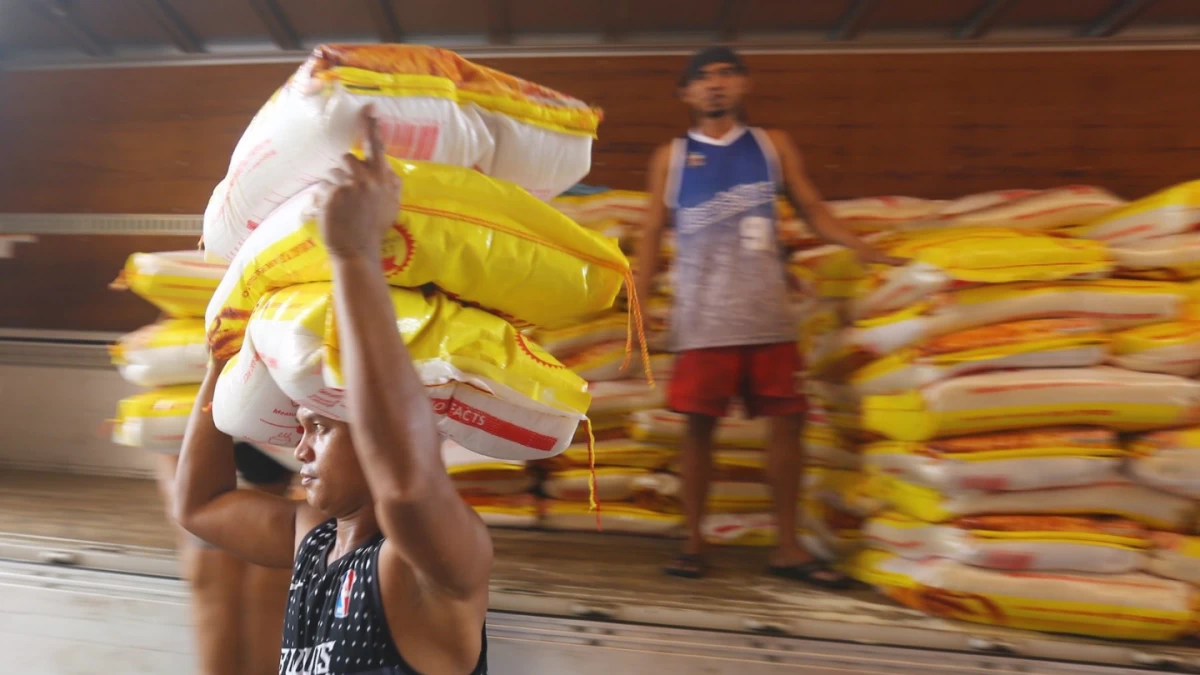
The Department of Agriculture (DA) is studying the potential imposition of a suggested retail price (SRP) on locally produced regular and well-milled rice to temper price swings across the country driven by ongoing inflationary pressures.
Agriculture Secretary Francisco Tiu Laurel Jr. said the planned SRP will not be implemented nationwide and will instead be localized per region to better reflect prevailing market conditions.
“We’re just finalizing the figures and we are consulting with the different regions because it would depend on each region,” the DA chief said in a chance interview last week.
The Philippine Statistics Authority (PSA) reported that prices of a kilogram of well-milled rice averaged ₱58.33 nationwide during the first week of May, up 15.8 percent from ₱50.37 per kilo in the same period last year.
Regular milled rice, meanwhile, rose by 18 percent to ₱51.59 per kilo from the average of ₱43.64 a year ago.
In Metro Manila, prices of well-milled rice increased by 10.5 percent year-on-year to ₱54.12 per kilo, while the regular milled variety climbed by 12.6 percent to ₱46.63.
As a result, Tiu Laurel said the DA is leaning toward imposing an SRP of ₱53 per kilo for both well-milled and regular milled rice in the capital region.
He added that regions with higher prevailing prices would likely have correspondingly higher SRPs.
PSA data showed that Region 11, or Davao Region, recorded the highest rice prices in the country as of May, with well-milled increasing by 14.6 percent year-on-year to ₱62.45 per kilo and regular milled surging by nearly 30 percent to ₱56.04.
Rice, which accounts for roughly nine percent of the consumer basket used to measure inflation, has continued to post price increases in recent weeks amid supply disruptions and higher costs triggered by the conflict in the Middle East.
Headline inflation accelerated to 7.2 percent in April, its highest level in three years, while rice inflation quickened to 13.7 percent, PSA data showed.
Unlike the recently implemented price cap for imported rice, Tiu Laurel said the upcoming local rice SRP would be non-binding and would only serve as a “guide [for] our consumers on what the price should be.”
Tiu Laurel recently said he may also recommend a price cap on locally produced rice, but this would no longer push through in favor of the SRP mechanism.
President Ferdinand R. Marcos Jr. issued Executive Order (EO) No. 118 last week imposing a price ceiling of ₱50 per kilo on five-percent broken imported rice to curb rising costs and prevent market abuse.
Under EO 118, the DA and the Department of Trade and Industry (DTI) were tasked with ensuring the strict and uniform enforcement of the price ceiling in markets nationwide, including monitoring and investigating unjustified price movements.
The price cap will remain in place for 30 days unless earlier lifted by the President upon recommendation of the interagency National Price Coordinating Council (NPCC).
Tiu Laurel, an NPCC member, said he expects the measure to be extended for up to two more months as prices remain elevated.
“Even if it’s over, the effects of the crisis are not limited to 30 days. It might be affecting us to the end of the year. So, there is a good chance that the price cap may be extended for another month or two,” he said.