







ASEAN peacemaking breakthrough attained through PH initiative
Published May 18, 2026 12:05 am
|
Updated May 17, 2026 04:06 pm


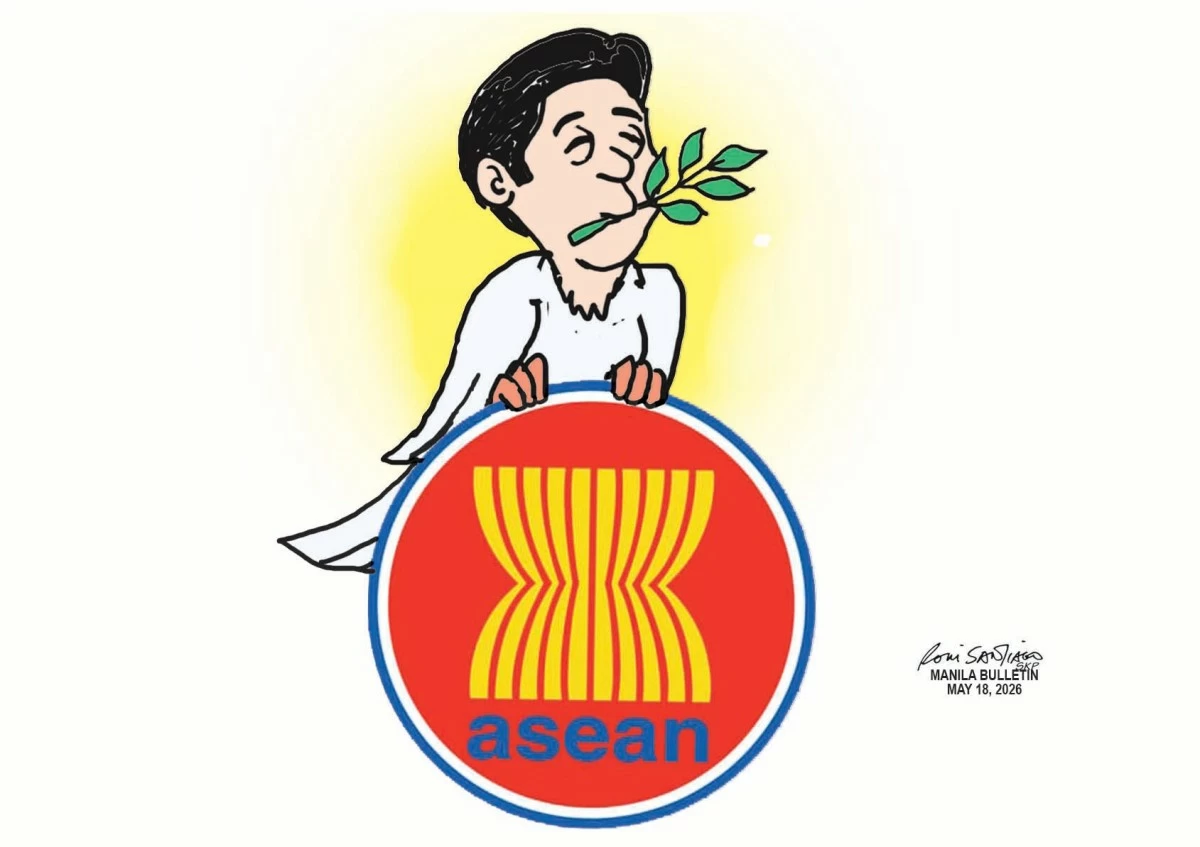
At a time when wars, territorial disputes, and geopolitical rivalries are redefining the global order, the peacemaking initiative undertaken by President Ferdinand Marcos Jr. during the recent 48th ASEAN Summit deserves far greater attention than it has thus far received.
On the sidelines of the summit in Cebu, President Marcos convened a trilateral meeting with the leaders of Thailand and Cambodia amid renewed tensions along their common border. The discussions resulted in both countries agreeing to sustain dialogue through their foreign ministers, maintain open communication, exercise restraint, and avoid actions that could further escalate hostilities.
This may appear modest when viewed against the backdrop of larger global conflicts. Yet in ASEAN diplomacy, such quiet interventions often matter most. Preventing escalation before violence spirals out of control is one of the highest forms of statesmanship.
The Philippines, as ASEAN chair this year, has demonstrated that leadership in the region is not measured merely by economic size or military capability, but by the ability to build consensus and preserve stability among neighbors with differing interests and historical grievances.
Thailand remains one of mainland Southeast Asia’s economic anchors and a major tourism and manufacturing hub whose stability affects regional trade and supply chains. Cambodia, meanwhile, has emerged as one of ASEAN’s fastest-growing economies and an increasingly important bridge between continental and maritime Southeast Asia. Both nations are indispensable to ASEAN’s long-term cohesion.
Their willingness to engage in dialogue under Philippine facilitation reflects a continuing faith in ASEAN’s founding principle: that disputes among neighbors must be resolved peacefully, through consultation rather than confrontation.
Equally important is the broader diplomatic context in which this initiative took place. The summit itself unfolded amid rising instability in the Middle East, concerns over maritime security, food and energy disruptions, and uncertainties in global trade. President Marcos repeatedly emphasized ASEAN solidarity, collective resilience, and peaceful coexistence as guiding principles for the region.
There are precedents in Southeast Asian diplomacy that President Marcos may well emulate as his influence in the region begins to be more widely felt.
One was Indonesia’s leadership during the Cambodian peace process in the late 1980s and early 1990s, when Jakarta played a critical convening role that eventually contributed to the Paris Peace Agreements. Another was the persistent shuttle diplomacy undertaken by Singapore’s elder statesman Lee Kuan Yew, whose influence often rested not on public declarations but on quiet persuasion among leaders.
Malaysia, too, helped facilitate peace negotiations between the Philippine government and the Moro Islamic Liberation Front over many years — a reminder that patient diplomacy within ASEAN can produce durable outcomes.
The Philippines now appears ready to assume a similar role as bridge-builder and consensus-forger.
This is particularly significant because ASEAN today faces growing pressure from external powers competing for influence in the Indo-Pacific. Internal divisions, if left unmanaged, could weaken the organization precisely when unity is most needed.
By bringing Thailand and Cambodia back to the negotiating table, President Marcos helped reinforce ASEAN’s credibility as a community capable of resolving disputes within its own family.
That alone is an important diplomatic achievement.
If sustained with patience, prudence, and consistency, this quiet peacemaking effort may yet become one of the defining contributions of Philippine leadership in ASEAN’s evolving story. As the world has started to gain cognizance of strategic peace initiatives in the ASEAN and beyond, a scenario in which President Marcos could be nominated and recognized as a Nobel laureate looms in the horizon.