








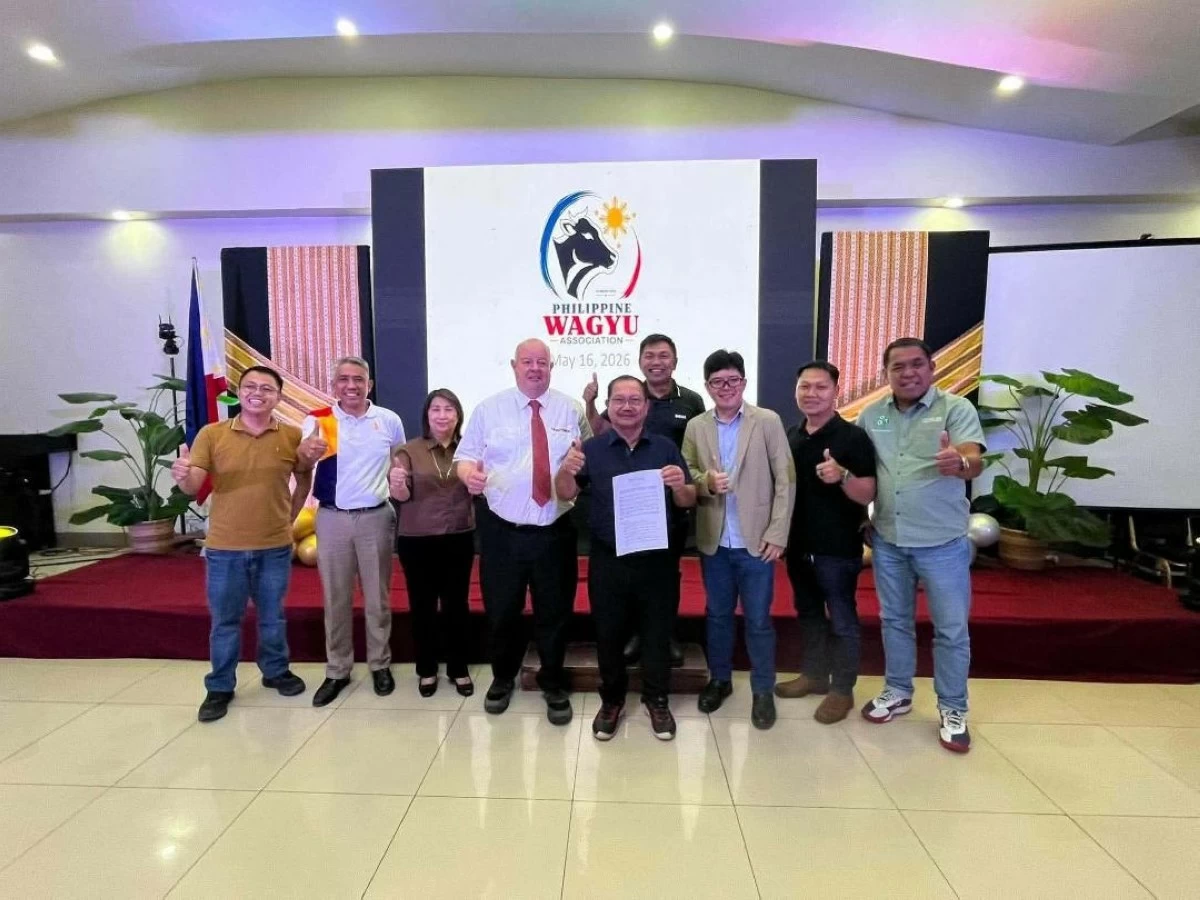
THE 1-M Wagyu Crusade is launched in Davao City on May 15.
DAVAO CITY – A private sector-led initiative is pushing to position the Philippines as a major producer of Wagyu beef, with proponents saying it could improve food security and generate thousands of jobs in rural communities.
Wagyu, a premium Japanese beef known for its tenderness, flavor, and high marbling, is the focus of the “1-M Wagyu Crusade,” an agricultural campaign aimed at expanding local cattle production.
Former Agriculture Secretary Emmanuel Piñol presented the initiative before cattle industry stakeholders during the Davao Wagyu and Sorghum Forum on Friday, May 15.
Piñol emphasized that this is a sustainable approach to addressing the country’s rising food demand through integrated farming and livestock production.
He said beef production offers several advantages over pork and poultry, citing lower biosecurity risks, reduced dependence on commercial feeds, and greater protection from the effects of import competition.
The program will begin with 1,200 breeder cattle at Great Arch Farm and aims to expand the population to one million Wagyu cattle by 2027. The long-term target is to reach 10 million heads by 2037.
According to Piñol, the initiative follows a three-pronged strategy that includes cultivating sorghum and soybeans for quality feed production, processing feeds such as grains, silage, and full-fat soy, and expanding livestock production for poultry, aquaculture, and high-value cattle such as Wagyu.
He added that campaign projections estimate that forage harvesting could generate about P31 billion in annual income for farmers, while silage processing may create around 250,000 rural jobs.
"The initiative also projects P400 billion in annual earnings from producing 200 million kilos of Wagyu beef," Piñol said.
Piñol said Wagyu cattle provide higher returns compared with conventional cattle while requiring similar levels of labor and resources.
He added that the breed offers strong export potential and could provide higher-quality meat for local consumers.
Piñol said increasing Wagyu production could help transform the Philippines into a major global supplier of premium beef while creating economic opportunities for rural communities.
"The initiative also aims to reduce the country’s dependence on imported meat products, stabilize domestic food supply, and help Filipino farmers enter higher-value livestock markets," he said.
Data from the Philippine Statistics Authority showed that as of 2025, the country’s cattle inventory stood at around 2.6 million heads.
Statistics said about 82 to 83 percent of the total was raised by smallholder or backyard farmers, while the remaining livestock came from semi-commercial and commercial farms.