







Broken trust
Published May 17, 2026 12:05 am
|
Updated May 16, 2026 04:20 pm


Tragic, shameless.
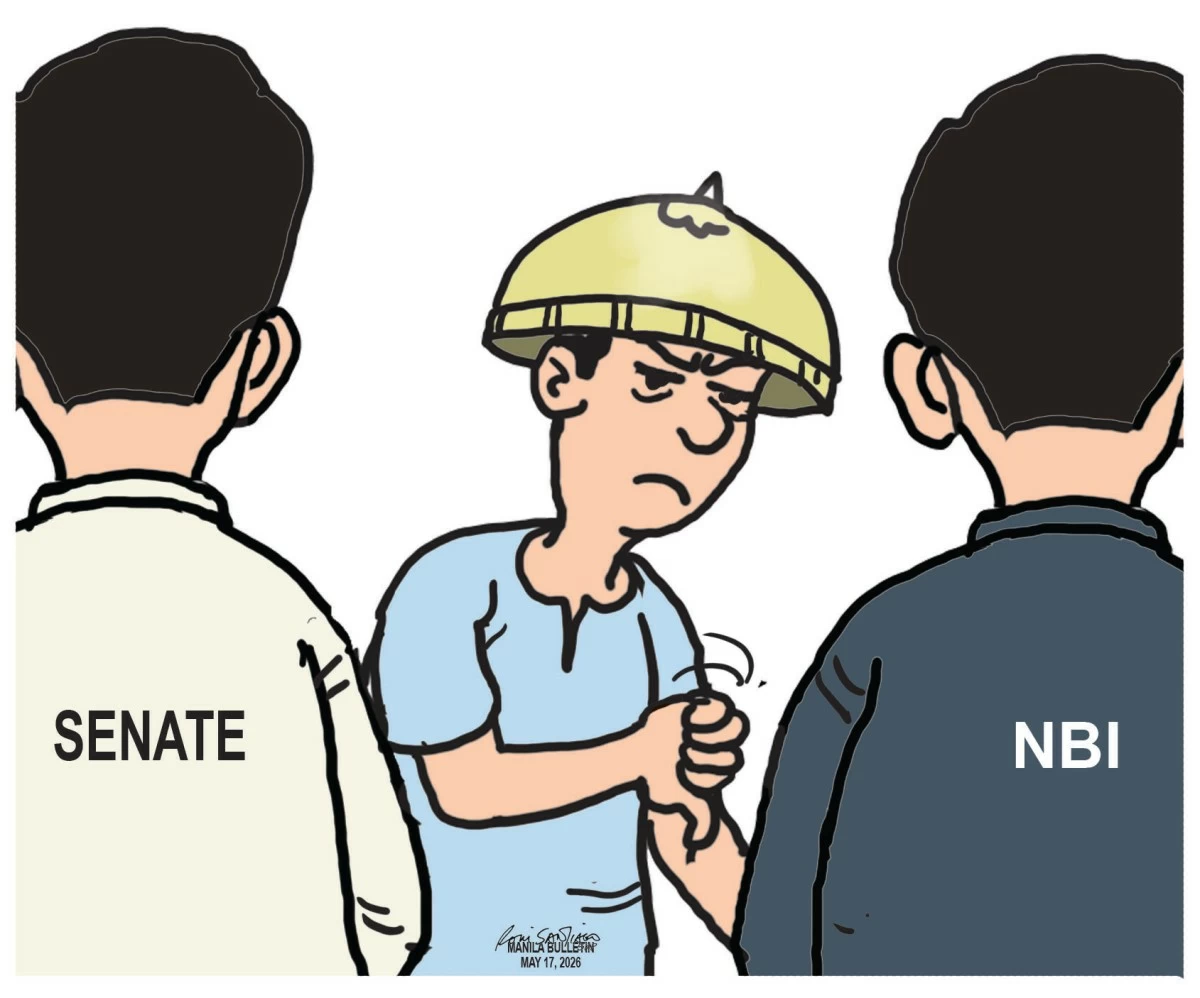
These may aptly describe the gunfire that disrupted the halls of the Senate on May 13, depending on what political spectrum you belong to or believe in. No matter what, it further weakened public confidence in institutions entrusted with preserving order, upholding the rule of law, and safeguarding democratic stability. Regardless of political affiliation or ideological persuasion, the incident brought embarrassment to the nation and exposed troubling vulnerabilities within the country’s system of governance.
At the center of this crisis stand two institutions that now carry the burden of restoring public trust—the Senate and the National Bureau of Investigation (NBI). Both have issued explanations. Both have defended their actions. But public confidence cannot be restored through statements alone. Nor can it be rebuilt through mutual accusations, defensive rhetoric, or attempts to assign blame. What the Filipino people now seek is decisive, transparent, and accountable action.
The Senate must first recognize that institutional dignity is not preserved by political alliances or protective posturing. It is preserved by transparency, restraint, and fidelity to the rule of law. The Senate symbolizes democratic discourse, not confrontation. The images of lockdowns, warning shots, and confusion inside its premises projected weakness instead of statesmanship. Reports that Senate security personnel fired warning shots first only intensified public concern over judgment and protocol.
Similarly, the NBI must address legitimate public concerns regarding operational coordination, communication procedures, and conduct during the incident. Law enforcement agencies exercise substantial authority on behalf of the State, and such authority must always be exercised with prudence, professionalism, and restraint. Any perception of recklessness, miscalculation, or politicization inevitably diminishes confidence not only in one agency, but in the broader justice system itself.
Both institutions must therefore refrain from engaging in public disputes that only deepen political divisions and erode confidence in governance. Efforts to shape competing narratives may serve short-term political interests, but they ultimately reinforce public cynicism toward government institutions. What the nation requires at this critical moment is not an exchange of accusations, but a credible, impartial, and transparent determination of the facts.
Respect for due process and adherence to the rule of law must guide all succeeding actions. Investigations must be conducted impartially, expeditiously, and free from political influence. Accountability must apply equally regardless of rank, position, or political affiliation. Should violations of protocol or abuses of authority be established, corresponding sanctions must be imposed without hesitation. Public trust cannot be restored if accountability is perceived as selective or superficial.
The responsibility of restoring institutional credibility, however, does not rest solely upon the Senate and the NBI. Other government institutions must likewise demonstrate independence, professionalism, and fidelity to the public interest. The Department of Justice, the Ombudsman, the Philippine National Police, and the judiciary must fulfill their respective mandates with impartiality and integrity. Their duty is not to protect individual personalities, but to preserve the credibility and stability of democratic institutions.
The Filipino people likewise have an indispensable role in restoring confidence in governance. Democratic institutions cannot function effectively in an environment where every national issue is reduced to partisan conflict. Citizens must remain vigilant, discerning, and committed to truth and accountability. Public discourse must be guided by facts, civic responsibility, and respect for democratic processes rather than by misinformation, political hostility, or blind allegiance.
Ultimately, the May 13 incident will be remembered not solely because violence disrupted the Senate, but because it compelled the nation to confront a fundamental question: whether its institutions remain capable of rising above political division and faithfully upholding the rule of law.
The answer depends on the integrity of the actions that follow.