







Strategy behind Philippine F&B's leanest coffee scale-up
Squeezing the square meter:
Published May 16, 2026 07:41 am


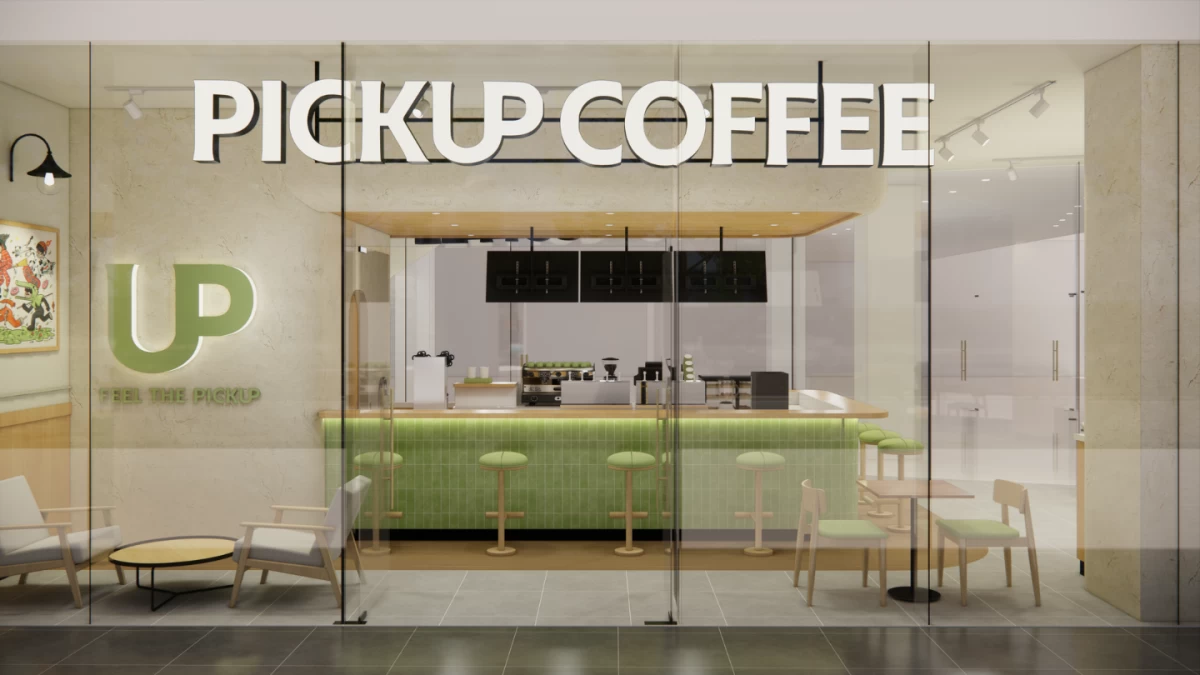
The hybrid PICKUP PRIME format, which offers a rightsized seating area for urban workers. Ranging between 50 and 80 square meters, these larger concepts represent the brand’s tiered strategy to capture both the on-the-fly commuter and brief business meetings.
For a long time, the formula for running a successful coffee chain was to build a space that feels like a living room away from home. The industry called it the third place, a comfortable middle ground between the office and your house where you could sit for hours on a plush couch, open a laptop, and sip a premium latte.
Real estate strategies followed this logic, with brands renting out massive storefronts in prime locations to accommodate long-lingering customers. But in the dense and traffic-heavy cities, that model is starting to look too expensive to survive.
A homegrown company has spent the last four years proving that you do not need high-end armchairs or massive square footage to sell millions of cups of coffee. Founded in 2022, the brand skipped the traditional café layout entirely, focusing instead on small, tech-enabled grab-and-go stands. The strategy worked, and the company has rapidly scaled to over 500 company-owned locations across the country.
Now, they are shifting gears to grow even faster. At the recent Franchise Asia Philippines expo, PICKUP COFFEE officially opened its doors to independent franchise operators, setting a target of 800 stores by the end of 2026. This expansion points to a bigger shift in how urban retail space is evolving. As commercial rents climb and fast-paced daily routines take over, efficiency per square meter is winning out over hospitality.
Traditional coffee shops are a major real estate gamble. They require heavy upfront investment for interior design, plenty of seating, constant air conditioning, and sprawling spaces inside malls or busy street corners.
PICKUP COFFEE built its business by avoiding those costs. By sticking to outdoor carts, small indoor kiosks, and compact walk-up windows, the brand has kept its overhead low enough to weather a tough economy.
While inflation and rising ingredient costs have squeezed profits for restaurants and cafes, PICKUP COFFEE has kept its prices steady.
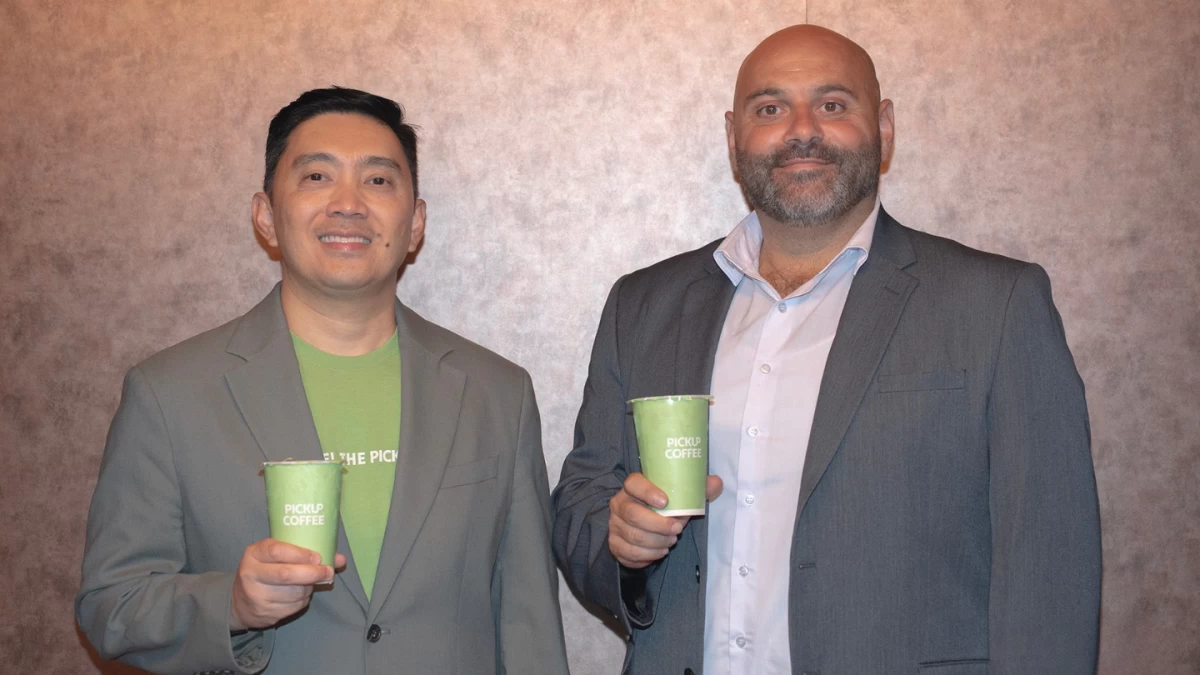
Francis Flores, PICKUP COFFEE global managing director (left) and Rami Chahwan, PICKUP COFFEE PH president and CEO (right)
Rami Chahwan, the company’s country president and chief executive officer, recently noted that their growth to more than 500 stores reflects how PICKUP COFFEE has become part of Filipinos’ everyday routines.
He points out that for most daily commuters and office workers, coffee is not a luxury they are willing to cut from their budget, even when money is tight.
Because the stores are small and do not require massive electricity bills or sprawling seating areas, the business can handle economic pressures that might cripple a larger venue. The company expects its sales to grow by 18 percent to 20 percent this year, largely because their lean setup keeps fixed costs so low.
Micro-real estate playbook
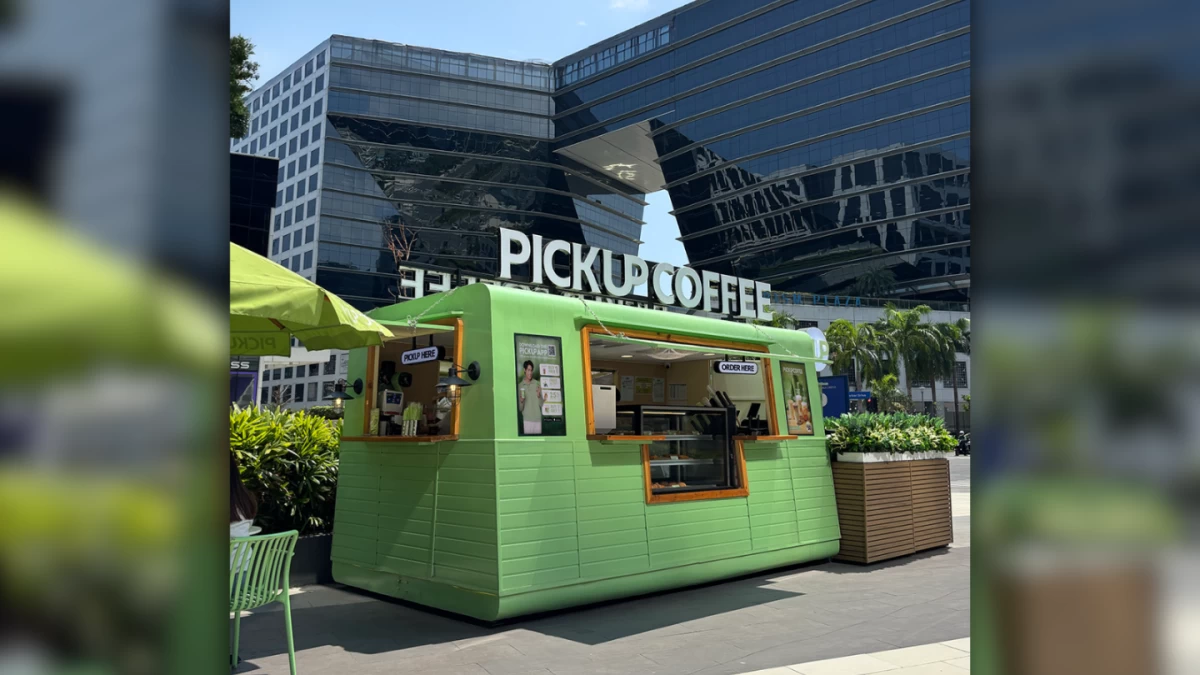
An outdoor PICKUP COFFEE cart utilizes minimal pavement square-footage to drive high-volume sales. The low-overhead setup allows the homegrown chain to maintain steady pricing despite rising inflation.
From an urban planning perspective, this ultra-compact setup unlocks real estate that traditional businesses would never consider. An empty alleyway, a small corner of a parking lot, or a tiny spot underneath an office building’s escalator suddenly becomes a profitable storefront.
Hazel Hernandez-Francisco, head of franchising, explains that the operating model enables faster store rollouts and efficient scalability compared to many traditional café concepts in the market. Because these small setups are quick and relatively cheap to build, the company tells prospective franchisees that they can expect a payback period of 18 to 24 months under ideal conditions.
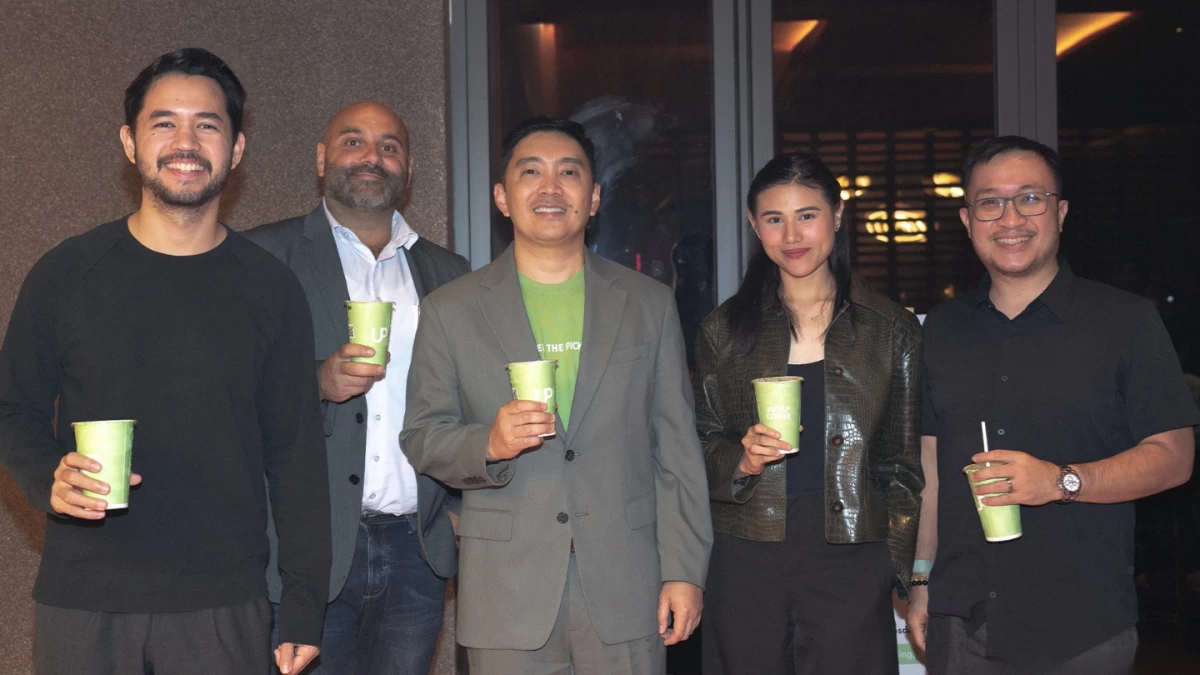
(From Left) Diego Lorenzo, PICKUP COFFEE co-founder, global chairman & CEO, Rami Chahwan, PICKUP COFFEE PH president and CEO, Francis Flores, PICKUP COFFEE global managing director, Bien Lee, PICKUP COFFEE co-founder and global chief brand officer, Kiko Macaalay, PICKUP COFFEE co-founder and global product and innovations head.
Francis Flores, the global managing director, breaks down the actual costs for entrepreneurs looking to get in on the expansion. A small indoor kiosk format costs about ₱1.7 million, while the brand’s signature outdoor green carts require around ₱2 million. For those looking for a hybrid setup, larger spaces between 50 and 80 square meters, which include their new Café 2.0 and PICKUP PRIME concepts, run between ₱3 million and ₱4 million.
This tiered strategy allows the brand to saturate a city. A commuter can grab a quick drink from a cart outside a train station in the morning, order a midday pick-me-up through an app to collect from their office lobby kiosk, and then sit down for a quick meeting at one of the larger PRIME locations later in the day.
Speed over seating
Mobile technology is quickly replacing the need for traditional sit-down cafés. When you take the physical lounge out of the equation, the digital experience has to pick up the slack. PICKUP COFFEE relies heavily on its own mobile app, using features like PICKUP Fast to let customers pre-order, pay, and walk away with their drink in seconds.
Instead of making money by getting people to stay, the company makes money through volume and speed. High foot traffic and repeat daily customers make up for the fact that a single order costs less than it would at a premium global chain.
This is the system that the company is now handing over to franchisees. With a centralized supply chain, standardized training, and a tech system already tested across 500 corporate locations, they are betting that local business owners can easily run these micro-locations.
The business model is also proving that it can travel. PICKUP COFFEE has already expanded outside the Philippines, opening more than 50 locations in Mexico to see if the grab-and-go concept works in other car-centric, busy international markets.
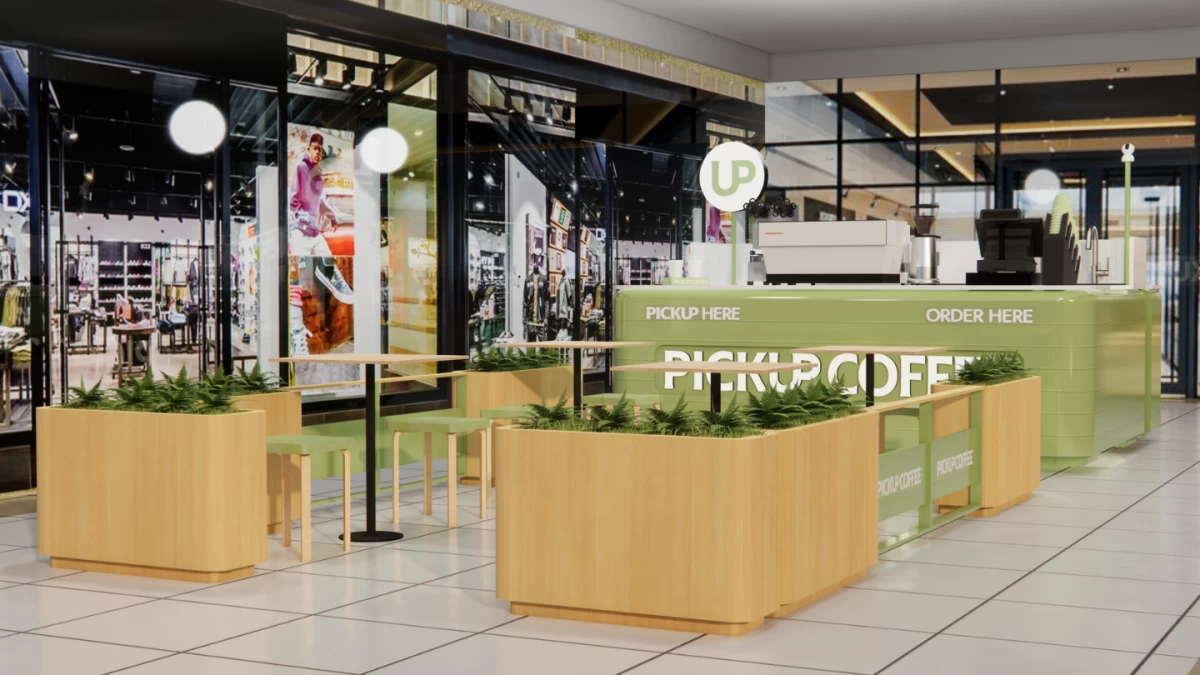
The hybrid PICKUP PRIME format, which offers a rightsized seating area for urban workers. Ranging between 50 and 80 square meters, these larger concepts represent the brand’s tiered strategy to capture both the on-the-fly commuter and brief business meetings.
However, giving up on physical seating entirely comes with risks. The company knows that some customers still want a place to sit and chat, which is why they are introducing the Café 2.0 and PICKUP PRIME formats. They are not completely destroying the idea of a neighborhood coffee shop, they are just rightsizing it to fit today's real estate prices.
For landlords and commercial property owners, the trend is clear. The days of relying on massive, 200-square-meter coffee shops to anchor a retail district are shifting toward high-density, small-footprint operations. In the modern city, the future belongs to businesses that can get the highest return out of a single square meter of concrete.