ADVERTISEMENT

I came from the Father

Published May 16, 2026 12:05 am  |  Updated May 15, 2026 05:50 pm
REFLECTIONS TODAY
In John, Jesus’ contemporaries refer to his place of origin. Philip, one of the first to follow Jesus, introduces him to Nathanael as, “Jesus, son of Joseph, from Nazareth” (Jn 1:45). On the discussion about Jesus as possibly the Messiah or the Prophet prophesied by Moses, some Jews do not subscribe to it because Scriptures says that the Messiah will not come from Galilee (7:52), while others say that when the Messiah comes no one will know where he is from (7:27).
Pontius Pilate affixes on Jesus’ cross an inscription about his origin and his “crime”: “Jesus the Nazorean, the King of the Jews” (19:19). Paradoxically, belief in the mysterious origin of the Messiah is true of Jesus. While he grew up in Nazareth in Galilee, and while he was born in Bethlehem, the city of David, thus fulfilling what Scriptures says where the Messiah would be born (Mi 5:1), Jesus’ true origin is the heavenly realm, from God.
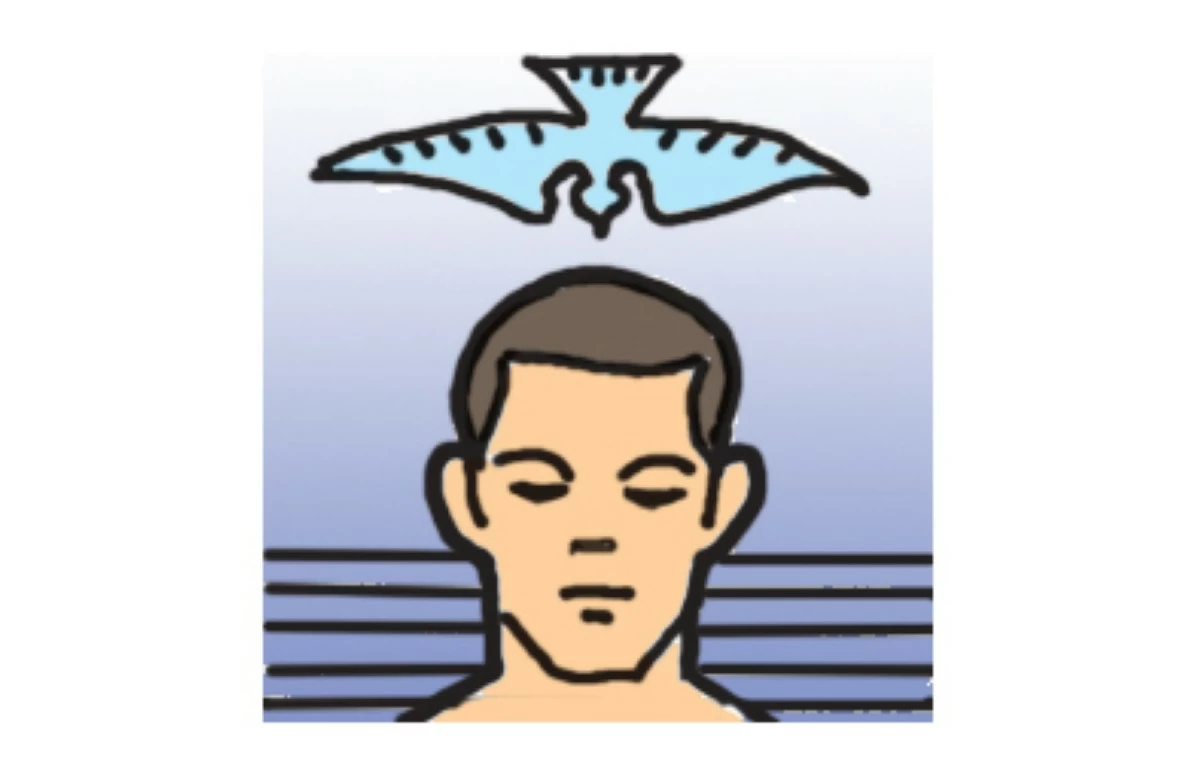
In the Gospel reading, he declares, “I came from the Father and have come into the world” (v 28). Bible scholars speak of the “Johannine pendulum” in describing the “trajectory” of Jesus’ mission. Because of God’s love for the world, he sends his Son—the divine Logos—to become “flesh,” a human being, to dwell among men. This is the downward movement.
After accomplishing his mission in the paschal events, Jesus—the incarnate Son of God—now returns to the Father. This is the upward movement. This is what he reveals to the disciples, “Now I am leaving the world and going back to the Father” (v 28).
Yet his return “home” to the Father, rather than a cutting of relationship, is an intensification of his presence. Though no longer visible like during his historical time on earth, life on earth is replete with his presence, comfort, and guidance.
First Reading • Acts 18:23-28
After staying in Antioch some time, Paul left and traveled in orderly sequence through the Galatian country and Phrygia, bringing strength to all the disciples.
A Jew named Apollos, a native of Alexandria, an eloquent speaker, arrived in Ephesus. He was an authority on the Scriptures. He had been instructed in the Way of the Lord and, with ardent spirit, spoke and taught accurately about Jesus, although he knew only the baptism of John.
He began to speak boldly in the synagogue; but when Priscilla and Aquila heard him, they took him aside and explained to him the Way of God more accurately. And when he wanted to cross to Achaia, the brothers encouraged him and wrote to the disciples there to welcome him.
After his arrival he gave great assistance to those who had come to believe through grace. He vigorously refuted the Jews in public, establishing from the Scriptures that the Christ is Jesus.
Gospel • John 16:23b-28
Jesus said to his disciples: “Amen, amen, I say to you, whatever you ask the Father in my name he will give you. Until now you have not asked anything in my name; ask and you will receive, so that your joy may be complete.
“I have told you this in figures of speech. The hour is coming when I will no longer speak to you in figures but I will tell you clearly about the Father. On that day you will ask in my name, and I do not tell you that I will ask the Father for you.
“For the Father himself loves you, because you have loved me and have come to believe that I came from God. I came from the Father and have come into the world. Now I am leaving the world and going back to the Father.”
Source: “365 Days with the Lord 2026,” St. Paul’s, 7708 St. Paul Rd., SAV, Makati City (Phils.); Tel.: 632-895-9701; E-mail: [email protected]; Website: http://www.stpauls.ph.
ADVERTISEMENT
.most-popular .layout-ratio{ padding-bottom: 79.13%; } @media (min-width: 768px) and (max-width: 1024px) { .widget-title { font-size: 15px !important; } }

{{ articles_filter_1561_widget.title }}

.most-popular .layout-ratio{ padding-bottom: 79.13%; } @media (min-width: 768px) and (max-width: 1024px) { .widget-title { font-size: 15px !important; } }

{{ articles_filter_1562_widget.title }}

.most-popular .layout-ratio{ padding-bottom: 79.13%; } @media (min-width: 768px) and (max-width: 1024px) { .widget-title { font-size: 15px !important; } }

{{ articles_filter_1563_widget.title }}

{{ articles_filter_1564_widget.title }}

.mb-article-details { position: relative; } .mb-article-details .article-body-preview, .mb-article-details .article-body-summary{ font-size: 17px; line-height: 30px; font-family: "Libre Caslon Text", serif; color: #000; } .mb-article-details .article-body-preview iframe , .mb-article-details .article-body-summary iframe{ width: 100%; margin: auto; } .read-more-background { background: linear-gradient(180deg, color(display-p3 1.000 1.000 1.000 / 0) 13.75%, color(display-p3 1.000 1.000 1.000 / 0.8) 30.79%, color(display-p3 1.000 1.000 1.000) 72.5%); position: absolute; height: 200px; width: 100%; bottom: 0; display: flex; justify-content: center; align-items: center; padding: 0; } .read-more-background a{ color: #000; } .read-more-btn { padding: 17px 45px; font-family: Inter; font-weight: 700; font-size: 18px; line-height: 16px; text-align: center; vertical-align: middle; border: 1px solid black; background-color: white; } .hidden { display: none; }
function initializeAllSwipers() { // Get all hidden inputs with cms_article_id document.querySelectorAll('[id^="cms_article_id_"]').forEach(function (input) { const cmsArticleId = input.value; const articleSelector = '#article-' + cmsArticleId + ' .body_images'; const swiperElement = document.querySelector(articleSelector); if (swiperElement && !swiperElement.classList.contains('swiper-initialized')) { new Swiper(articleSelector, { loop: true, pagination: false, navigation: { nextEl: '#article-' + cmsArticleId + ' .swiper-button-next', prevEl: '#article-' + cmsArticleId + ' .swiper-button-prev', }, }); } }); } setTimeout(initializeAllSwipers, 3000); const intersectionObserver = new IntersectionObserver( (entries) => { entries.forEach((entry) => { if (entry.isIntersecting) { const newUrl = entry.target.getAttribute("data-url"); if (newUrl) { history.pushState(null, null, newUrl); let article = entry.target; // Extract metadata const author = article.querySelector('.author-section').textContent.replace('By', '').trim(); const section = article.querySelector('.section-info ').textContent.replace(' ', ' '); const title = article.querySelector('.article-title h1').textContent; // Parse URL for Chartbeat path format const parsedUrl = new URL(newUrl, window.location.origin); const cleanUrl = parsedUrl.host + parsedUrl.pathname; // Update Chartbeat configuration if (typeof window._sf_async_config !== 'undefined') { window._sf_async_config.path = cleanUrl; window._sf_async_config.sections = section; window._sf_async_config.authors = author; } // Track virtual page view with Chartbeat if (typeof pSUPERFLY !== 'undefined' && typeof pSUPERFLY.virtualPage === 'function') { try { pSUPERFLY.virtualPage({ path: cleanUrl, title: title, sections: section, authors: author }); } catch (error) { console.error('ping error', error); } } // Optional: Update document title if (title && title !== document.title) { document.title = title; } } } }); }, { threshold: 0.1 } ); function showArticleBody(button) { const article = button.closest("article"); const summary = article.querySelector(".article-body-summary"); const body = article.querySelector(".article-body-preview"); const readMoreSection = article.querySelector(".read-more-background"); // Hide summary and read-more section summary.style.display = "none"; readMoreSection.style.display = "none"; // Show the full article body body.classList.remove("hidden"); } document.addEventListener("DOMContentLoaded", () => { let loadCount = 0; // Track how many times articles are loaded const offset = [1, 2, 3, 4, 5, 6, 7, 8, 9, 10]; // Offset values const currentUrl = window.location.pathname.substring(1); let isLoading = false; // Prevent multiple calls if (!currentUrl) { console.log("Current URL is invalid."); return; } const sentinel = document.getElementById("load-more-sentinel"); if (!sentinel) { console.log("Sentinel element not found."); return; } function isSentinelVisible() { const rect = sentinel.getBoundingClientRect(); return ( rect.top < window.innerHeight && rect.bottom >= 0 ); } function onScroll() { if (isLoading) return; if (isSentinelVisible()) { if (loadCount >= offset.length) { console.log("Maximum load attempts reached."); window.removeEventListener("scroll", onScroll); return; } isLoading = true; const currentOffset = offset[loadCount]; window.loadMoreItems().then(() => { let article = document.querySelector('#widget_1690 > div:nth-last-of-type(2) article'); intersectionObserver.observe(article) loadCount++; }).catch(error => { console.error("Error loading more items:", error); }).finally(() => { isLoading = false; }); } } window.addEventListener("scroll", onScroll); });

Sign up by email to receive news.