







Shooting at Senate; assault on democracy
Published May 15, 2026 12:05 am
|
Updated May 14, 2026 05:36 pm


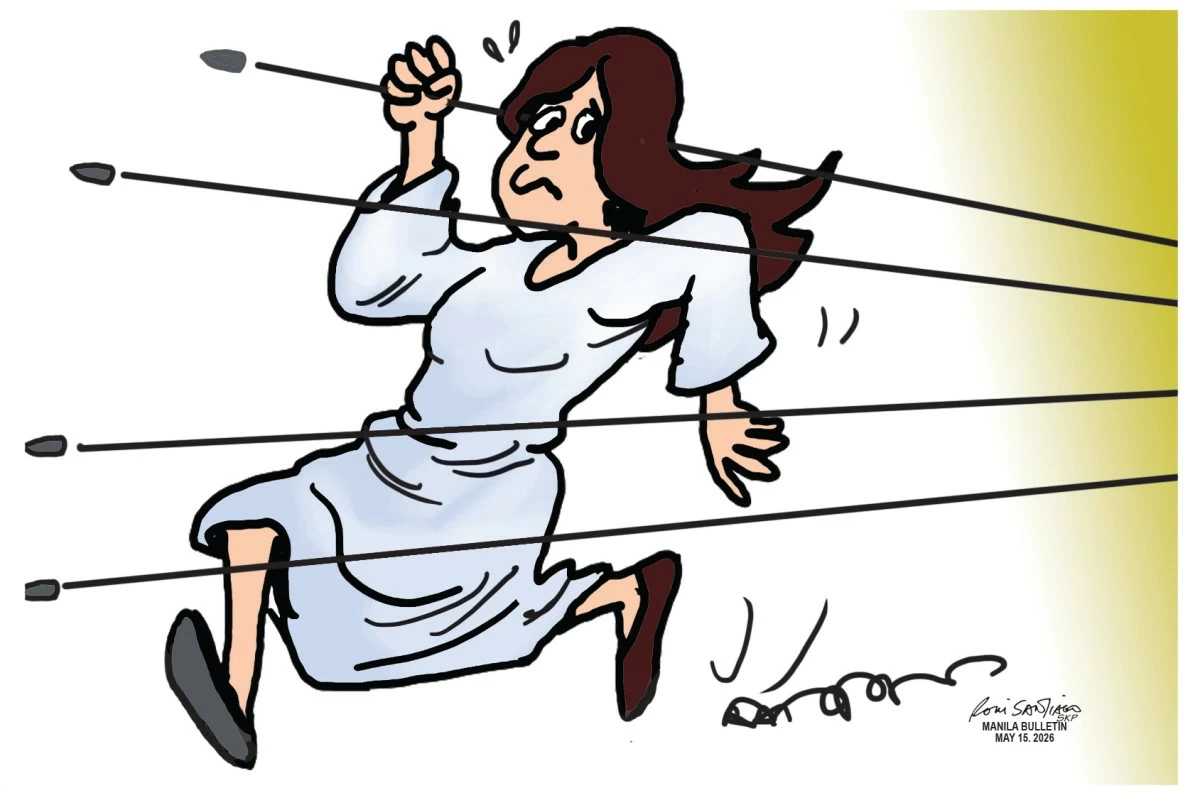
The gunfire inside the Senate on Wednesday night should not be dismissed merely as a security breach. It was an assault on the nation’s democratic institutions and a chilling reminder of how dangerously polarized the Philippines has become. The halls of the Senate are meant to be an arena for debates, lawmaking, and accountability; not of intimidation, chaos, and fear.
Therefore, authorities must move swiftly and decisively to identify not only those who pulled the trigger, but also the individuals and groups who may have orchestrated the incident. Anything less than a full, transparent, and credible investigation will only deepen public suspicion and further erode trust in government. Conflicting accounts about who entered the Senate premises and who fired the shots have only intensified public anxiety.
The timing of the incident cannot be ignored. The shooting erupted on the very night the Articles of Impeachment against Vice President Sara Duterte were transmitted to the Senate, and only days after the attempt to arrest Senator Ronald “Bato” Dela Rosa over an International Criminal Court warrant tied to crimes against humanity of murder allegations stemming from the Duterte administration’s bloody anti-drug campaign. These developments have already inflamed political tensions nationwide. The gunfire has now pushed the country closer to a dangerous precipice where political conflict risks spilling beyond rhetoric and into violence.
The stakes are high. This is no longer simply about partisan politics. It is already about preserving the rule of law and preventing institutions from collapsing under the weight of factional warfare. Both sides of the political divide have contributed to the toxicity now engulfing the national discourse. Allegations of corruption, destabilization efforts, abuse of power, and political maneuvering have created an atmosphere where distrust thrives and democratic processes are viewed as weapons rather than safeguards.
The economic consequences of prolonged instability cannot be understated. The country is already bleeding from controversies surrounding flood control projects, which many Filipinos see as symbols of corruption and inefficiency. At the same time, the escalating crisis in the Middle East threatens oil prices, inflation, overseas Filipino workers, and global market stability. The Philippines can ill afford another crisis, especially one involving the breakdown of law and order at the heart of government itself.
Investors watch political stability closely. Tourists do as well. So do foreign governments and international institutions. Images of armed men, panic, and gunfire inside the Senate send a deeply damaging message to the world. It just underscores that the Philippines is struggling to maintain control over its own democratic institutions. If left unresolved, the incident risks staining the country’s international image and weakening confidence in its governance.
The government must therefore do more than solve the shooting. It must restore public confidence. This means ensuring an impartial investigation, strengthening institutional security, enforcing accountability regardless of political affiliation, and toning down inflammatory rhetoric from political allies and opponents alike. Leaders must stop treating every disagreement as a war to be won at all costs.
With a highly polarized society, the government alone cannot restore order. The private sector must help steady the nation by promoting responsible business practices, supporting civic initiatives, and resisting the temptation to fuel division for political or financial gain. Media organizations and social media users also carry enormous responsibility in resisting disinformation and refusing to amplify hysteria.
Most importantly, ordinary Filipinos must reject violence, fanaticism, and blind political loyalty. Democracy survives only when citizens place the country above personalities.
The gunfire at the Senate should serve as a national wake-up call. If the country continues down the path of political vengeance, institutional distrust, and unchecked division, the next shots may not only wound democracy, they may shatter it entirely.