






Manila Bulletin
 Business
The Economy
Luzon, Visayas face third wave of rotating brownouts this Friday
Business
The Economy
Luzon, Visayas face third wave of rotating brownouts this Friday
Business
The Economy
Luzon, Visayas face third wave of rotating brownouts this Friday
Luzon, Visayas face third wave of rotating brownouts this Friday
Published May 15, 2026 09:26 am


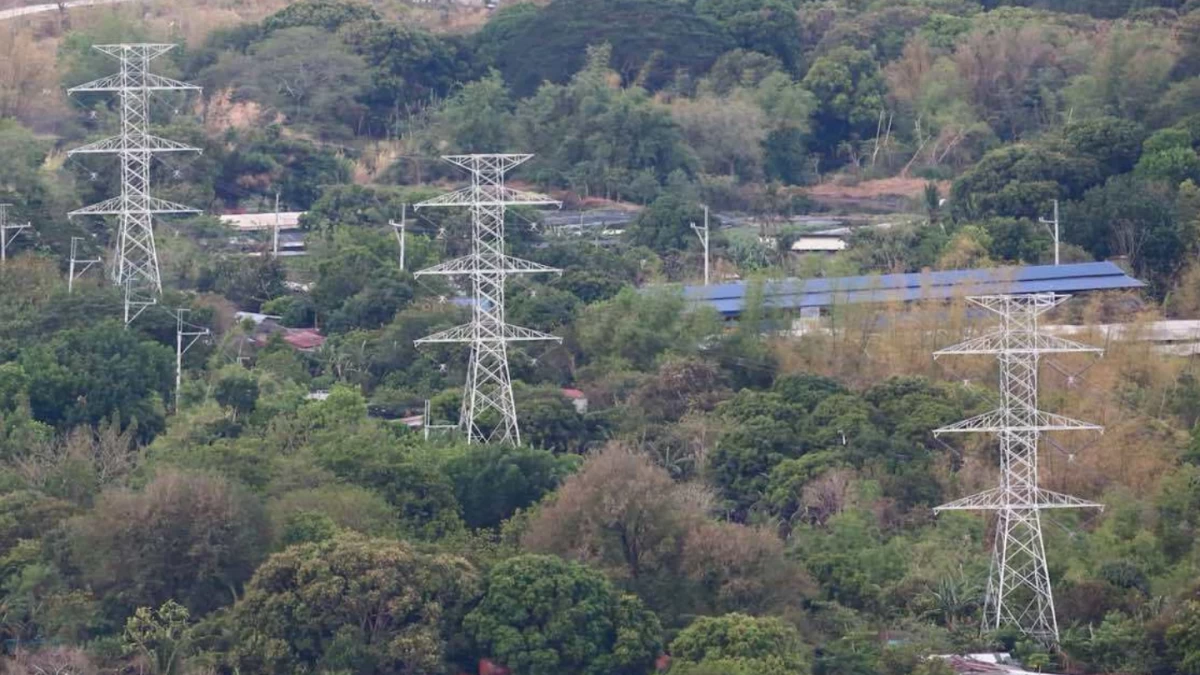
(Photo by John Louie Abrina | Manila Bulletin)
Rotating power disruptions are set to return to Luzon and Visayas on Friday, May 15, as the National Grid Corporation of the Philippines (NGCP) placed the two regional grids under yellow and red alert status due to widening supply deficit.
The NGCP advised that the Luzon grid will experience yellow alerts from 1 to 3 p.m. and 10 to 11 p.m., while a red alert is scheduled from 3 to 10 p.m.
The Visayas grid, on the other hand, will be faced with yellow alerts from 2 to 5 p.m. and again on 9 to 11 p.m., while a red alert will take effect from 5 to 9 p.m.
The NGCP places red alerts when the power supply is not enough to meet the consumer demand and the transmission grid’s requirements, while a yellow alert signals that the operating margin is insufficient to meet the contingency requirement of the grid.
According to the grid operator, the peak demand for electricity in Luzon is higher compared to the available capacity due to multiple forced power plant outages, assets that run on derated capacities, and about 4,160 megawatts (MW) remain unavailable to the grid. Visayas shares a similar concern, and about 841.3 MW remain unavailable to the grid.
Although it clarified that the Tayabas-Ilijan 500-kilovolt (kV) line and the Dasmarinas-Ilijan 500 kV line have been restored earlier this week, some plants have yet to synchronize back to the transmission system.
Moreover, the Department of Energy (DOE) instructed an immediate power plant restoration of the concerned generation companies, and has them return to full rated capacity.
“The DOE’s top priority is to protect consumers and maintain grid stability. We have directed all concerned generation companies to expedite the restoration of affected units at the soonest possible time,” she said on Thursday, May 14.
The Energy Regulatory Commission (ERC) also addressed the NGCP to submit a detailed report on the grid alert schedules, affected areas, as well as the triggers of supply deficiency. The NGCP has also been ordered by the commission to submit data on the generating units, transmission lines, and grid facilities that were faced with unexpected outages, derating, or reduced availability, as well as the supply and demand levels.
The NGCP has also been tasked to provide measures to be undertaken during the high grid alerts, including load management or dispatch instructions, as well as the timeline of grid normalization.
As of writing, no areas in Metro Manila have yet been identified as affected by possible brownouts due to Manual Load Dropping (MLD). MLD is implemented when the demand for electricity exceeds the available supply, and rotational power interruptions are necessary to protect the integrity of the entire power grid.