






Manila Bulletin
 Lifestyle
Arts and Culture
Hidden treasures unveiled at the Metropolitan Museum of Manila
Lifestyle
Arts and Culture
Hidden treasures unveiled at the Metropolitan Museum of Manila
Lifestyle
Arts and Culture
Hidden treasures unveiled at the Metropolitan Museum of Manila
Hidden treasures unveiled at the Metropolitan Museum of Manila
Over 300 years of Philippine art displayed at "TouchPoints (in Philippine Art History)"
Published May 15, 2026 09:40 pm


At A Glance
- To call the exhibition extraordinary is no exaggeration.
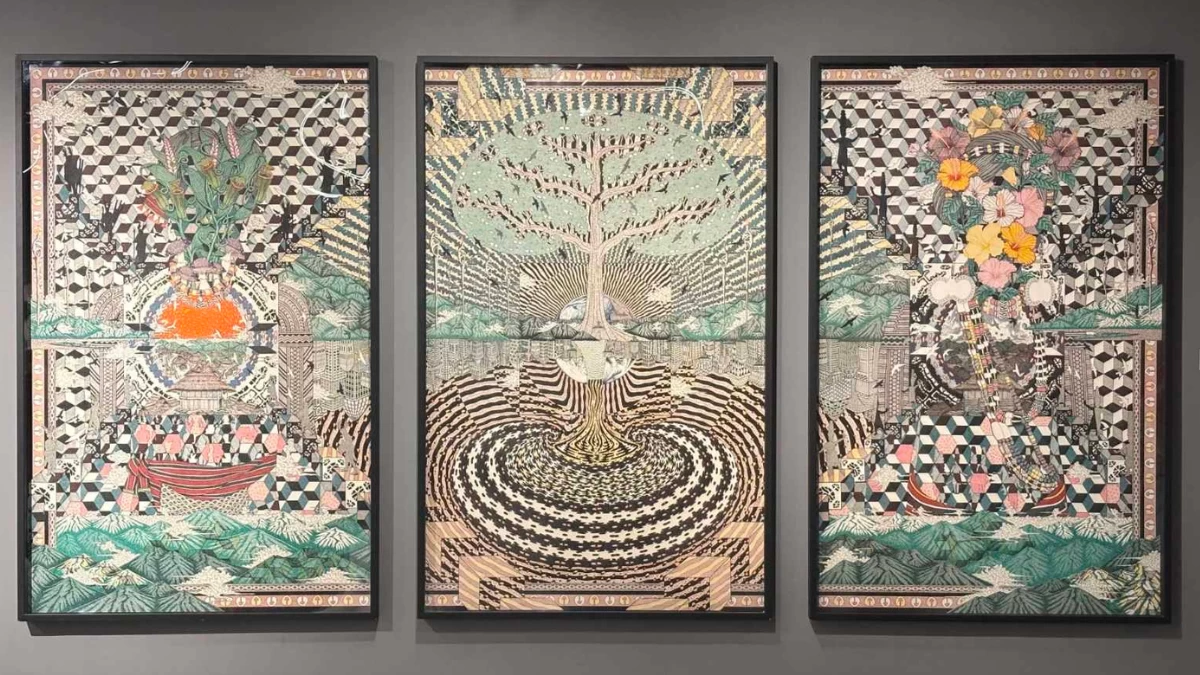
'REFLECTION TRIPTYCH,' John Sabado
A rare exhibition at the Metropolitan Museum of Manila briefly offered a breathtaking journey through 300 years of Philippine art. It began with a glance. Two young women seated at a piano look up, as though interrupted mid-melody with your arrival. Painted in 1869 by the eminent artist Antonio Malantic, “Portraits of Inocencia and Soledad Francia” welcomes visitors into a large gallery of the museum with grace, refinement, and quiet intimacy.
The sisters, members of the Francia family of Pagsanjan, Laguna, are the opening notes of a sweeping visual symphony: “TouchPoints (in Philippine Art History)”, an exhibition drawn from the remarkable Del Monte Art Collection. Mounted in gratitude to the patrons and donors who supported the Metropolitan Museum’s transition to its new home in Bonifacio Global City, the exhibition offers a rare and dazzling survey of Philippine artistic achievement from the 1700s to the present.
To call the exhibition extraordinary is no exaggeration.
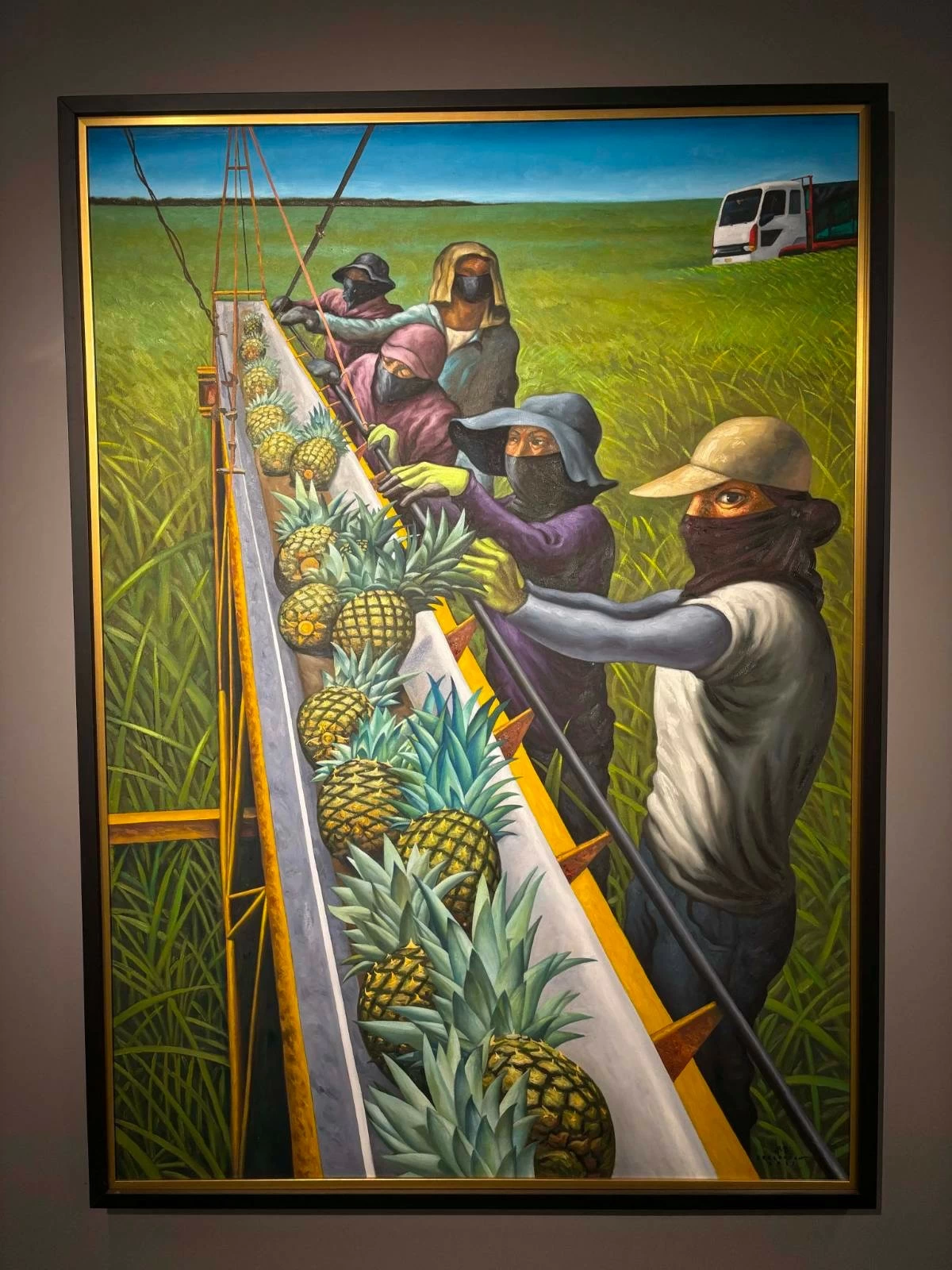
'PINEAPPLE HARVESTERS,' Elmer Borlongan
The earliest work on display may well be unique. A small genre by Nicolas de la Cruz Bagay—born around 1700 and best known as the engraver of the famed 1734 Murillo-Velarde Map of the Philippines—serves as a profound reminder of the depth of the country’s artistic heritage. At the opposite end of the timeline stand works by contemporary masters Alfonso Ossorio and Elmer Borlongan that seem to say, “that isn’t all” to overwhelmed visitors as they exit the gallery. Indeed, one emerges with one’s head held a little higher in renewed admiration for Filipino genius.
If the Francia sisters serve as the overture, the exhibition’s “first movement” unfolds with one of the very few extant series of Justiniano Asuncion’s “Tipos del Pais” watercolors. Probably repatriated from New England or Britain from the heirs of a Manila-based expat trader, these are vivid depictions of indios, peninsulares, and insulares—hawkers, students, soldiers, officials—that evoke the texture and rhythms of mid-19th-century Manila life.
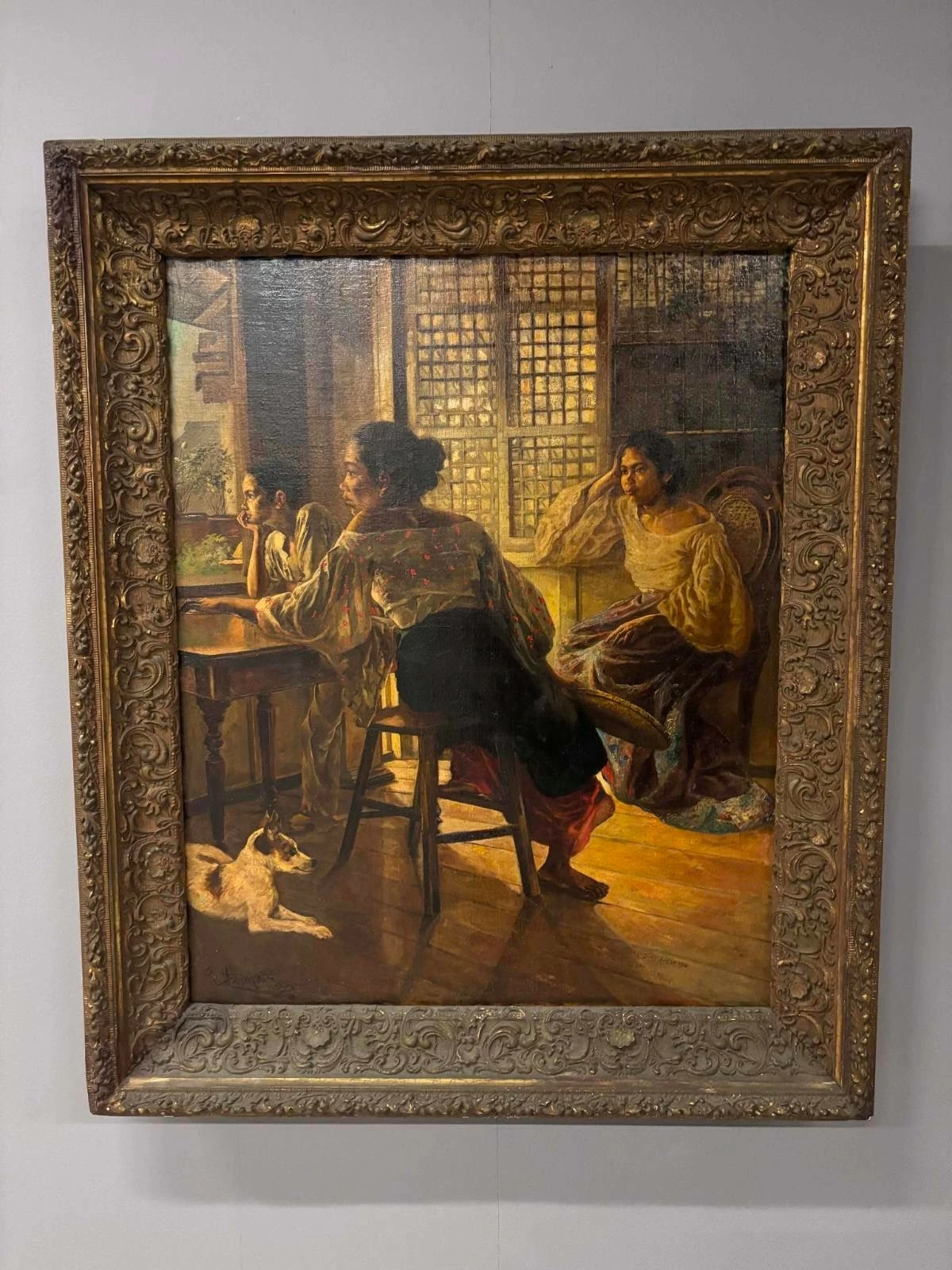
'LA ALLEGORIA DE FILIPINAS,' oil on canvas, 44 inches x 33 inches, Felix Martinez, 1895
Across from them hang rare Letras y Figuras by Jose Honorato Lozano, among them the celebrated “Balvino Mauricio,” where portraiture and local color intertwine in imaginatively rendered letters. Through this uniquely Filipino art form, one glimpses a grand mansion by the Estero de Binondo, its elegant sala and comedor impressive with large mirrors, carpets, and furnishings that proclaim the ultimate in wealth and taste.
Further on are exceptional treasures: a portrait of Maximino Paterno by Dr. Jose Rizal, no less; a luminous Pasig River scene by Adelaida Paterno, one of the few recognized women artists of the period; and paintings by lesser-known but highly accomplished late 19th-century masters.
Then comes the visual symphony’s commanding “second movement”—the age of the great Ilustrado painters who proved themselves equal, and indeed superior, to artists of the Hispanic motherland.
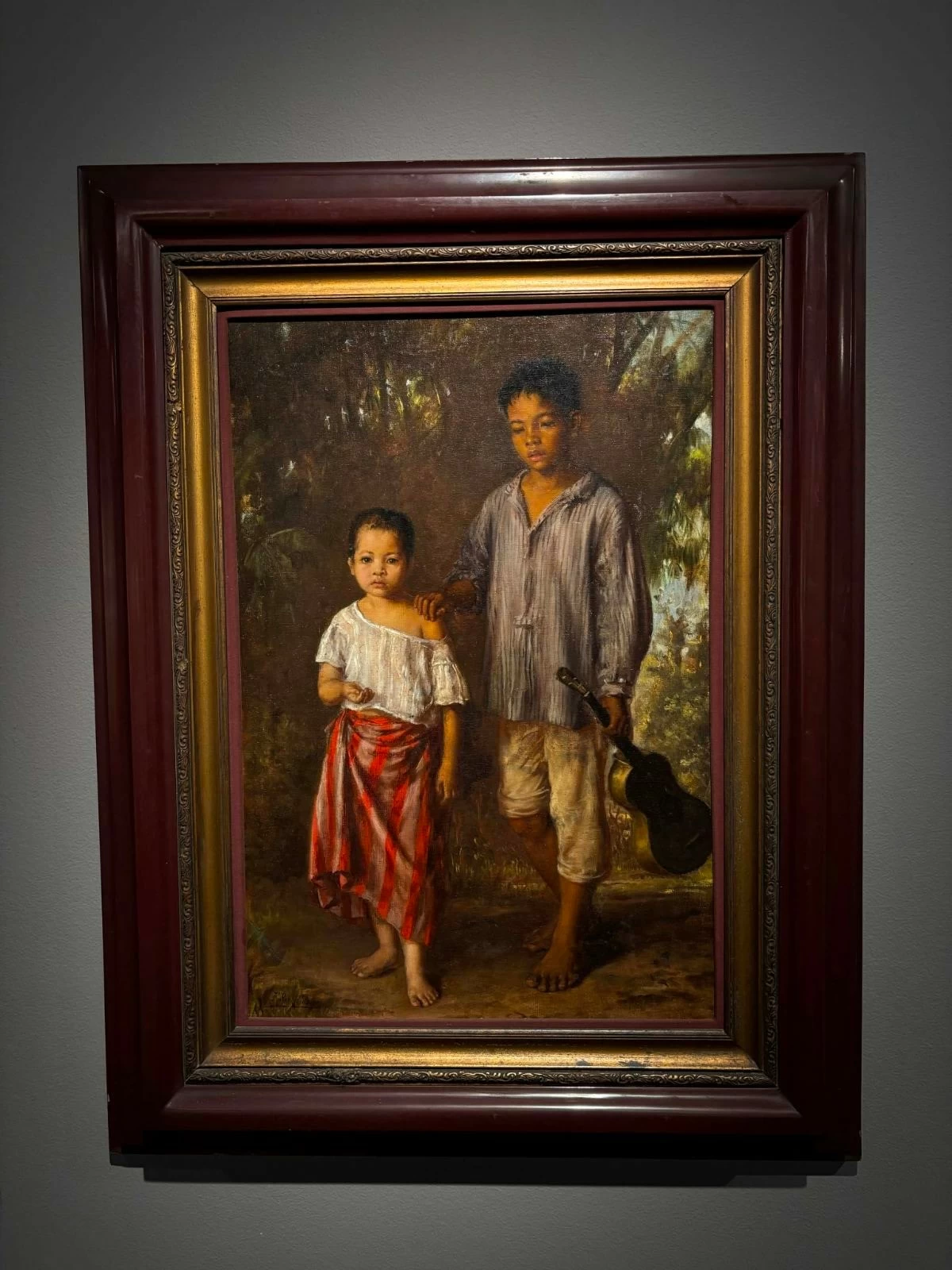
'LOS MENDIGOS,' Felix Resurrecion Hidalgo, 1873
Two Juan Luna paintings anchor this section: a Venetian scene and a dramatic imagined episode of Ancient Rome, rendered in the lush, romantic manner associated with Sir Lawrence Alma-Tadema. Alongside them are infrequently seen works by Felix Martinez and Felix Resurrección Hidalgo, including Hidalgo’s “Los Mendigos,” a tender portrayal of a young boy and his little sister hoping for help. This is the first time in living memory that the masterpiece has been seen by the public.
The exhibition also offers an intriguing shift in perspective through the works of Scottish artist Elizabeth Keith, who visited the Philippines during the 1920s. Her rare prints provide an illuminating contrast between how Filipino artists and foreign observers interpreted Philippine lands and peoples.
The “third movement” bursts forth with giants of 20th-century Philippine art—from the American colonial period into the early Republic. Fernando Amorsolo dominates with scenes of rice planting and harvests, sunlit countryside, life in the Cordilleras, and idyllic rural landscapes beneath mango trees. Among them is the unforgettable portrait of the beautiful Fernanda de Jesus, glowing with Amorsolo’s signature warmth and light.
Memories of distant battles between the modernists and traditional painters come alive with works of the pioneering modernists, Victorio Edades, Carlos “Botong” Francisco, and Galo Ocampo, and works of established painters, including Fabian de la Rosa, Jorge Pineda, and Toribio Herrera. The exhibition goes on to trace the evolution of Philippine modernism through the Thirteen Moderns, the Taza de Oro group, to the Saling-pusa artists, and their contemporaries and successors who extended the boundaries of artistic expression.
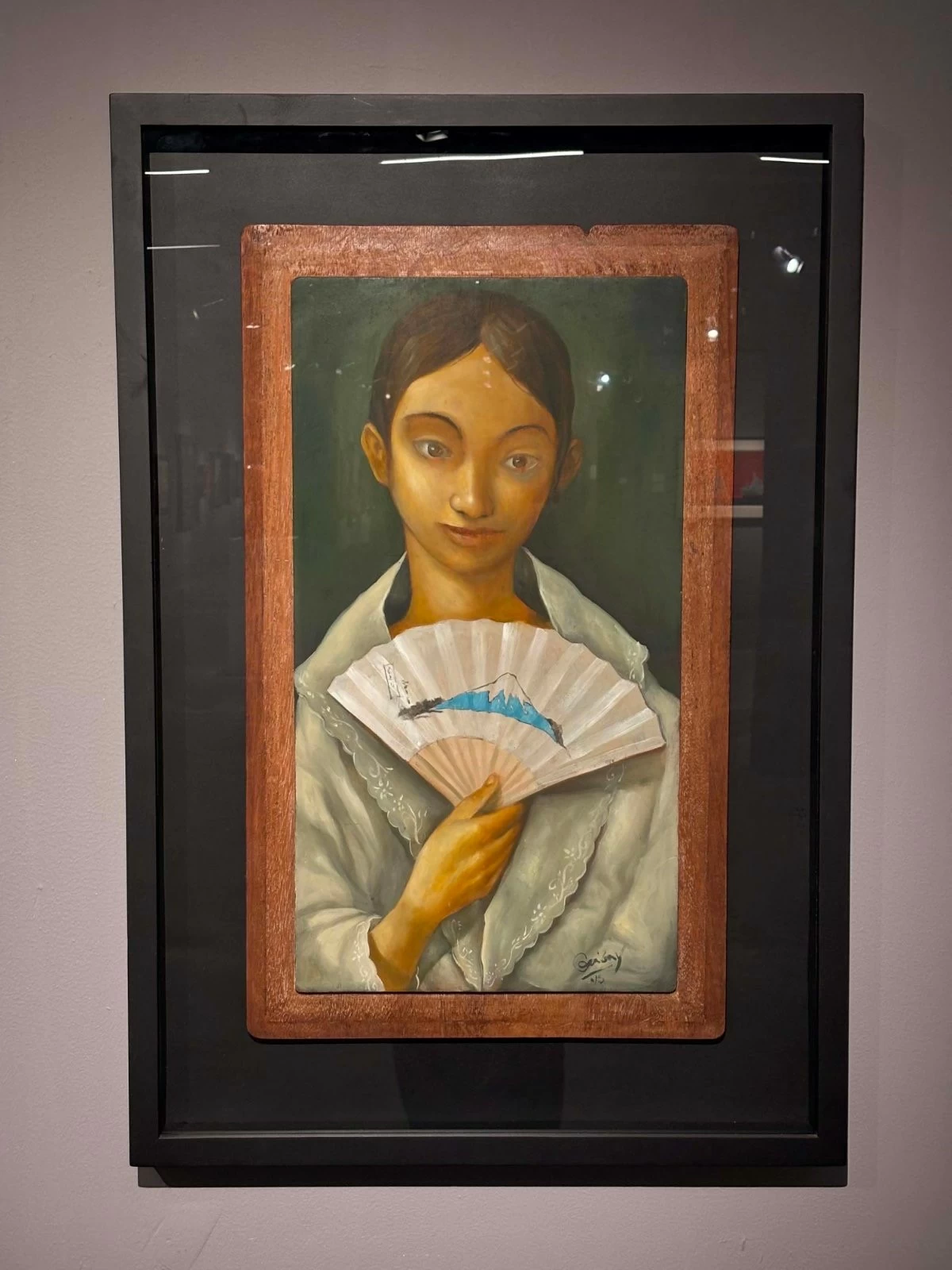
'GIRL WITH FAN,' Manny Garibay
Virtually every major Filipino artist of the 20th century was represented in the show. H.R. Ocampo, Vicente Manansala, Ang Kiukok, Cesar Legaspi, Romeo Tabuena, Juan Arellano, and Anita Magsaysay-Ho—whose exquisite egg tempera works were among the exhibition’s highlights—stand alongside later artists such as Pacita Abad and Brenda Fajardo. Many of the pieces shown are seldom-seen early works.
The exhibition’s “finale” belongs to contemporary voices still shaping Philippine art today. Elaine Navas, Raffy Napay, and Andres Barrioquinto accompany two monumental, wall-sized works that serve as the exhibition’s crescendo: “Epilogo” by the Sanggawa Artist Collective and “Eternal Damn Nation” by the Anting Anting Artist Collective. Bold, provocative, and expansive in scale, they underscore how Philippine art continues to evolve while remaining deeply rooted in history and identity.
Although Philippine art forms the heart of the collection, the Del Monte Collection also reaches beyond national borders, including works by important Southeast Asian artists such as Indonesia’s Affandi and Vietnam’s Le Phô. The collection reflects the vision of its founders, who understand that collecting art is not merely a private pursuit but a cultural responsibility.
Indeed, the founders of the Del Monte Collection carry on the illustrious tradition whereby visionary Filipinos care for heritage, support artistic creativity, and enrich the lives of ordinary people. They include Eugenio and Oscar Lopez; Carmen Guevara, Jaime Zobel de Ayala, Jorge Vargas, Alfonso Yuchengco, and Bro. Andrew Gonzalez, FSC. May there be more of them.
Exhibitions such as “TouchPoints” remind us not only of the richness of Philippine art but also of the sophistication, imagination, and humanity embedded within our national story.
Note: The Metropolitan Museum of Manila is located at the MK Tan Centre, 30th Street, Bonifacio Global City, Taguig City. Founded in the 1970s, the museum has become one of the country’s leading institutions for modern and contemporary art.
Comments are cordially invited, addressed to [email protected]