







Wisdom of veterans still needed in PNP
Published May 14, 2026 12:01 am
|
Updated May 13, 2026 03:34 pm


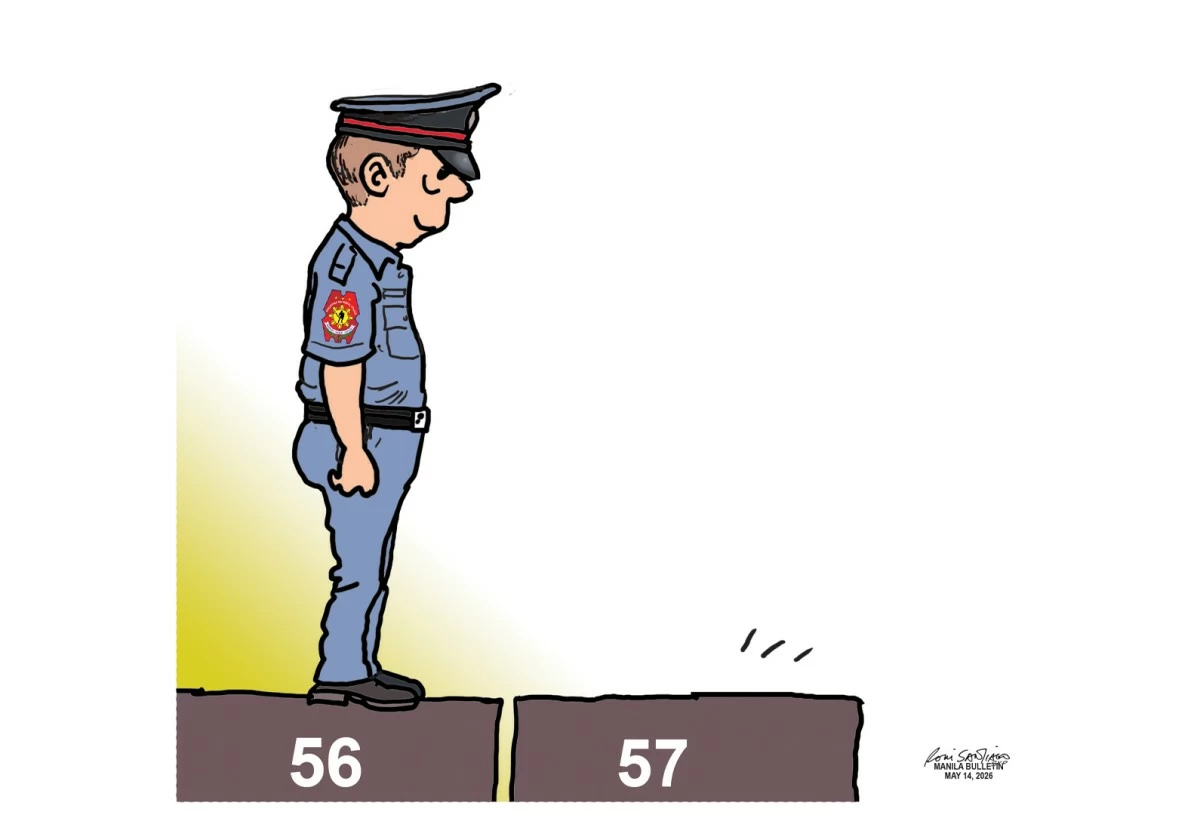
The proposal to extend the retirement age of personnel of the Philippine National Police from 56 to 57 years old is clearly a recognition of experience, institutional memory, and the continuing value of seasoned public servants whose knowledge cannot be replaced overnight. As the measure gains traction in the House of Representatives and awaits stronger momentum in the Senate, lawmakers must realize that this reform is long overdue.
The state spends millions of pesos to recruit, educate, and train police officers. Beyond formal schooling, years of field exposure sharpen their judgment in crime prevention, crisis response, intelligence gathering, and community relations. These are not skills learned in a classroom alone. They are forged through decades of service, sacrifice, and experience under pressure.
To compel highly trained police personnel to retire at 56, while many remain physically fit, mentally sharp, and professionally productive, deprives the nation of valuable expertise. One additional year of service may appear modest on paper, but within the police institution, that extra year can mean stronger mentoring for younger officers, improved leadership continuity, and deeper institutional stability.
Many countries have already recognized the importance of retaining experienced law enforcement personnel longer. In one of the bills previously filed in the House of Representatives, it cited a National Police Commission (Napolcom) comparative study showing countries like the United Kingdom, Vietnam, and Australia set the compulsory retirement age for their police personnel at around 60 years old. The study also found that the performance of officers in operational policing declines only after reaching that age. Even the Armed Forces of the Philippines already grants military personnel a longer period of service. There is no compelling reason why police officers should be denied a similar opportunity.
More importantly, extending the retirement age would serve as a powerful morale booster within the ranks. Police work is among the most difficult and dangerous professions in government. Officers spend decades confronting criminality, insurgency, terrorism, and social disorder, often at great personal cost to themselves and their families. Granting them an additional year of service signals institutional respect for their sacrifices and affirms that experience remains an asset rather than a liability.
The challenge now lies in political will.
The House of Representatives must prioritize the bill and fast-track deliberations to avoid another cycle of delays. Last May 6, the chamber already approved the bill on first reading. The leadership in the chamber should now ensure bipartisan support so the measure moves swiftly through second and third readings. The Senate, for its part, must immediately accelerate committee action and plenary sponsorship. With Senator Ronald dela Rosa, an active supporter of the measure, now back in harness after months of absence, he is expected to actively push for its approval like he did previously. Therefore, there is now a strong opportunity to build consensus and finally pass the measure.
The executive branch must likewise play a decisive role. The administration should certify the bill as urgent, recognizing its impact on national security and institutional development. Agencies such as the Napolcom, the Civil Service Commission, and the Department of Budget and Management should provide clear fiscal and operational support to ensure smooth implementation once enacted.
The nation asks much from its police officers. Extending their retirement age by one year is neither excessive nor unreasonable. It is an investment in stability, leadership, and public safety. If the country values wisdom, then it must not discard experience too soon.