







Rotating brownouts threaten Luzon, Visayas Thursday
Published May 14, 2026 11:25 am


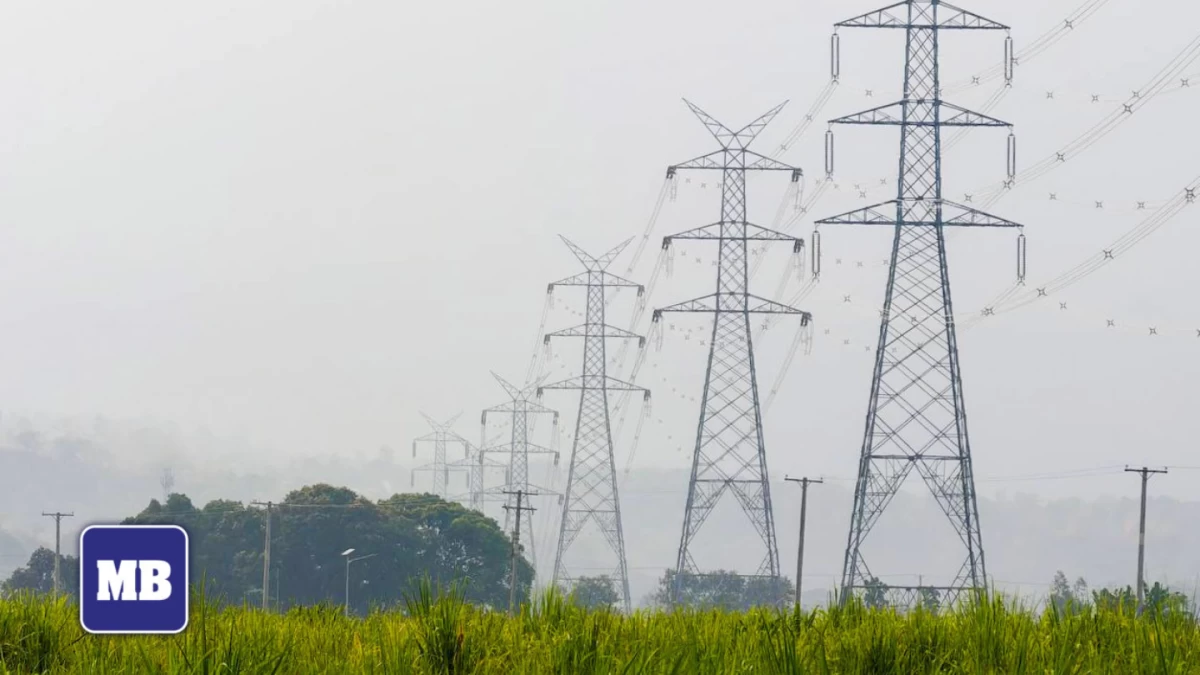
High-voltage transmission towers stand across the horizon in Pampanga on Wednesday, May 13. The National Grid Corporation of the Philippines placed the Visayas grid under yellow alert status this week following the unplanned shutdown of three power plants. The central islands remain vulnerable to supply fluctuations as the region relies heavily on power imports from Luzon and Mindanao to meet surging seasonal demand. (Photo by Santi San Juan | Manila Bulletin)
Country’s energy infrastructure is buckling under intensified seasonal demand, with grid operators warning of a second consecutive day of rotating power outages across the country’s two largest island groups.
The National Grid Corporation of the Philippines (NGCP) placed both the Luzon and Visayas grids under red alert status on Thursday, May 14, indicating that current power supply is insufficient to meet peak consumer demand and the grid’s necessary contingency requirements.
The red alert for the Luzon grid, which powers the nation’s economic hub and capital region, is scheduled to take effect from 4 p.m. to 10 p.m. Yellow alerts, indicating thin operating margins, will bracket the red alert period from 3 p.m. to 4 p.m. and again from 10 p.m. to 11 p.m.
The situation in the Visayas is equally precarious, with red alerts scheduled from 4 p.m. to 9 p.m., preceded and followed by yellow alerts. The recurrence of these alerts follows a turbulent Wednesday, during which a red alert triggered widespread manual load dropping—a technical term for rotating brownouts—across various provinces as the grid shed load to prevent a total system collapse.
Data from the NGCP revealed a widening supply gap. In Luzon, available capacity is currently recorded at 12,479 megawatts (MW), trailing a projected peak demand of 12,595 MW. The deficit is more pronounced in the Visayas, where available capacity of 2,413 MW is struggling to keep pace with a peak demand of 2,541 MW.
The Department of Energy (DOE) has responded by ordering power generation companies to resolve technical issues and optimize output to prevent “second wave” of fluctuations.
Energy Undersecretary Rowena Guevara noted that while the system is strained, several natural gas facilities have been dispatched to provide a critical buffer.
According to Guevara, the Sta. Rita and Ilijan units are maintaining high utilization rates, while units under Excellent Energy Resources, Inc. are showing stable loading. The San Gabriel and Avion plants are also contributing to the mix, albeit at varying output levels.
The ownership of these critical assets recently shifted. The 1,000-MW Sta. Rita, 450-MW San Gabriel, and 97-MW Avion plants are now managed by Prime CoreGen, an entity led by billionaire Enrique Razon Jr., following its acquisition of the facilities from First Gen Corp. in 2025.
To manage the shortfall, the DOE has issued an advisory directing energy efficiency professionals within government agencies to “strictly implement and intensify” conservation measures. This includes mandates for government offices and facilities to reduce consumption during peak hours.
The agency is also urging the private sector and industrial players to adopt similar efficiency protocols.