ADVERTISEMENT

Doctor who helped ship take care of passengers with hantavirus is isolated in Nebraska medical unit

Published May 14, 2026 06:47 am
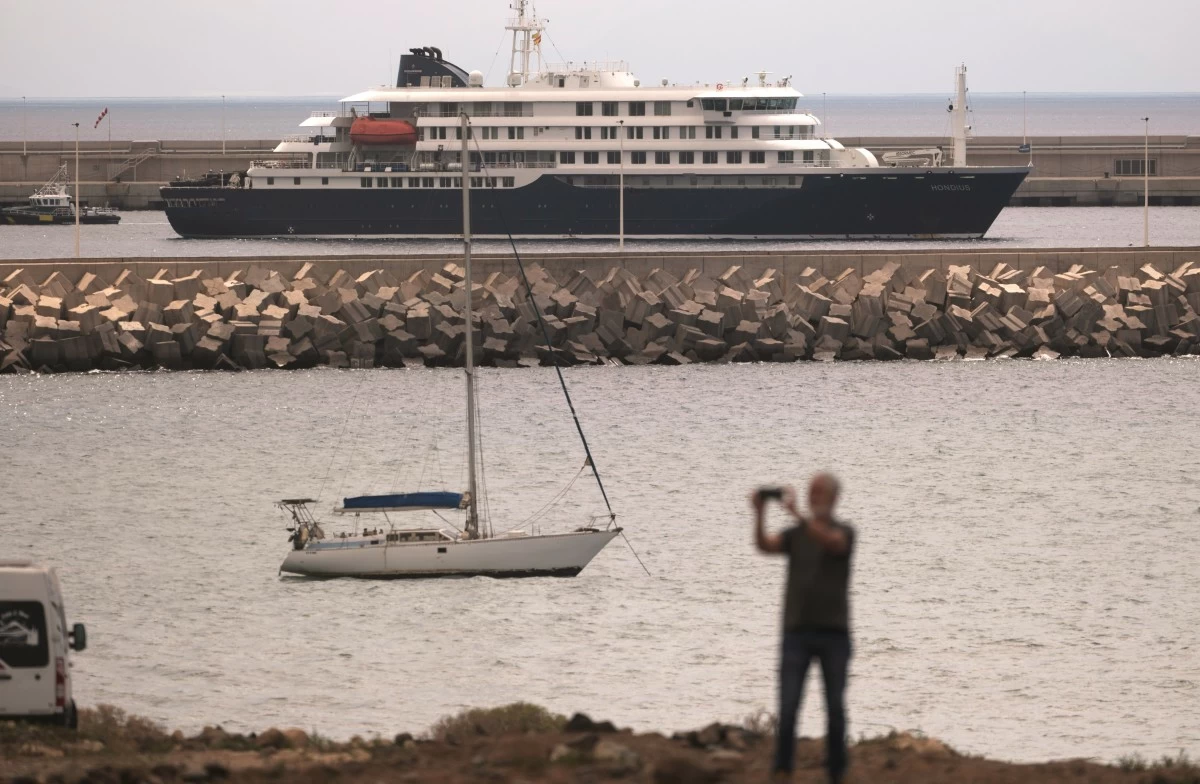
The hantavirus-stricken cruise ship MV Hondius is seen at anchor at the port of Granadilla in Tenerife, Canary Islands, Spain, Monday, May 11, 2026. (AP Photo/Arturo Rodriguez)

An oncologist traveling on the cruise ship at the center of a hantavirus outbreak says he's the lone American isolated at a special biocontainment unit in Nebraska.

Dr. Stephen Kornfeld of Bend, Oregon, says he volunteered to help care for fellow passengers who began getting sick aboard the MV Hondius in April. He was among more than 120 passengers and crew evacuated from the ship, and flown to different countries to enter quarantine.

While 15 other Americans are being monitored at the National Quarantine Unit at the University of Nebraska Medical Center in Omaha, Kornfeld was the only one taken to a separate unit after a nasal swab he took on the ship tested positive for the virus.

“I feel wonderful, 100%,” Kornfeld told CNN’s “Erin Burnett OutFront” on a video call from his hospital room Tuesday.

He said there was a period on the ship when he came down with flu-like symptoms including night sweats, chills and fatigue but he said he has no symptoms now.

The World Health Organization said Wednesday that a total of 11 hantavirus cases linked to the cruise have been reported worldwide, including three deaths. Eight cases have been confirmed by laboratory tests.

Kornfeld said a nasal swab he took on the ship was later tested twice in the Netherlands. One result came back negative, the other positive. He's now awaiting results from a new test taken when he returned to the U.S.

“The initial test that we received was from abroad and it was inconclusive in its results,” Dr. David Fitter of the U.S. Centers for Disease Control and Prevention told reporters Wednesday. “So we’re in the process of testing currently and we hope to have those results back in a day or so.”

In addition to the passengers taken to Nebraska, two other Americans are being monitored at the serious communicable disease unit at Emory University Hospital in Atlanta.

Health authorities say it is the first hantavirus outbreak on a cruise ship. While there is no cure or vaccine for hantavirus, the WHO says early detection and treatment improves survival rates.

Public health officials say the risk to the general public from the cruise ship outbreak is low. Hantavirus usually spreads from rodent droppings and is not easily transmitted between people, though the Andes virus detected on the Hondius may be able to spread between people in rare cases.

The WHO is recommending that passengers and crew from the cruise ship stay in quarantine, either at home or other facilities, for 42 days.

Kornfeld described his quarters in Nebraska as a hospital room with a comfortable bed.

“It’s a little weird being in here by myself,” he said. “But the nurses come in, the doctors come in. I’m on WhatsApp all the time. It’s really amazing how quickly time flies.”

Related Tags

WORLDNEWS
ADVERTISEMENT
.most-popular .layout-ratio{ padding-bottom: 79.13%; } @media (min-width: 768px) and (max-width: 1024px) { .widget-title { font-size: 15px !important; } }

{{ articles_filter_1561_widget.title }}

.most-popular .layout-ratio{ padding-bottom: 79.13%; } @media (min-width: 768px) and (max-width: 1024px) { .widget-title { font-size: 15px !important; } }

{{ articles_filter_1562_widget.title }}

.most-popular .layout-ratio{ padding-bottom: 79.13%; } @media (min-width: 768px) and (max-width: 1024px) { .widget-title { font-size: 15px !important; } }

{{ articles_filter_1563_widget.title }}

{{ articles_filter_1564_widget.title }}

.mb-article-details { position: relative; } .mb-article-details .article-body-preview, .mb-article-details .article-body-summary{ font-size: 17px; line-height: 30px; font-family: "Libre Caslon Text", serif; color: #000; } .mb-article-details .article-body-preview iframe , .mb-article-details .article-body-summary iframe{ width: 100%; margin: auto; } .read-more-background { background: linear-gradient(180deg, color(display-p3 1.000 1.000 1.000 / 0) 13.75%, color(display-p3 1.000 1.000 1.000 / 0.8) 30.79%, color(display-p3 1.000 1.000 1.000) 72.5%); position: absolute; height: 200px; width: 100%; bottom: 0; display: flex; justify-content: center; align-items: center; padding: 0; } .read-more-background a{ color: #000; } .read-more-btn { padding: 17px 45px; font-family: Inter; font-weight: 700; font-size: 18px; line-height: 16px; text-align: center; vertical-align: middle; border: 1px solid black; background-color: white; } .hidden { display: none; }
function initializeAllSwipers() { // Get all hidden inputs with cms_article_id document.querySelectorAll('[id^="cms_article_id_"]').forEach(function (input) { const cmsArticleId = input.value; const articleSelector = '#article-' + cmsArticleId + ' .body_images'; const swiperElement = document.querySelector(articleSelector); if (swiperElement && !swiperElement.classList.contains('swiper-initialized')) { new Swiper(articleSelector, { loop: true, pagination: false, navigation: { nextEl: '#article-' + cmsArticleId + ' .swiper-button-next', prevEl: '#article-' + cmsArticleId + ' .swiper-button-prev', }, }); } }); } setTimeout(initializeAllSwipers, 3000); const intersectionObserver = new IntersectionObserver( (entries) => { entries.forEach((entry) => { if (entry.isIntersecting) { const newUrl = entry.target.getAttribute("data-url"); if (newUrl) { history.pushState(null, null, newUrl); let article = entry.target; // Extract metadata const author = article.querySelector('.author-section').textContent.replace('By', '').trim(); const section = article.querySelector('.section-info ').textContent.replace(' ', ' '); const title = article.querySelector('.article-title h1').textContent; // Parse URL for Chartbeat path format const parsedUrl = new URL(newUrl, window.location.origin); const cleanUrl = parsedUrl.host + parsedUrl.pathname; // Update Chartbeat configuration if (typeof window._sf_async_config !== 'undefined') { window._sf_async_config.path = cleanUrl; window._sf_async_config.sections = section; window._sf_async_config.authors = author; } // Track virtual page view with Chartbeat if (typeof pSUPERFLY !== 'undefined' && typeof pSUPERFLY.virtualPage === 'function') { try { pSUPERFLY.virtualPage({ path: cleanUrl, title: title, sections: section, authors: author }); } catch (error) { console.error('ping error', error); } } // Optional: Update document title if (title && title !== document.title) { document.title = title; } } } }); }, { threshold: 0.1 } ); function showArticleBody(button) { const article = button.closest("article"); const summary = article.querySelector(".article-body-summary"); const body = article.querySelector(".article-body-preview"); const readMoreSection = article.querySelector(".read-more-background"); // Hide summary and read-more section summary.style.display = "none"; readMoreSection.style.display = "none"; // Show the full article body body.classList.remove("hidden"); } document.addEventListener("DOMContentLoaded", () => { let loadCount = 0; // Track how many times articles are loaded const offset = [1, 2, 3, 4, 5, 6, 7, 8, 9, 10]; // Offset values const currentUrl = window.location.pathname.substring(1); let isLoading = false; // Prevent multiple calls if (!currentUrl) { console.log("Current URL is invalid."); return; } const sentinel = document.getElementById("load-more-sentinel"); if (!sentinel) { console.log("Sentinel element not found."); return; } function isSentinelVisible() { const rect = sentinel.getBoundingClientRect(); return ( rect.top < window.innerHeight && rect.bottom >= 0 ); } function onScroll() { if (isLoading) return; if (isSentinelVisible()) { if (loadCount >= offset.length) { console.log("Maximum load attempts reached."); window.removeEventListener("scroll", onScroll); return; } isLoading = true; const currentOffset = offset[loadCount]; window.loadMoreItems().then(() => { let article = document.querySelector('#widget_1690 > div:nth-last-of-type(2) article'); intersectionObserver.observe(article) loadCount++; }).catch(error => { console.error("Error loading more items:", error); }).finally(() => { isLoading = false; }); } } window.addEventListener("scroll", onScroll); });

Sign up by email to receive news.