

ADVERTISEMENT

8 countries join Luzon Economic Corridor initiative as PH, Japan, US reaffirm commitment

Published May 14, 2026 02:24 pm

At A Glance

  • Eight more countries joined the Luzon Economic Corridor initiative as "valued partners"
  • Philippine, Japanese, and US officials met in Makati for the 4th Steering Committee meeting
  • The trilateral initiative aims to boost infrastructure, energy, and digital connectivity projects in Luzon
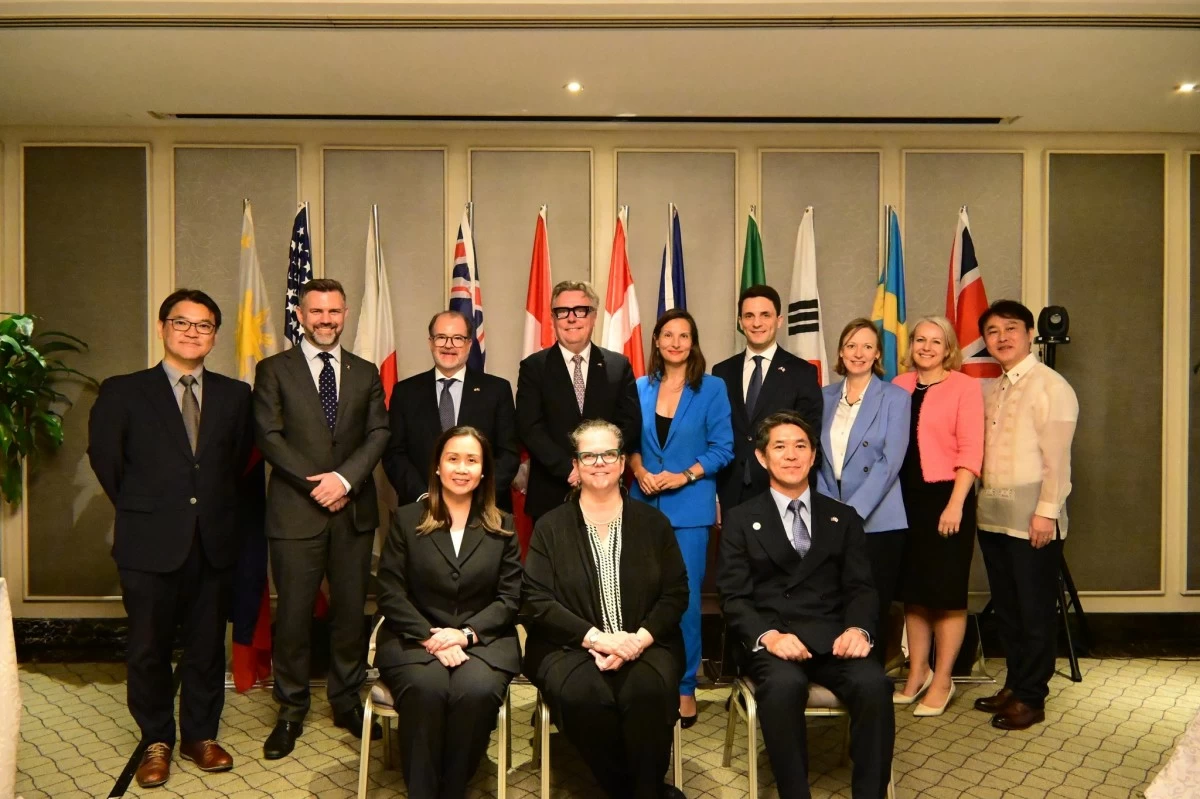
Finance Undersecretary Angela Ignacio, US Ambassador to the Philippines Heather Variava, and Japanese Ambassador to the Philippines Endo Kazuya are joined by representatives of the new partner countries of the Luzon Economic Corridor (LEC) during the fourth LEC meeting in Makati on May 12, 2026. (Japanese Embassy in the Philippines/Facebook)

Eight more countries have joined the Luzon Economic Corridor (LEC) initiative as “valued partners,” as the Philippines, Japan, and the United States reaffirmed their commitment to accelerate infrastructure development and economic connectivity in the country.

The development came during the 4th Luzon Economic Corridor Steering Committee meeting held in Makati on May 12.

In a Facebook post, the Japanese Embassy in the Philippines said that Australia, Canada, Denmark, France, Italy, South Korea, Sweden, and the United Kingdom were officially announced as valued partners of the initiative during the meeting.

In an X post, Japanese Ambassador to the Philippines Endo Kazuya welcomed the participation of the additional partner countries in the initiative.

“Together with the Philippines, the United States, and valued partners, we can create significant synergies to accelerate economic growth and enhance connectivity in the Philippines,” he said.

The three governments also reaffirmed their commitment to continue working together and collaborating with partner countries to further boost Philippine economic growth and regional connectivity.

Progress, business challenges discussed

According to the Japanese Embassy in the Philippines, officials discussed during the meeting the progress of ongoing projects as well as challenges faced by companies operating in the Philippine investment environment.

It noted that Japan has already made “concrete contributions” under the initiative in transportation infrastructure, energy, and digital technology.

The Japanese government said it continues to work closely with the Philippines and the United States to advance the vision of the corridor.

Ambassador Endo emphasized the importance of sustaining progress on ongoing projects and of improving the business environment to encourage more investment in the Philippines.

“We had productive discussions at the 4th Luzon Economic Corridor Steering Committee,” Endo said in a post on X.

“Japan remains committed to promoting quality infrastructure development, trusted connectivity, and sustainable economic growth in the Philippines,” he added.

The meeting was attended by delegations led by Japanese Ambassador Endo Kazuya, US Ambassador Heather Variava, and Philippine officials, including Department of Energy (DOE) Secretary Sharon Garin, Department of Information and Communications Technology (DICT) Secretary Henry Aguda, Department of Transportation (DOTr) Acting Secretary Giovanni Lopez, and Department of Finance (DOF) Undersecretary Angela Ignacio.

The Luzon Economic Corridor was launched in 2024 by the leaders of the Philippines, Japan, and the United States as the first Partnership for Global Infrastructure and Investment economic corridor in the Indo-Pacific region.

The initiative seeks to accelerate investments in high-impact infrastructure projects and improve connectivity across Luzon.

Related Tags

PH-Japan Luzon Economic Corridor Endo Kazuya Japanese Embassy PH-US-Japan
ADVERTISEMENT
.most-popular .layout-ratio{ padding-bottom: 79.13%; } @media (min-width: 768px) and (max-width: 1024px) { .widget-title { font-size: 15px !important; } }

{{ articles_filter_1561_widget.title }}

.most-popular .layout-ratio{ padding-bottom: 79.13%; } @media (min-width: 768px) and (max-width: 1024px) { .widget-title { font-size: 15px !important; } }

{{ articles_filter_1562_widget.title }}

.most-popular .layout-ratio{ padding-bottom: 79.13%; } @media (min-width: 768px) and (max-width: 1024px) { .widget-title { font-size: 15px !important; } }

{{ articles_filter_1563_widget.title }}

{{ articles_filter_1564_widget.title }}

.mb-article-details { position: relative; } .mb-article-details .article-body-preview, .mb-article-details .article-body-summary{ font-size: 17px; line-height: 30px; font-family: "Libre Caslon Text", serif; color: #000; } .mb-article-details .article-body-preview iframe , .mb-article-details .article-body-summary iframe{ width: 100%; margin: auto; } .read-more-background { background: linear-gradient(180deg, color(display-p3 1.000 1.000 1.000 / 0) 13.75%, color(display-p3 1.000 1.000 1.000 / 0.8) 30.79%, color(display-p3 1.000 1.000 1.000) 72.5%); position: absolute; height: 200px; width: 100%; bottom: 0; display: flex; justify-content: center; align-items: center; padding: 0; } .read-more-background a{ color: #000; } .read-more-btn { padding: 17px 45px; font-family: Inter; font-weight: 700; font-size: 18px; line-height: 16px; text-align: center; vertical-align: middle; border: 1px solid black; background-color: white; } .hidden { display: none; }
function initializeAllSwipers() { // Get all hidden inputs with cms_article_id document.querySelectorAll('[id^="cms_article_id_"]').forEach(function (input) { const cmsArticleId = input.value; const articleSelector = '#article-' + cmsArticleId + ' .body_images'; const swiperElement = document.querySelector(articleSelector); if (swiperElement && !swiperElement.classList.contains('swiper-initialized')) { new Swiper(articleSelector, { loop: true, pagination: false, navigation: { nextEl: '#article-' + cmsArticleId + ' .swiper-button-next', prevEl: '#article-' + cmsArticleId + ' .swiper-button-prev', }, }); } }); } setTimeout(initializeAllSwipers, 3000); const intersectionObserver = new IntersectionObserver( (entries) => { entries.forEach((entry) => { if (entry.isIntersecting) { const newUrl = entry.target.getAttribute("data-url"); if (newUrl) { history.pushState(null, null, newUrl); let article = entry.target; // Extract metadata const author = article.querySelector('.author-section').textContent.replace('By', '').trim(); const section = article.querySelector('.section-info ').textContent.replace(' ', ' '); const title = article.querySelector('.article-title h1').textContent; // Parse URL for Chartbeat path format const parsedUrl = new URL(newUrl, window.location.origin); const cleanUrl = parsedUrl.host + parsedUrl.pathname; // Update Chartbeat configuration if (typeof window._sf_async_config !== 'undefined') { window._sf_async_config.path = cleanUrl; window._sf_async_config.sections = section; window._sf_async_config.authors = author; } // Track virtual page view with Chartbeat if (typeof pSUPERFLY !== 'undefined' && typeof pSUPERFLY.virtualPage === 'function') { try { pSUPERFLY.virtualPage({ path: cleanUrl, title: title, sections: section, authors: author }); } catch (error) { console.error('ping error', error); } } // Optional: Update document title if (title && title !== document.title) { document.title = title; } } } }); }, { threshold: 0.1 } ); function showArticleBody(button) { const article = button.closest("article"); const summary = article.querySelector(".article-body-summary"); const body = article.querySelector(".article-body-preview"); const readMoreSection = article.querySelector(".read-more-background"); // Hide summary and read-more section summary.style.display = "none"; readMoreSection.style.display = "none"; // Show the full article body body.classList.remove("hidden"); } document.addEventListener("DOMContentLoaded", () => { let loadCount = 0; // Track how many times articles are loaded const offset = [1, 2, 3, 4, 5, 6, 7, 8, 9, 10]; // Offset values const currentUrl = window.location.pathname.substring(1); let isLoading = false; // Prevent multiple calls if (!currentUrl) { console.log("Current URL is invalid."); return; } const sentinel = document.getElementById("load-more-sentinel"); if (!sentinel) { console.log("Sentinel element not found."); return; } function isSentinelVisible() { const rect = sentinel.getBoundingClientRect(); return ( rect.top < window.innerHeight && rect.bottom >= 0 ); } function onScroll() { if (isLoading) return; if (isSentinelVisible()) { if (loadCount >= offset.length) { console.log("Maximum load attempts reached."); window.removeEventListener("scroll", onScroll); return; } isLoading = true; const currentOffset = offset[loadCount]; window.loadMoreItems().then(() => { let article = document.querySelector('#widget_1690 > div:nth-last-of-type(2) article'); intersectionObserver.observe(article) loadCount++; }).catch(error => { console.error("Error loading more items:", error); }).finally(() => { isLoading = false; }); } } window.addEventListener("scroll", onScroll); });

Sign up by email to receive news.