






Manila Bulletin
 Philippines
National
3 key bills get penultimate passage as House revs up legislative work
Philippines
National
3 key bills get penultimate passage as House revs up legislative work
Philippines
National
3 key bills get penultimate passage as House revs up legislative work
3 key bills get penultimate passage as House revs up legislative work
Published May 14, 2026 04:22 pm


At A Glance
- HB No. 8876 extends the validity of Professional Regulation Commission (PRC) IDs from three to five years, aiming to ease costs and burdens for professionals while reducing red tape and improving government service efficiency.
- HB No. 9157 establishes a Waste-to-Energy framework to convert waste into clean energy, strengthen flood control and waste management systems, and enforce strict environmental monitoring standards for LGUs and agencies.
- HB No. 8869 exempts indigent and Indigenous Peoples (IPs) from paying licensure and civil service examination fees, expanding access to professional opportunities and government employment for disadvantaged Filipinos.
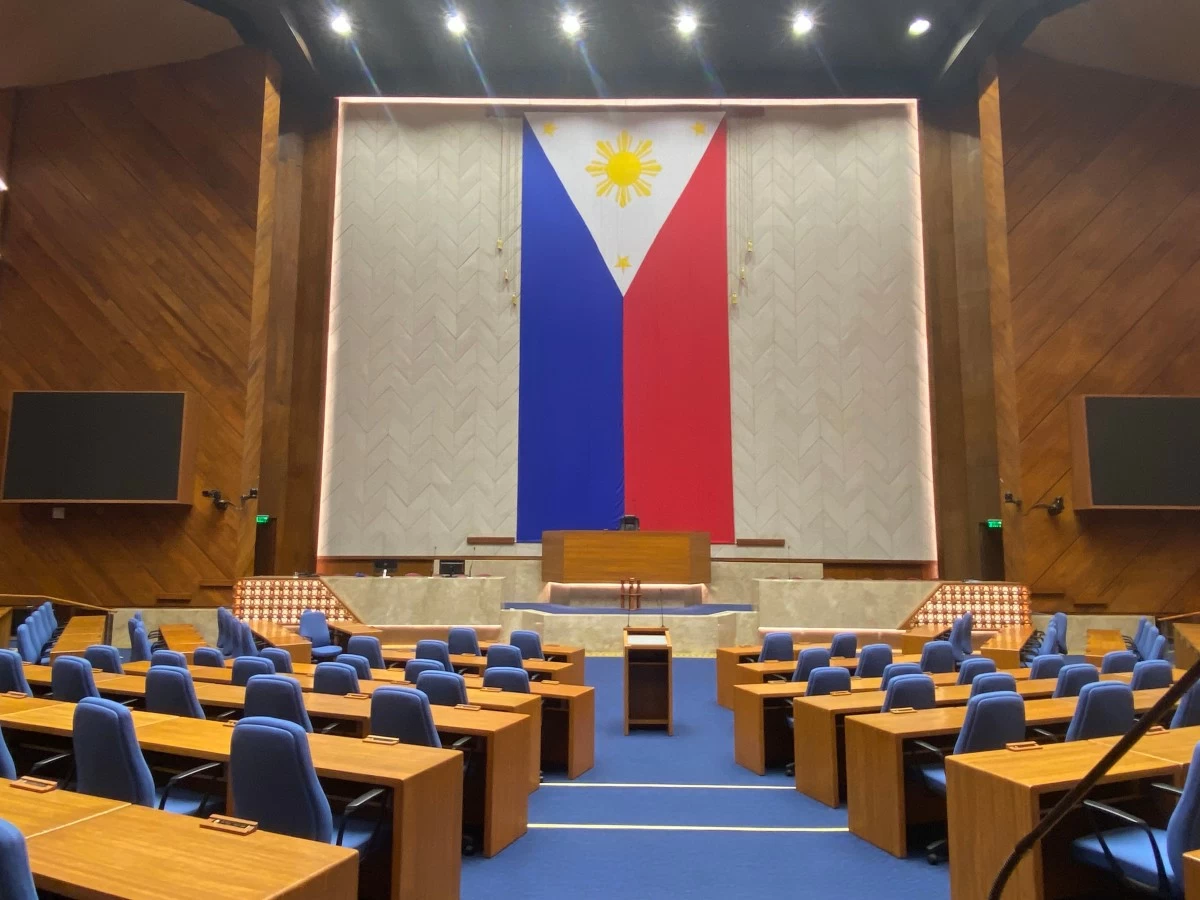
The House plenary (Contributed photo)
The House of Representatives under its Speaker, Isabela 6th district Rep. Faustino "Bojie" Dy III approved on second reading three key measures during plenary session Wednesday, May 13 as the chamber accelerates work during the tail end of the first regular session.
Given penultimate passage via simple voice vote were House Bill (HB) No. 8876, which seeks to lengthen the validity period of Professional Identification Cards (PIC) currently renewed every three years, usually during the birth month of the professional; HB No. 9157, or the proposed Waste-to-Energy (WTE) Act; and HB No. 8869, or the proposed Free Professional Examinations Act.
Wednesday's plenary action also sets up the three bills' possible third and final reading approval during session days next week.
The first regular session of the 20th Congress will adjourn sine die on June 6, meaning there's plenty of time advance the three bills and other pending measures.
A boon to professionals
Leyte 1st district Rep. Martin Romualdez, an author of HB No. 8876, said: “Sa panahon ngayon, mahalaga na mapagaan natin ang gastos at abala ng ating mga propesyonal. Sa pagpapalawig ng validity ng PRC (Professional Regulation Commission) IDs mula tatlo tungo sa limang taon, mas mabibigyan natin sila ng panahon para mag-focus sa kanilang trabaho, kabuhayan, at serbisyo sa bayan kaysa sa paulit-ulit na proseso ng renewal,”
(At present, it is important to ease the expenses and burdens of our professionals. By extending the validity of PRC IDs from three to five years, we give them more time to focus on their work, livelihood, and service to the nation instead of repeatedly going through the renewal process.
“Ang mga guro, nurse, engineer, architect, accountant, at iba pang professionals ay kabilang sa haligi ng ating ekonomiya. Nararapat lamang na gawing mas simple, mas mabilis, at mas makatao ang proseso para sa kanila. Ang panukalang ito ay konkretong hakbang para bawasan ang red tape at gawing mas maginhawa ang serbisyo ng gobyerno,” Romualdez, a lawyer from the University of the Philippines (UP), added.
(Teachers, nurses, engineers, architects, accountants, and other professionals are pillars of our economy. It is only right to make the process simpler, faster, and more humane for them. This proposal is a concrete step to reduce red tape and make government service more convenient.)
The bill provides that all PICs issued by the PRC shall be valid for five years, subject to compliance with existing legal and procedural requirements.
House Majority Leader Ilocos Norte 1st district Rep. Sandro Marcos said the measure would help professionals save time, money and effort spent on repeated renewals and long appointment queues.
“Professionals should not have to spend unnecessary time and money on frequent renewals when we can provide a more efficient system without compromising professional standards and regulation,” Marcos said.
He added that the bill would also help decongest the PRC appointment system by reducing annual renewal transactions.
“This is a practical and people-centered reform that will make government services faster, more efficient, and more convenient for millions of Filipino professionals,” noted the presidential son.
Pro-health, pro-environment bill
A priority measure under the Legislative-Executive Development Advisory Council (LEDAC), HB No. 9157 seeks to strengthen the country’s renewable energy portfolio while addressing long-standing waste management and flood control problems through modern and environmentally compliant technologies.
Marcos said the legislative proposal would help turn one of the country’s biggest environmental challenges into a long-term source of clean energy and economic opportunity.
“For decades, waste has been treated as a growing problem. This measure changes that mindset. We are now treating waste as a resource that can help power communities, reduce pollution, and improve public health,” he said.
It aims to reduce the health and environmental risks posed by open dumpsites, clogged waterways, and untreated residual waste while promoting cleaner and more sustainable communities.
The measure covers local government units (LGUs), national government agencies, government-owned and controlled corporations, waste management facilities, and public and private health facilities utilizing WTE technologies as part of their ecological solid waste management strategies.
Under the bill, thermal combustion and other waste treatment technologies must comply with strict environmental and emissions standards and install Continuous Emission Monitoring Systems approved by the Department of Environment and Natural Resources (DENR) to ensure transparency and public accountability.
The bill also mandates proper waste segregation and resource recovery before waste materials may be used as WTE feedstock and requires LGUs and concerned agencies to integrate effective waste management systems into flood control and drainage programs.
“This is not simply an energy bill. It is also an environmental protection and public health measure. We made sure that strict monitoring, emissions controls, and accountability mechanisms are built into the law,” reckoned the majority leader.
A path out of poverty
Meanwhile, HB No. 8869 seeks to remove financial barriers that prevent many poor Filipinos from becoming licensed professionals or qualifying for government employment.
The bill forms part of the 300-plus strong House's broader push to expand economic opportunities and make government services more accessible, especially to disadvantaged sectors.
Marcos said the proposal would help poor but deserving Filipinos pursue careers that could lift their families out of poverty. “For many poor Filipinos, the problem is not lack of talent or determination. The problem is that even examination fees can already be too expensive."
“This bill gives them a genuine opportunity to become licensed professionals, enter government service, and build better futures for themselves and their families,” he added.
Under HB No. 8869, qualified indigents and IPs will be exempted from paying written examination fees for licensure examinations administered by the PRC and eligibility examinations conducted by the Civil Service Commission (CSC).
Applicants seeking to avail themselves of the benefit must present either a certificate of indigency issued by their local government or certification from the National Commission on Indigenous Peoples (NCIP).
The measure may be availed of once a year by qualified beneficiaries.
Marcos said the bill recognizes the importance of making professional opportunities accessible even to Filipinos from remote and underserved communities.
“Education and professional advancement should not be reserved only for those who can afford expensive fees and repeated expenses,” the House leader said.
“When we help more Filipinos become professionals and civil servants, we also strengthen our workforce, improve public service, and create more opportunities for inclusive national development,” he further said.