

ADVERTISEMENT

Trump set to meet with Xi in Beijing as war and inflation weigh on his presidency

Published May 13, 2026 08:34 am
BEIJING (AP) — President Donald Trump is set to arrive in Beijing on Wednesday for a state visit with Chinese leader Xi Jinping at a restless moment for a world worried about war, trade and artificial intelligence.
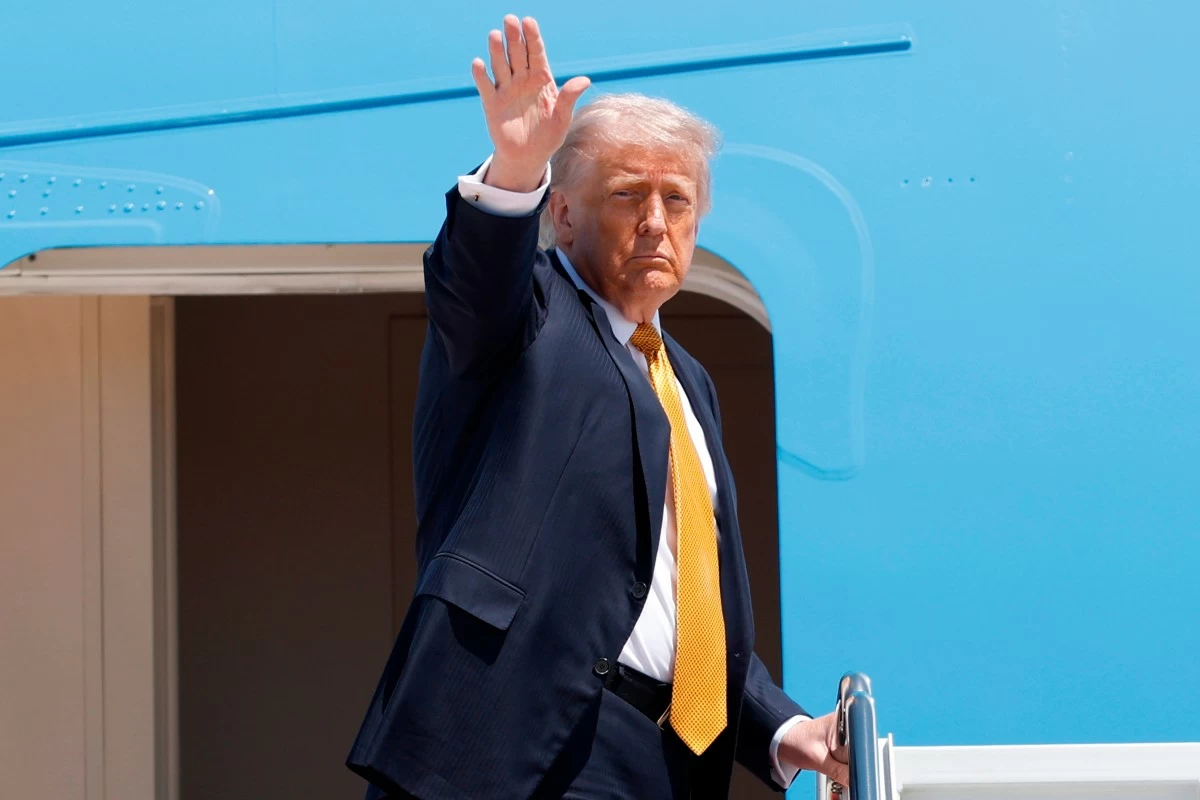
President Donald Trump waves from the stairs of Air Force One as he boards upon his arrival at Joint Base Andrews, Md., Tuesday, May 12, 2026, for a trip to China to meet President Xi Jinping. (AP Photo/Luis M. Alvarez)
"We're the two superpowers," Trump told reporters as he departed the White House on Tuesday. "We're the strongest nation on Earth in terms of military. China's considered second."
While Trump likes to project a sense of strength, the state visit occurs at a delicate moment for his presidency as his popularity at home has been weighed down by the U.S. and Israel's war with Iran and rising inflation as a consequence of that conflict. The president is seeking a win by signing deals with China to buy more American food and aircraft, saying he'll be talking with Xi about trade "more than anything else."
The Trump administration hopes to begin the process of establishing a "Board of Trade" with China to address differences between the countries. The board could help prevent the trade war ignited last year after Trump's tariff hikes, an action China countered through its control of rare earth minerals. That led to a one-year truce last October.
But Trump comes to Beijing at a time when Iran continues to dominate his domestic agenda. The war has led to the effective closure of the Strait of Hormuz, stranding oil and natural gas tankers and causing energy prices to spike to levels that could sabotage global economic growth. The U.S. president declared that Xi didn't need to assist in resolving the conflict, even though Iran's Foreign Minister Abbas Araghchi was in Beijing last week.
"We have a lot of things to discuss. I wouldn't say Iran is one of them, to be honest with you, because we have Iran very much under control," Trump told reporters Tuesday.
The status of Taiwan also appears to be a major topic as China is displeased with U.S. plans to sell weapons to the self-governing island that the Chinese government claims as part of its own territory.
Trump told reporters Monday that he would be discussing with Xi an authorized $11 billion weapons package for Taiwan. At the same time, Taiwan — as the world's leading chipmaker — has become essential for the development of AI, with the U.S. importing more goods so far this year from Taiwan than China. Trump has sought to use Biden-era programs and his own deals to bring more chipmaking to America.
But Trump was already portraying the trip as a success before he left White House grounds. He openly mused about Xi's planned reciprocal visit to the U.S., lamenting that the ballroom under construction would not be completed in time.
"We're going to have a great relationship for many, many decades to come," Trump said of the U.S. and China. "As you know, President Xi will be coming here toward the end of the year. So that would be exciting. I only wish we had the ballroom finished."
Trump said he had spoken with the Chinese leader and the meeting would be "positive" as he embarked with a coterie of aides, CEOs and family members. He will arrive in China on Wednesday evening and, after a ceremonial greeting, go to his hotel. He will attend a state banquet Thursday and have a working lunch with Xi on Friday before returning to the U.S.
Despite Trump's outward confidence, China appears to be entering the meeting from "a much stronger place," said Scott Kennedy, a senior adviser on Chinese business and economics at the Center for Strategic and International Studies, a Washington think tank.
China would like to reduce tech restrictions on accessing computer chips and find ways to reduce tariffs, among other goals.
"But even if they don't get much on any of those things, as long as there's not a blow-up in the meeting and President Trump doesn't go away and look to re-escalate, China basically comes out stronger," Kennedy said.

Related Tags

world news US China Donald Trump Xi Jinping summit
ADVERTISEMENT
.most-popular .layout-ratio{ padding-bottom: 79.13%; } @media (min-width: 768px) and (max-width: 1024px) { .widget-title { font-size: 15px !important; } }

{{ articles_filter_1561_widget.title }}

.most-popular .layout-ratio{ padding-bottom: 79.13%; } @media (min-width: 768px) and (max-width: 1024px) { .widget-title { font-size: 15px !important; } }

{{ articles_filter_1562_widget.title }}

.most-popular .layout-ratio{ padding-bottom: 79.13%; } @media (min-width: 768px) and (max-width: 1024px) { .widget-title { font-size: 15px !important; } }

{{ articles_filter_1563_widget.title }}

{{ articles_filter_1564_widget.title }}

.mb-article-details { position: relative; } .mb-article-details .article-body-preview, .mb-article-details .article-body-summary{ font-size: 17px; line-height: 30px; font-family: "Libre Caslon Text", serif; color: #000; } .mb-article-details .article-body-preview iframe , .mb-article-details .article-body-summary iframe{ width: 100%; margin: auto; } .read-more-background { background: linear-gradient(180deg, color(display-p3 1.000 1.000 1.000 / 0) 13.75%, color(display-p3 1.000 1.000 1.000 / 0.8) 30.79%, color(display-p3 1.000 1.000 1.000) 72.5%); position: absolute; height: 200px; width: 100%; bottom: 0; display: flex; justify-content: center; align-items: center; padding: 0; } .read-more-background a{ color: #000; } .read-more-btn { padding: 17px 45px; font-family: Inter; font-weight: 700; font-size: 18px; line-height: 16px; text-align: center; vertical-align: middle; border: 1px solid black; background-color: white; } .hidden { display: none; }
function initializeAllSwipers() { // Get all hidden inputs with cms_article_id document.querySelectorAll('[id^="cms_article_id_"]').forEach(function (input) { const cmsArticleId = input.value; const articleSelector = '#article-' + cmsArticleId + ' .body_images'; const swiperElement = document.querySelector(articleSelector); if (swiperElement && !swiperElement.classList.contains('swiper-initialized')) { new Swiper(articleSelector, { loop: true, pagination: false, navigation: { nextEl: '#article-' + cmsArticleId + ' .swiper-button-next', prevEl: '#article-' + cmsArticleId + ' .swiper-button-prev', }, }); } }); } setTimeout(initializeAllSwipers, 3000); const intersectionObserver = new IntersectionObserver( (entries) => { entries.forEach((entry) => { if (entry.isIntersecting) { const newUrl = entry.target.getAttribute("data-url"); if (newUrl) { history.pushState(null, null, newUrl); let article = entry.target; // Extract metadata const author = article.querySelector('.author-section').textContent.replace('By', '').trim(); const section = article.querySelector('.section-info ').textContent.replace(' ', ' '); const title = article.querySelector('.article-title h1').textContent; // Parse URL for Chartbeat path format const parsedUrl = new URL(newUrl, window.location.origin); const cleanUrl = parsedUrl.host + parsedUrl.pathname; // Update Chartbeat configuration if (typeof window._sf_async_config !== 'undefined') { window._sf_async_config.path = cleanUrl; window._sf_async_config.sections = section; window._sf_async_config.authors = author; } // Track virtual page view with Chartbeat if (typeof pSUPERFLY !== 'undefined' && typeof pSUPERFLY.virtualPage === 'function') { try { pSUPERFLY.virtualPage({ path: cleanUrl, title: title, sections: section, authors: author }); } catch (error) { console.error('ping error', error); } } // Optional: Update document title if (title && title !== document.title) { document.title = title; } } } }); }, { threshold: 0.1 } ); function showArticleBody(button) { const article = button.closest("article"); const summary = article.querySelector(".article-body-summary"); const body = article.querySelector(".article-body-preview"); const readMoreSection = article.querySelector(".read-more-background"); // Hide summary and read-more section summary.style.display = "none"; readMoreSection.style.display = "none"; // Show the full article body body.classList.remove("hidden"); } document.addEventListener("DOMContentLoaded", () => { let loadCount = 0; // Track how many times articles are loaded const offset = [1, 2, 3, 4, 5, 6, 7, 8, 9, 10]; // Offset values const currentUrl = window.location.pathname.substring(1); let isLoading = false; // Prevent multiple calls if (!currentUrl) { console.log("Current URL is invalid."); return; } const sentinel = document.getElementById("load-more-sentinel"); if (!sentinel) { console.log("Sentinel element not found."); return; } function isSentinelVisible() { const rect = sentinel.getBoundingClientRect(); return ( rect.top < window.innerHeight && rect.bottom >= 0 ); } function onScroll() { if (isLoading) return; if (isSentinelVisible()) { if (loadCount >= offset.length) { console.log("Maximum load attempts reached."); window.removeEventListener("scroll", onScroll); return; } isLoading = true; const currentOffset = offset[loadCount]; window.loadMoreItems().then(() => { let article = document.querySelector('#widget_1690 > div:nth-last-of-type(2) article'); intersectionObserver.observe(article) loadCount++; }).catch(error => { console.error("Error loading more items:", error); }).finally(() => { isLoading = false; }); } } window.addEventListener("scroll", onScroll); });

Sign up by email to receive news.