






Manila Bulletin
 Philippines
National
Sandro Marcos says help is on the way as KALINGA Bill moves forward in House
Philippines
National
Sandro Marcos says help is on the way as KALINGA Bill moves forward in House
Philippines
National
Sandro Marcos says help is on the way as KALINGA Bill moves forward in House
Sandro Marcos says help is on the way as KALINGA Bill moves forward in House
Published May 13, 2026 08:49 am


At A Glance
- The Ad Hoc Committee on Legislative Energy Action and Development (LEAD) endorses the consolidated KALINGA Bill authored by House Speaker Bojie Dy and Rep. Sandro Marcos, aiming to provide comprehensive crisis response.
- The proposed law institutionalizes mechanisms to address oil price hikes and similar emergencies, offering targeted relief for vulnerable sectors such as farmers, fisherfolk, transport drivers, and small business owners.
- The measure incorporates inputs from government, business groups, and private organizations, symbolizing collaboration to stabilize fuel, essential goods, and supply chains while promoting long-term resilience through conservation and renewable energy adoption.
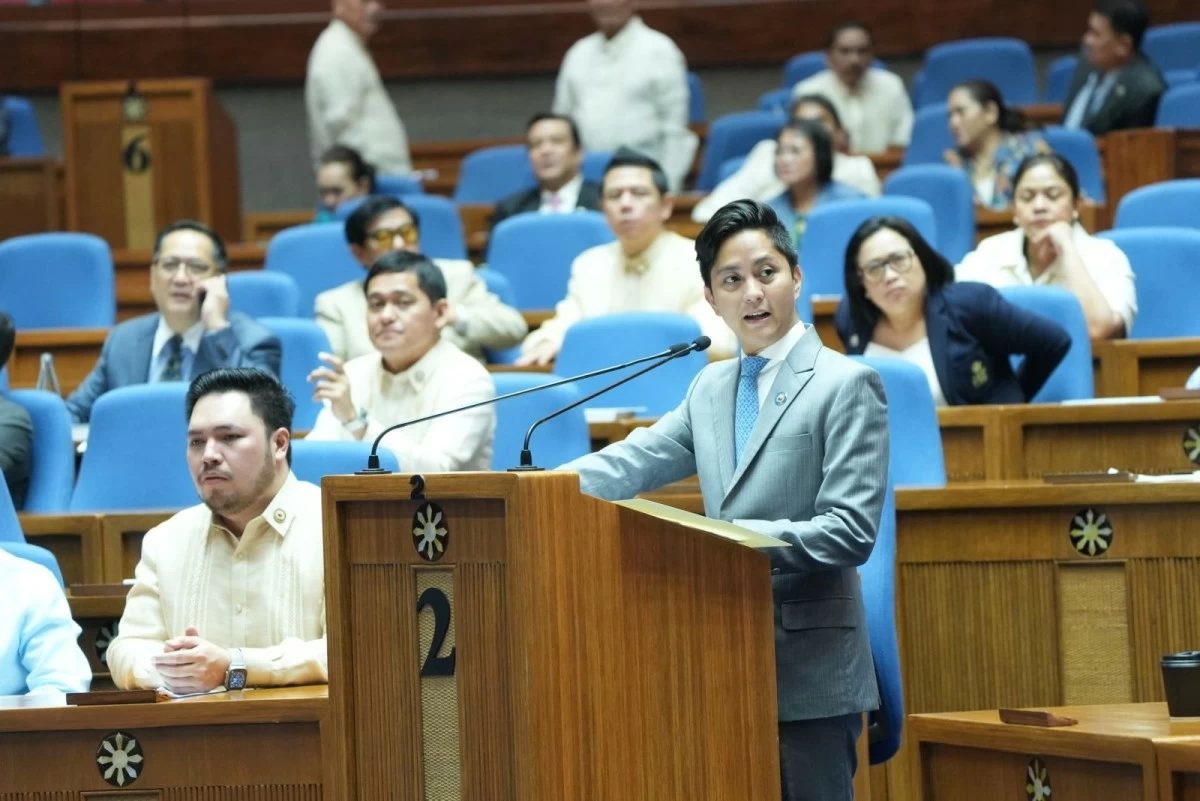
Ilocos Norte 1st district Rep. Sandro Marcos (Facebook)
Help is on the way.
House Majority Leader Ilocos Norte 1st district Rep. Sandro Marcos gave this assurance to Filipinos after the Ad Hoc Committee on Legislative Energy Action and Development (LEAD) approve on Tuesday, May 12 the consolidated KALINGA Bill.
House Speaker Isabela 6th district Rep. Faustino "Bojie" Dy III and Marcos are the authors of the main KALINGA measure, which means Komprehensibong Alalay sa Livelihood, Inflation, Negosyo, at Goods Assistance.
“Makakaasa ng tulong ang ating mga kababayan (Our countrymen can rest assured that help is on the way). The proposed KALINGA Act is about helping and protecting Filipinos, the most vulnerable of them - from the poorest of the poor, to transport sector drivers, farmers and fisherfolk, and small business owners,” Marcos said.
The presidential son said the proposed law would institutionalize a mechanism or a framework for comprehensively responding to an oil crisis and similar emergencies.
“Hindi na maghahanap ang gobyerno ng batas o mekanismo para tumugon sa isang krisis na nagpapahirap sa ating mga kababayan, gaya ng pagtaas ng presyo na langis. Ito na - ang KALINGA Act,” he said.
(The government will no longer search for laws or mechanisms to respond to a crisis that burdens our people, such as the rising price of oil. This is it — the KALINGA Act.)
The majority leader expressed the hope that the House would soon pass the measure in plenary. “We are hoping as well that the Senate would act on it as expeditiously as possible."
He said the nation needs the proposed crisis response framework even after the end of the US-Iran war.
“We envision it as an institutional or permanent response mechanism to any crisis or emergency,” noted Marcos.
It was the LEAD ad hoc panel chaired by Marikina City 2nd district Rep. Miro Quimbo, who also heads the Committee on Ways and Means, that endorsed the Dy-Marcos bill.
Marcos thanked the Quimbo panel for endorsing the bill after two months of hearings and deliberations. He said the final measure contains inputs from representatives of the executive branch, business groups and other private sector organizations.
“It symbolizes public-private sector cooperation in formulating responses to the raging oil crisis and similar situations that may arise in the future,” he said.
The proposed KALINGA Program, originally contained in House Bill (HB) No. 8834 authored by Dy and Marcos, consisted of seven component responses: fuel price stabilization; energy supply security and inventory management; targeted assistance; essential goods and logistics stabilization; micro, small, and medium enterprises (MSME) energy relief and business continuity; energy conservation and demand reduction; and flexible fiscal and regulatory measures.
“It is now timely that we present to the Filipino people the direction of our response. The KALINGA Bill serves as the strong foundation for consolidating the outcome of the deliberations into a substitute bill,” Quimbo told the ad hoc panel Tuesday.
“The proposals before us are meant to provide more than immediate relief, but to begin the long-term systemic changes to reduce our fuel dependency,” noted the economist-solon.
“This is the spirit of the KALINGA Program: relief now, resilience for the future. The framework seeks to address both sides of the crisis: direct and targeted relief for vulnerable households and sectors; and stabilization measures to keep food, transport, energy, jobs, essential services, and supply chains moving,” Quimbo said.
He said the Dy-Marcos bill “looks beyond the present emergency by promoting conservation, fuel efficiency, renewable energy adoption, and measures to reduce our dependence on imported fuel".
Quimbo pointed out that the oil crisis has affected every Filipino.
“When the price of fuel rises, the impact travels through the entire economy. It affects the cost of going to work, the cost of bringing food to market, the cost of operating a small business, and the cost of keeping the lights on and meeting the most basic needs of a family. Fuel is not just one commodity. It is an input into almost everything that keeps daily life moving,” he stressed.