






Manila Bulletin
 Business
Trade & Industry
Philippines fast-tracks plan to build electric cars locally
Business
Trade & Industry
Philippines fast-tracks plan to build electric cars locally
Business
Trade & Industry
Philippines fast-tracks plan to build electric cars locally
Philippines fast-tracks plan to build electric cars locally
Published May 13, 2026 01:37 pm


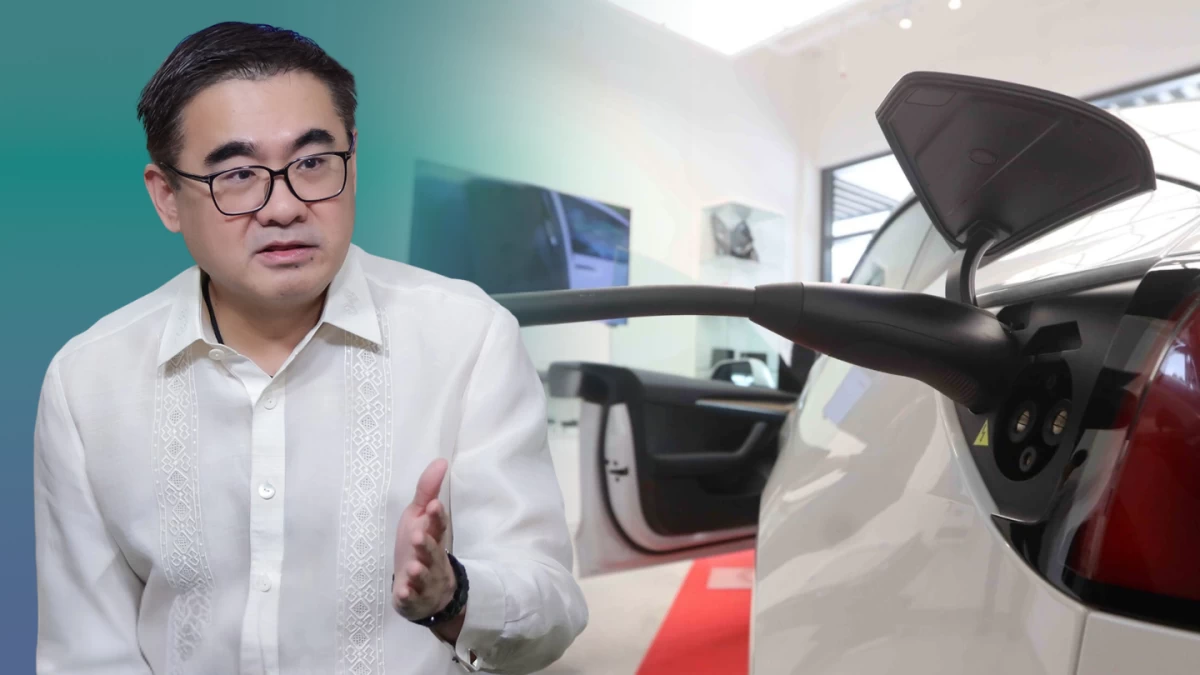
Finance Secretary Frederick Go
The government is set to soon launch an incentive program aimed at encouraging companies to manufacture electric vehicles (EVs) in the country, with at least four automotive firms already expected to participate.
Finance Secretary Frederick Go, President Macos’ point man for investment and economic affairs, said the proposed Electric Vehicle Incentive Strategy (EVIS) is nearing its official rollout.
“I think it's soon, we are all determined to make it happen,” Go said when asked about the timeline for the rollout of the proposed EVIS.
Go said the EVIS is now being finalized by the Board of Investments (BOI).
He said the BOI is coordinating with the likes of the Fiscal Incentives Review Board (FIRB) and the Department of Budget and Management (DBM) to determine the legal framework of the program.
“There are steps that we need to take care of; we just need to go through that process,” said Go.
Last month, Trade Undersecretary and BOI Managing Head Ceferino Rodolfo said the executive order that would outline the program would be released within the first half of the year.
He said the specific amount of fiscal support that would be granted under EVIS is still being finalized.
The EVIS aims to encourage investments in local EV manufacturing or assembly in exchange for corresponding incentives from the government.
Trade Secretary Cristina Roque said during the ASEAN Business Media Exchange last week that the program will be open to manufacturers of four-wheeled EVs, particularly hybrid and fully electrified vehicles.
The EVIS is similar to the Comprehensive Automotive Resurgence Strategy (CARS) program, which provided fiscal support to participating companies that produced at least 200,000 units of their enrolled vehicle model within six years.
While the government was initially working on launching a successor program known as the Revitalizing the Automotive Industry for Competitiveness Enhancement (RACE) program, Roque said the government will no longer proceed with the plan and instead pivot to EVIS due to the current oil crisis.
Following the latest conflict in the Middle East, petroleum prices have escalated in recent weeks, prompting a surge in demand for EVs.
The EVIS is proposed to narrow the cost gap between EVs and traditional motor vehicles, encouraging Filipinos to make the transition.
Unlike the CARS program, which only had two slots, Roque said the BOI plans for EVIS to accommodate more than four participating manufacturers.
Go said the government is in support of the suggested number of slots, although he noted that this remains open for change.
Roque said there are already four automotive firms that have expressed interest in joining the EVIS, including Toyota Motor Philippines and Mitsubishi Motors Corp. (MMC).
MMC recently announced plans to produce hybrid EVs at its Laguna plant by 2028, subject to approval of its entry into the EVIS.
“We don't know how many are really going to join, but we are encouraging them to join,” Roque said.
Apart from the manufacturing or assembly of EVs, Roque said the government is also inviting companies to invest in the installation of charging stations nationwide.
Under EVIS, the government also aims to attract companies to manufacture components of EVs, including batteries, electric components and parts, as well as the deployment of charging stations.