






Manila Bulletin
 Spotlight Features
Philippine natural dyers gather to share knowledge and preserve craft
Spotlight Features
Philippine natural dyers gather to share knowledge and preserve craft
Spotlight Features
Philippine natural dyers gather to share knowledge and preserve craft
Philippine natural dyers gather to share knowledge and preserve craft
By Yvette Tan
Published May 13, 2026 04:32 pm
|
Updated Jun 4, 2026 04:40 pm


Long before chemical dyes became ubiquitous, ancient Filipinos used various plants to add color to textile, which itself was made from plant fiber. The craft has been reduced to a niche, but is now experiencing a resurgence.
Natural dyers from all over the Philippines gathered together for Agtina Tayo! (Let’s Dye!), a natural dyeing workshop and knowledge exchange organized by cultural organizations Bahay Ugnayan, Mahalina Foundation and CordiTex; artist collective Masda-Aw (of which this editor is a member); and Baguio weaving retail pioneer Narda’s.
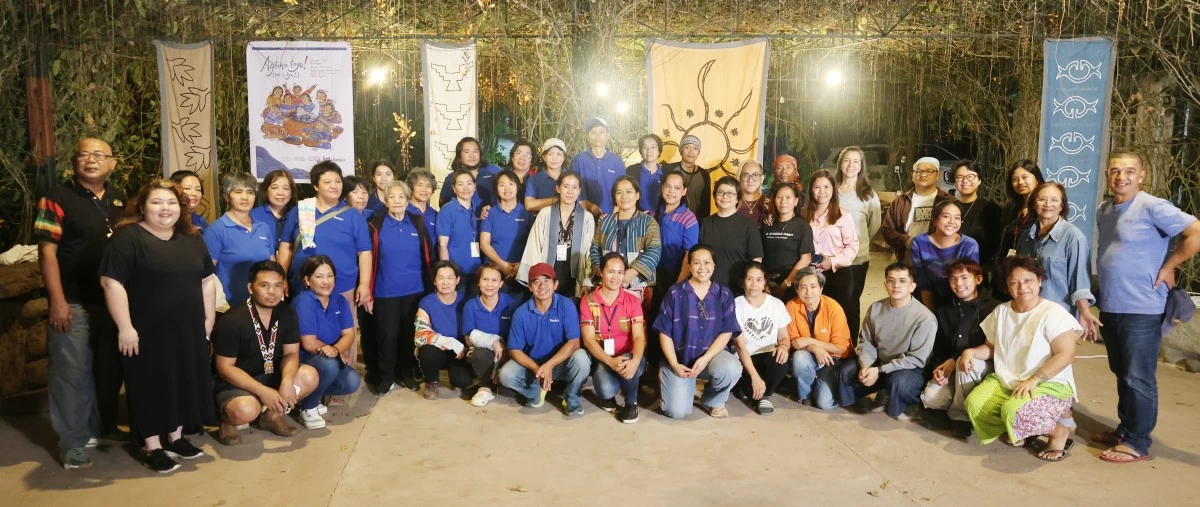
Agtina Tayo! — Gathered natural dyeing craftspeople from all over the Philippines gathered for a weekend of knowledge sharing.
“It started with the idea of trying to revive or research on… indigenous natural dyes from the Philippines. There are partitioners out there who are doing natural dyes, but they are not documented,” Dr. Analyn Salvador-Amores, professor of Anthropology at University of the Philippines Baguio, Cordillera Textile Leader of the Cordillera Textile Project (CordiTex), said.
“What we do in CordiTex is, aside from the textiles that we study, aside from the designs, the technique, and even those endangered textiles or extant textiles, we also study the colors... There are colors or natural dyes that have cultural value or significance in the community and we want to find that out. The connection between culture, the ecology, and of course, the technical aspects of coloring it.”
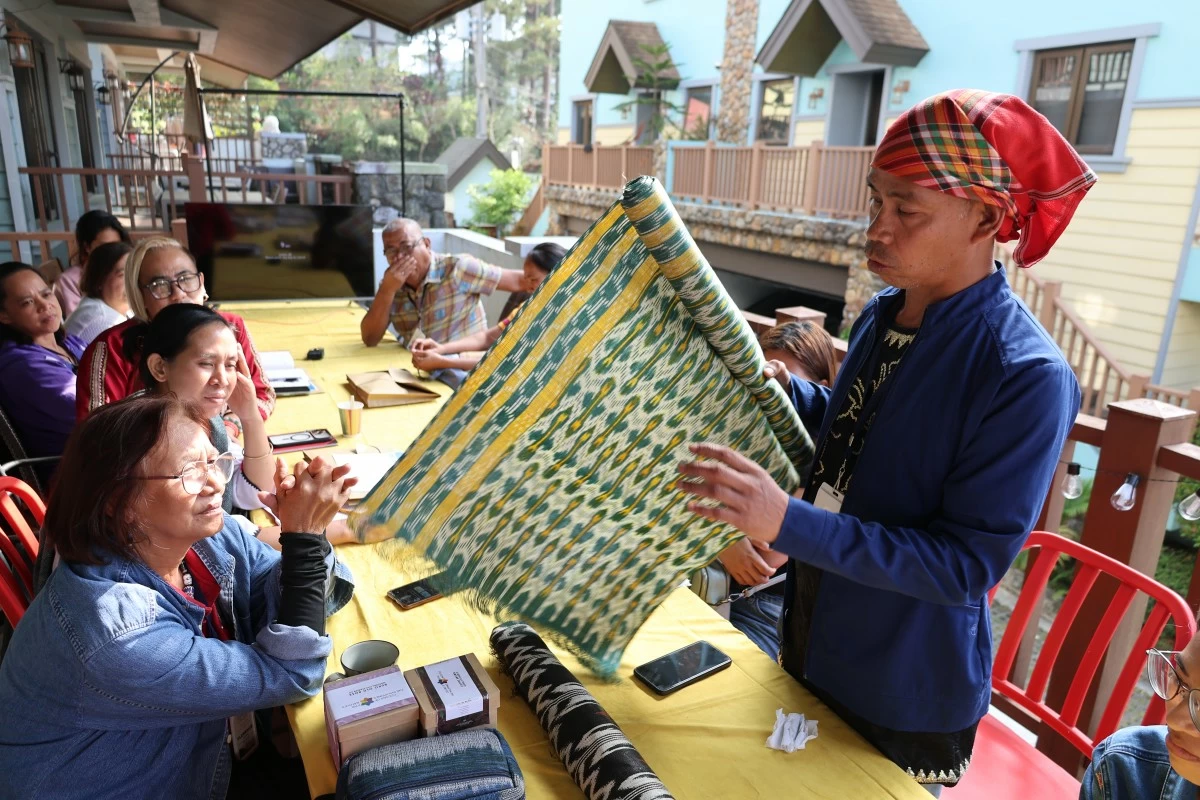
Agustin Sudaw, the first T’boli male weaver shows the group a roll of T’nalak, their traditional textile.
The attendees were a mix of master dyers from unbroken lineages such as Rey Rose Dillera, daughter of Gawad Manlilikha ng Bayan (GAMABA) awardee Salinta Monon, Lorcita Manggay, daughter of GAMABA awardee Estelita Bantilan, and Charlie Dulay, nephew of GAMABA awardee Lang Dulay; trailblazers like Agustin Sudaw, the first T’boli male weaver; folks who left their old lives to revive the weaving culture in their areas such as Mario Manzano, president of the Bagtason Loom Weavers Association in Antique, Mervin To-ong, manager of the Binugao Bagobo Tagabawa Women Association, and Florence Ao-Wat, president of the Kalinga Indigenous Weavers Association; artisans like Kat Palasi from Baguio and university professor Diana Katigbak from Manila; and newbies such as Mahalina Foundation beneficiary Lorna Pronda and CCP Thirteen Artists Awardee Issay Rodriguez.
“We gathered natural dyers from Luzon, Visayas, and Mindanao, to convene… in one place to share what they know of the indigenous practices on natural dyeing so we can learn from each other and then eventually document that. And then all of these learnings will cascade when they go back to their communities,” Amores said.
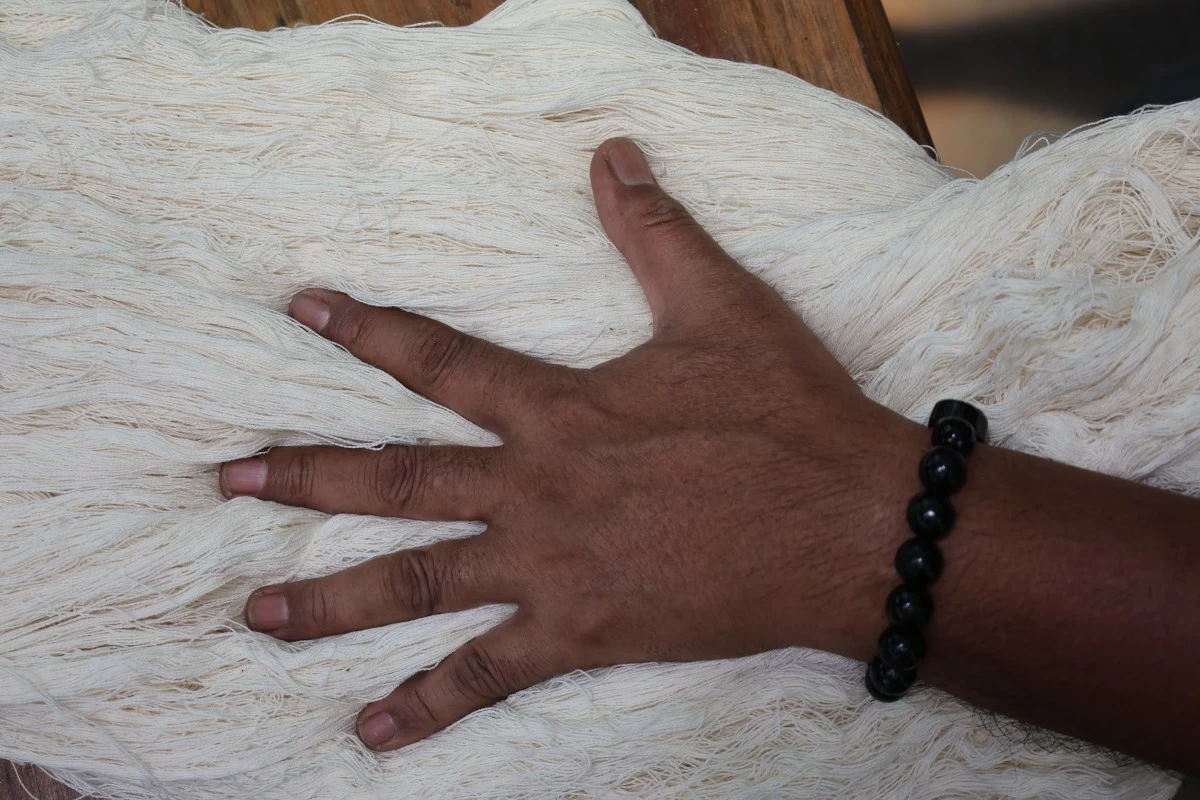
PRESERVING TRADITION — Undyed pure cotton thread.
Also present were university professor and Masda Aw coordinator Nina Tesoro Poblador and her brother Raffy Tesoro, whose mother, fashion designer Patis Tesoro, started the natural dye revival in the 1990s; and Lucia Catanes from Narda’s Weaving, the Baguio handicraft institution started by her mother Narda Capuyan, who generously housed the majority of the workshop in Winaca Eco-Cultural Village in Tublay, Benguet.
Participants were encouraged to bring natural dye sources from their regions and share dyeing techniques that weren’t closed practices.
“The mere fact that we're sharing our work together was already a dream come true for my family, so, yes, we're happy with the outcome,” Poblador said. “A preservation of culture… from where my mom and my dad are coming from, is to the extent that there has to be a baseline... But the innovation of this whole activity is also important, because then it increases the opportunity of artisans and entrepreneurs for creativity and for livelihood. It always works hand in hand, at least from where we're coming from. And today, we were able to actually delineate, which dye sources… should be left as heritage, and which ones can be made commercially viable. That's huge.”
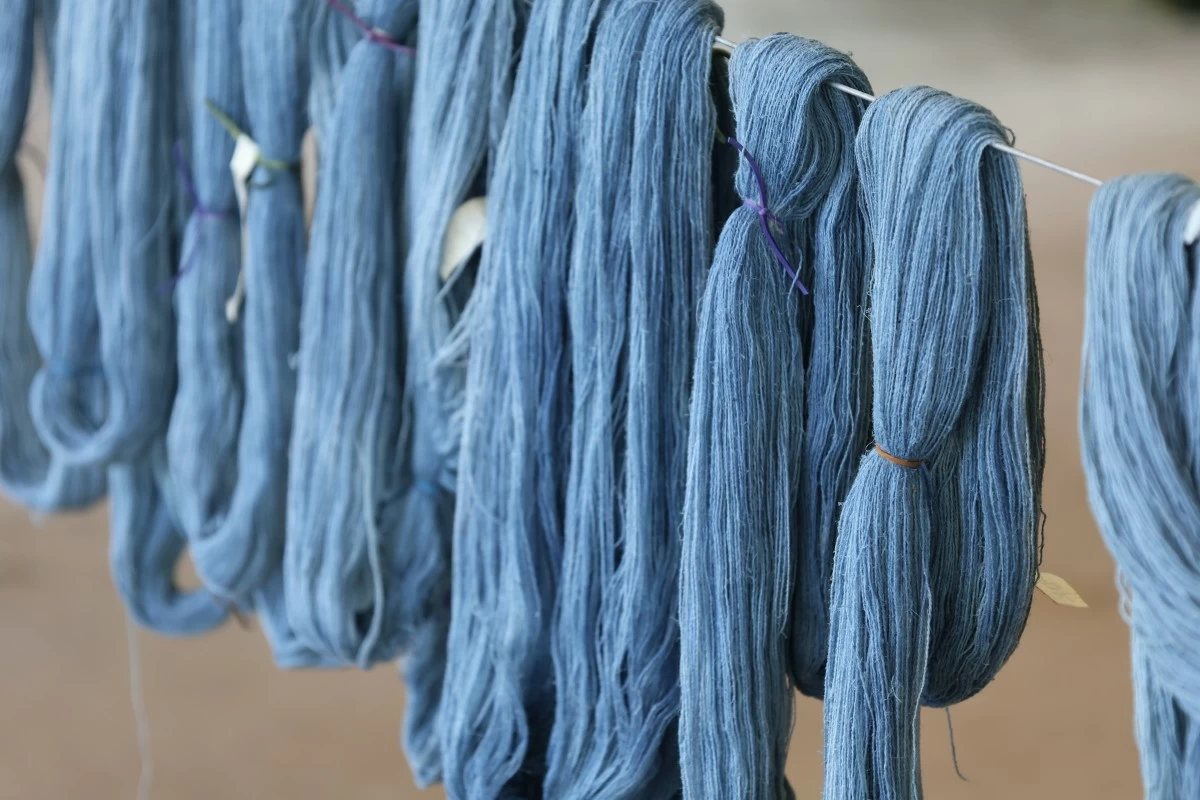
NEW COLORS — Cotton thread dyed with indigo left to dry.
Dyers compared the availability (or lack thereof) of plants and in their areas, as well as the effects of terroir on the color produced by the same species. For example, turmeric from Mindanao may not produce the same shade of golden orange as turmeric from Luzon. The workshop documented 26 natural dye sources from around the Philippines, including indigo, turmeric, mango leaves, and coffee.
“We can actually write one book with all of this data, information that we gathered. It can be a global project in terms of comparing to Southeast Asia, because the colors are comparatively similar to the ones we saw in Thailand, Indonesia, and Lao,” Amores said. “In my research, there is no book on Philippine natural dyeing, so that's one dream, to have a compendium of all these natural dyes from the Philippines. This is a good start.”
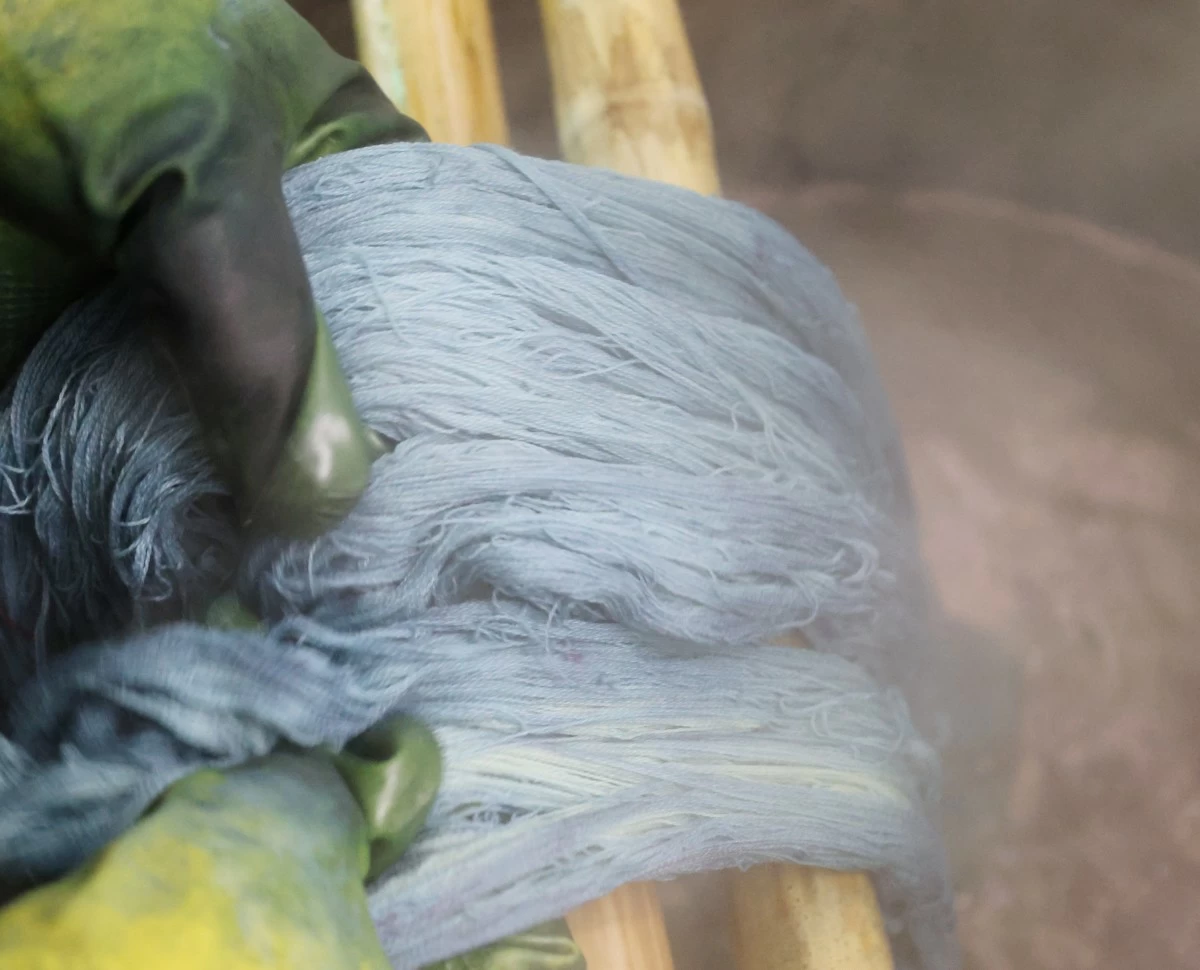
The art of natural dyeing is currently experiencing a resurgence.
The traditional production and design of textile is an important part of being Filipino. “What makes the textile Filipino? Originally, we used cotton, and of course, natural dyes. If you lose that, you lose the identity of the distinct communities who produce it; a total erasure if you forget that,” Amores said. “In the last five years, there's been a strong revival of [traditional, indigenous earth styles], but what is important is also that people try to innovate things, but they keep the core Filipino feature or characteristic of that textile. Especially Filipinos in diaspora, they connect being Filipino through textiles… It's one way of connecting the threads to their roots.” (Photos by Arnold Amores)