








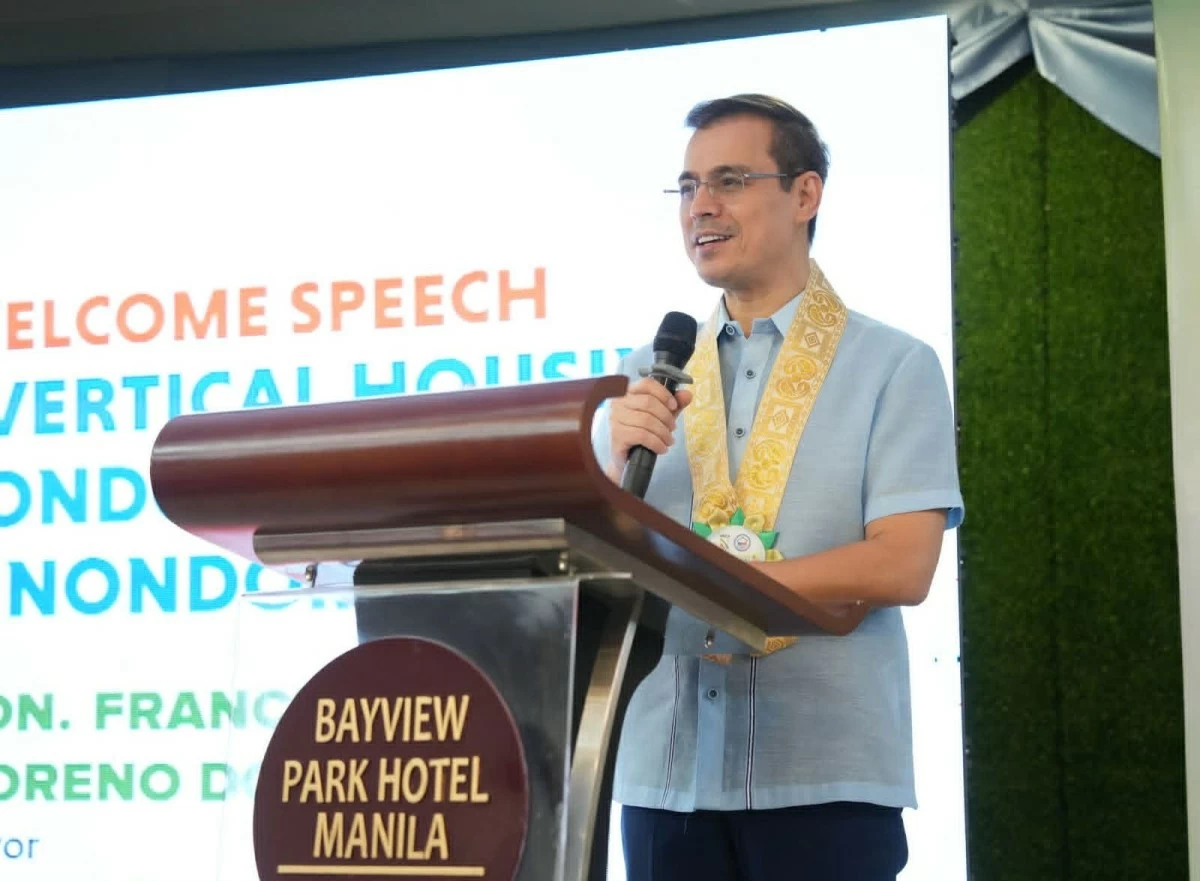
Domagoso said the program was shaped by his personal experience growing up in informal settlements in Manila, recalling how his mother, a migrant from Northern Samar, worked as a household helper in Tondo before building a makeshift home on Road 10 near Roxas Boulevard.
He cited his mother’s reminder about the importance of shelter: “Umulan, bumagyo, magkaroon ng delubyo, may masisilungan ka (Whether it rains, storms, or disaster strikes, you will have shelter).”
“Nagtanim ng talbos ng kamote, bahay ang tumubo (Planted sweet potato tops, and a house grew),” he said, describing informal settlements as a long-running cycle tied to poverty and lack of housing options.
The mayor said the city’s flagship projects, Binondominium 1, Binondominium 2, and BaseCommunity, were constructed during the Covid-19 pandemic as part of Manila’s housing program expansion.
He said each unit measures 42 square meters with two bedrooms, designed to separate sleeping spaces for parents and children.
He said the layout was intended to address issues often seen in overcrowded informal settlements.
Beneficiaries pay P2,000 monthly under the program.
Domagoso said the arrangement does not transfer ownership of the unit, but residents may recover payments if they voluntarily leave and surrender the housing unit.
“Habang nabubuhay ka at tinutugunan mo ‘yung dalawang libo buwan-buwan sa gobyerno, walang makapagpapalayas sa’yo (As long as you’re alive and paying the two thousand pesos monthly to the government, no one can drive you out),” he said.
Domagoso said the model treats housing as a public service rather than a revenue source.
“Government is not a savings bank,” he said. “Government is not to make money out of projects. Projects should be considered as public service.”
He said the program is patterned after Singapore’s Housing Development Board system but differs in one key aspect: Manila retains ownership of all units to prevent resale and ensure long-term housing for beneficiaries.
Domagoso said this addresses a recurring problem in past relocation programs where beneficiaries eventually returned to informal settlements.
He also said the city plans to expand its housing pipeline, including San Lazaro Residences and additional Binondominium projects.
Future developments may rise to 20 storys and will be financed through loans from the Land Bank of the Philippines and the Development Bank of the Philippines.
He added that Manila is also investing in health and education infrastructure, including the reactivation of a catheterization laboratory offering free angioplasty services, a planned 10-story public hospital, and a College of Medicine under the Pamantasan ng Lungsod ng Maynila.
Domagoso ended his remarks by urging local governments to prioritize the timely spending of public funds.
“A peso spent today is better spent today than to spend the same peso tomorrow,” he said.