






Manila Bulletin
 Spotlight Features
Butuan farmer proves strawberries can thrive in lowland areas, earns up to ₱50,000 monthly
Spotlight Features
Butuan farmer proves strawberries can thrive in lowland areas, earns up to ₱50,000 monthly
Spotlight Features
Butuan farmer proves strawberries can thrive in lowland areas, earns up to ₱50,000 monthly
Butuan farmer proves strawberries can thrive in lowland areas, earns up to ₱50,000 monthly
By Pam Pascual
Published May 13, 2026 04:54 pm


Versandear Abuzo, 33, a strawberry farmer from Butuan City, faced skepticism about growing strawberries in lowland areas, where many believed the crop would not thrive. However, Abuzo did not waver. Instead of following conventional practices, he carved his own path—proving that strawberries can succeed even in high-temperature environments with the right knowledge and perseverance.
His farming journey began in 2020, when he started cultivating vegetables just outside his home in Barangay Anticala, Butuan City. Although he grew up in a farming family, Abuzo initially held a negative perception of agriculture.
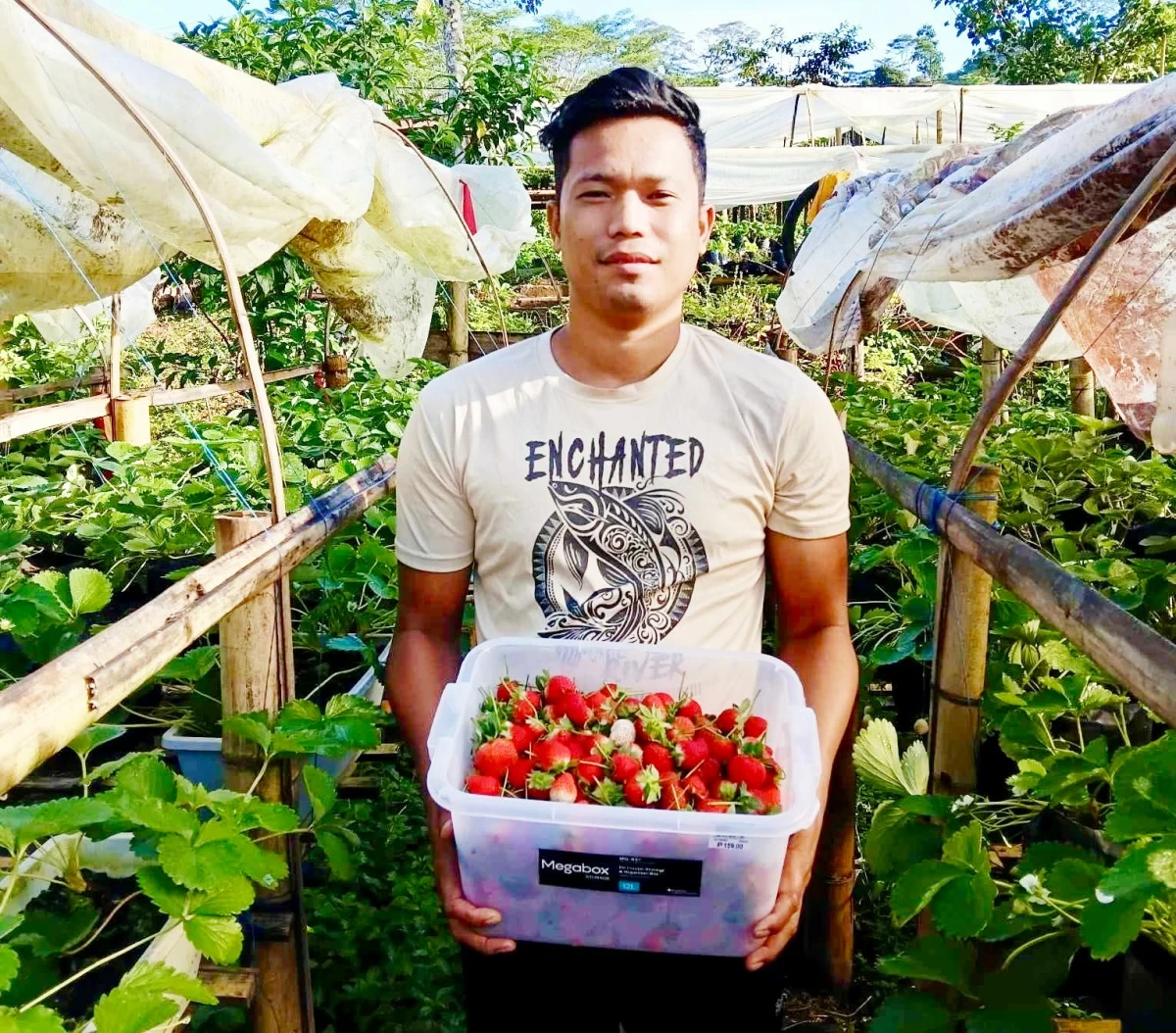
STRAWBERRY FARMER — Versandear Abuzo, owner of RV Agriventure, holds a basket of freshly picked strawberries at his farm in Butuan City.
“Before, I had a negative view of farming. I worked as a shopping mall employee for seven years. But when I changed my mindset, I decided to return and try farming again,” he shared.
During the pandemic, his interest shifted when he decided to experiment with strawberries, an uncommon crop in their area.
“I bought one plant and tried growing it in our area. It grew well, and when I posted it online, many people inquired. That’s when I realized strawberry farming had potential here because no one else was growing it,” he said.
From a single plant to national recognition
Abuzo’s small experiment soon opened bigger opportunities. In 2022, a customer encouraged him to join the Department of Agriculture’s Young Farmers Challenge.
He went on to win at both the provincial and regional levels, earning a total of ₱200,000 in grants, and was recognized as one of the 35 national finalists.
“We used the prize money to buy land and expand our farm,” he shared.
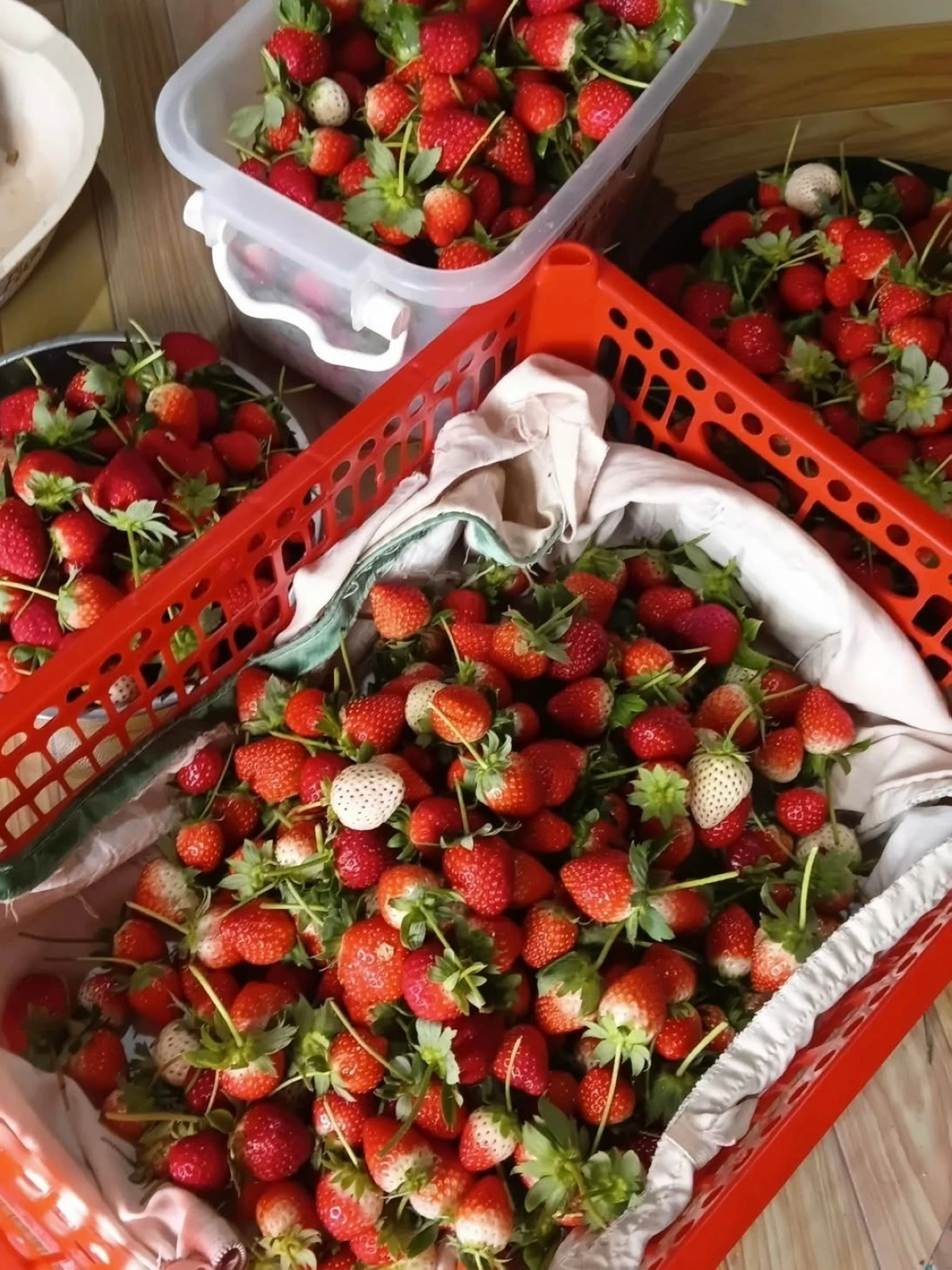
FRESH STRAWBERRIES — A basket full of freshly harvested strawberries, ready to be packed for delivery.
Before the grant, Abuzo and his family were renting a house, with strawberry plants simply hung along its sides. With the support they received, they were able to purchase a 500-square-meter lot and invest in farming materials.
Today, his farm grows several strawberry varieties, including Honeoye, Sweet Charlie, and San Andreas—though Honeoye remains his primary variety due to its abundant yield.
He also cultivates herbs such as rosemary, lavender, and stevia.
His wife, Ronalyn, assists him in managing the farm, and they only hire additional labor when needed, particularly for tasks like pruning and clearing.
Starting out and overcoming challenges
As the first farmer to seriously pursue strawberry production in their area, Abuzo faced numerous challenges.
“One of the hardest parts was that I had no one to ask when my strawberries got sick. Most farmers here grow crops like tomatoes and eggplants,” he explained. “I relied heavily on research, and even when I asked other growers, the information was sometimes incomplete.”
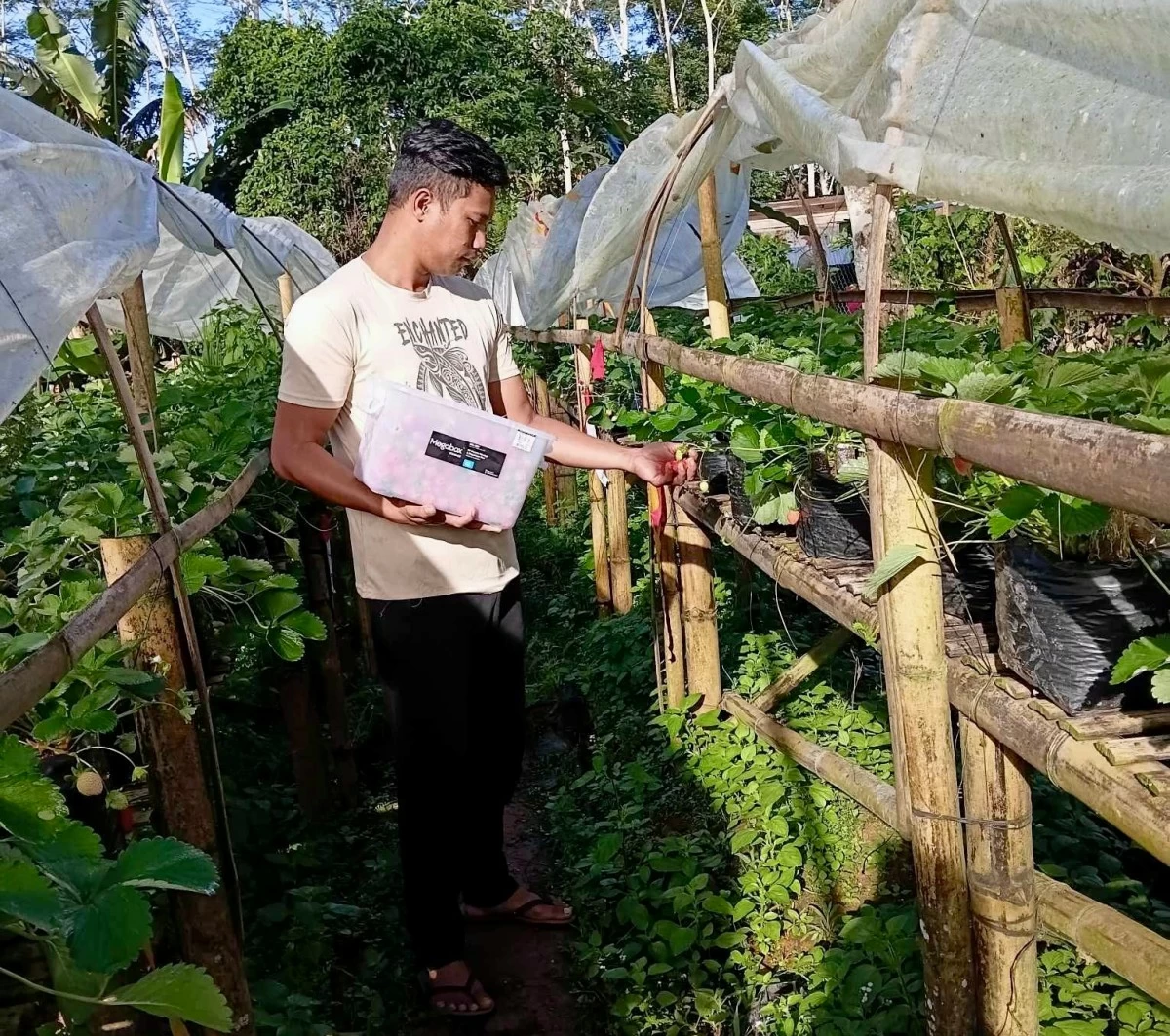
HARVESTING STRAWBERRIES — Versandear Abuzo, owner of RV Agriventure, harvests fresh strawberries that he cultivated in a lowland area. (Versandear Abuzo)
Pest management and unpredictable weather also posed significant difficulties, especially in the Caraga region where rainfall is frequent.
Despite skepticism from others who believed strawberries could only grow in cooler regions like Benguet, Abuzo remained determined.
Over time, through continuous research and trial and error, they eventually learned how to properly grow and protect strawberries in lowland areas.
“Many people told us to stop because strawberries are for cold places. But we continued, and when they saw the results, they stopped doubting,” he said.
From harvest to market
Their business is called RV Agriventure, a name derived from Abuzo and his wife’s names—Ronalyn and Versandear.
At present, Abuzo harvests an average of 2 to 4 kilograms of strawberries per day, depending on the season.
“During the summer, production is higher because the fruits develop better. But during the rainy season, harvests can drop to around 2 kilos per day,” he explained.
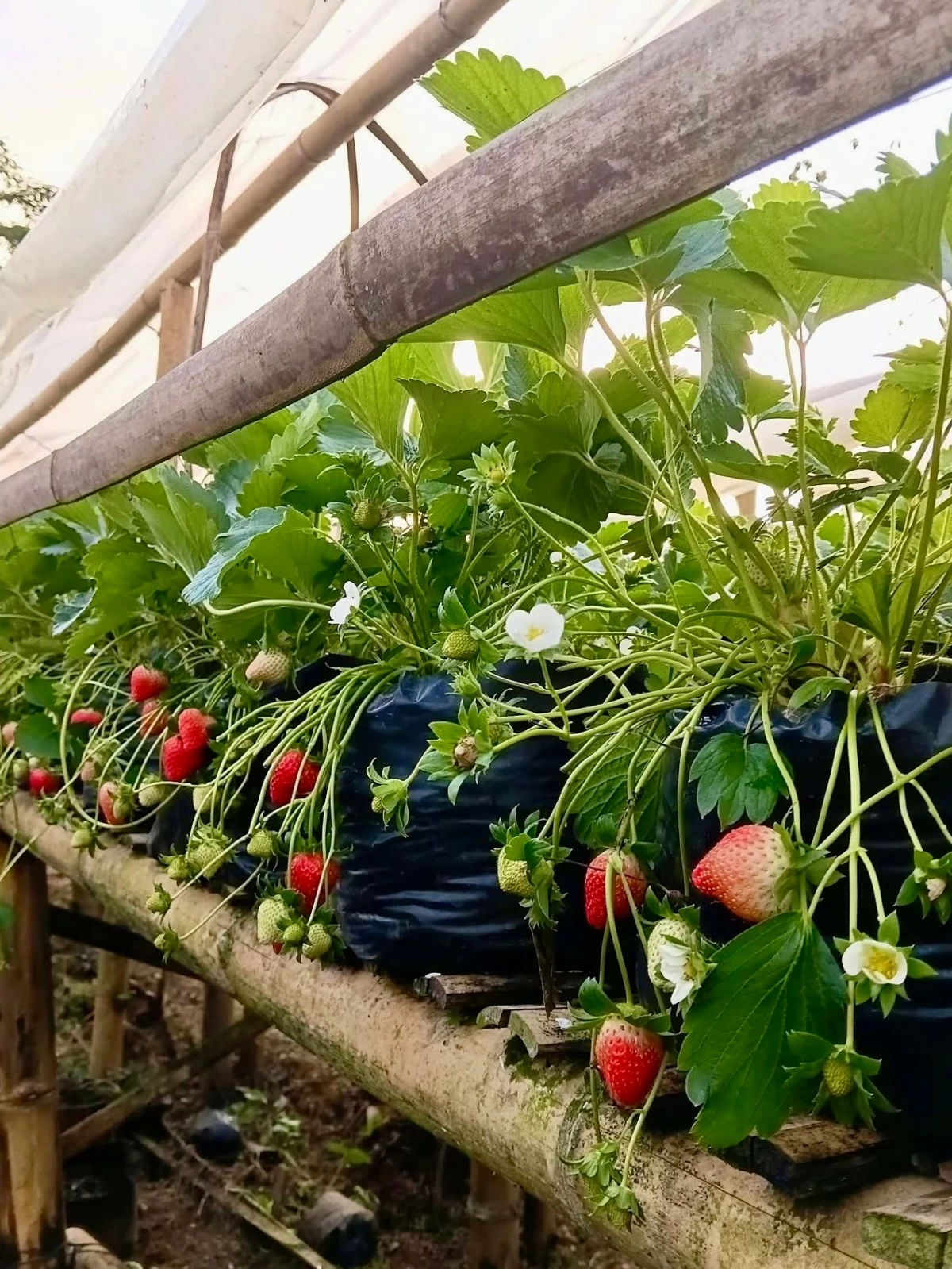
GROWING STRAWBERRY PLANTS — Rows of strawberries planted in polyethylene bags on elevated bamboo tables. (Versandear Abuzo)
Due to their location, most of their strawberries are picked up by customers at the Department of Agriculture office in Caraga. They also ensure proper packaging to maintain freshness and prevent spoilage.
Their strawberries are sold at around ₱1,000 per kilo, while potted fruiting plants are priced at ₱350 each. They also offer seedlings or runners, which are sold for ₱90.
To maximize their harvest, they also engage in value-adding by processing smaller strawberry yields into strawberry jam, strawberry float, and pie.
“Our monthly income is not fixed…Our possible monthly income ranges from around ₱30,000 to ₱50,000,” he shared.
Growing beyond strawberries
Since 2022, Abuzo has been a full-time strawberry farmer, and his venture now provides sufficient income for his family. He also sets aside savings to further expand their farm.
“Our plan is to acquire a larger area and eventually develop the farm into a tourism site,” he shared.
For Abuzo, success in farming starts with the right mindset.
“Most people think strawberries can only grow in Benguet, but that’s not true. Strawberries actually need sunlight and can thrive in lowland areas,” he said.
He encourages aspiring farmers to challenge traditional beliefs and remain open to learning.
“If you want to grow strawberries, change your mindset. Believe that it’s possible, even in the lowlands,” he advised. (Photos courtesy of Versandear Abuzo)