







Why is it 'safe' for Bato Dela Rosa to be in the Senate?
By Dhel Nazario
Published May 12, 2026 01:16 pm


At A Glance
- The 1987 Constitution grants senators limited protection from arrest, applying only to offenses punishable by not more than six years imprisonment and only while Congress is in session.
- The Supreme Court in People v. Jalosjos (G.R. No. 132875–76) ruled that legislative privilege from arrest cannot be expanded beyond what the Constitution explicitly provides.
- While senators are not immune from arrest for serious criminal charges, enforcement inside the Senate typically requires coordination with Senate leadership and security due to institutional protocol and separation of powers.
The situation involving Senator Ronald “Bato” Dela Rosa after the foiled arrest attempt against him has stirred public discussion over whether lawmakers can be arrested while inside the Senate and what legal protections actually apply.
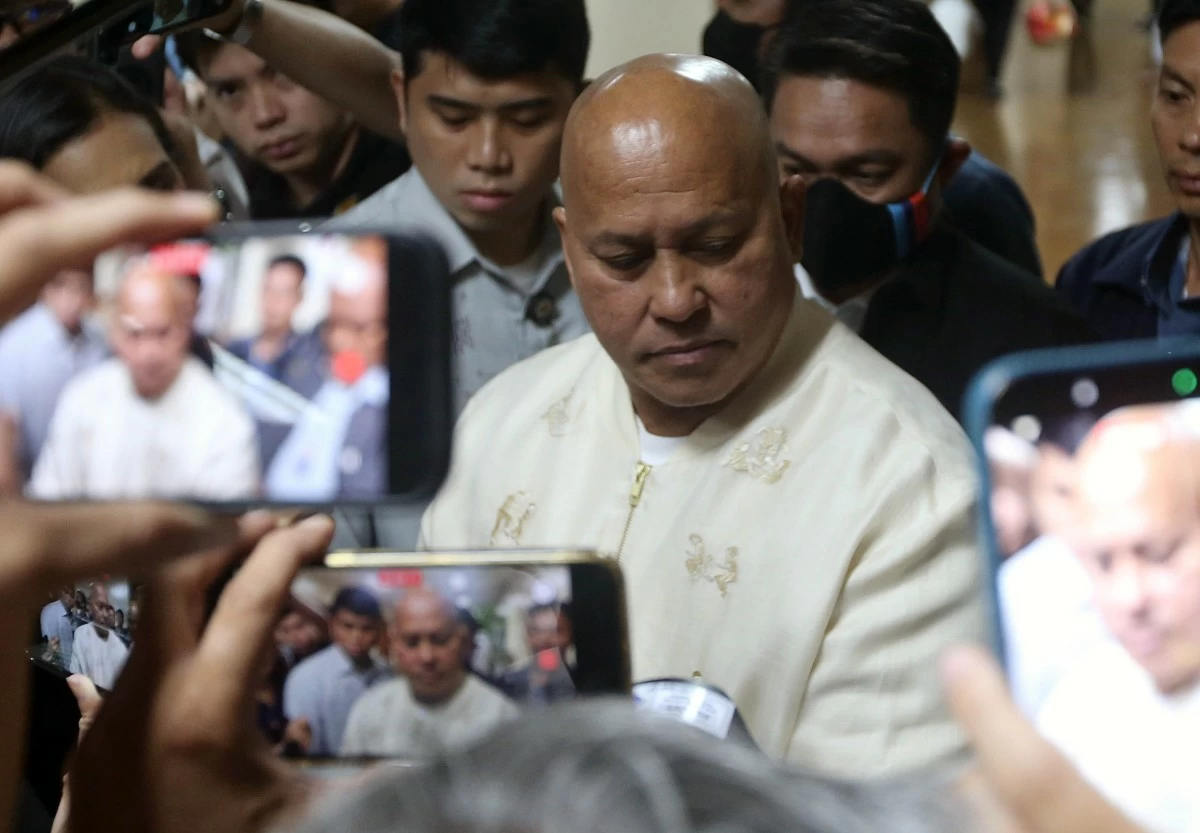
Senator Ronald 'Bato' Dela Rosa, speaks as he answers questiomns from the media outside his office at the Senate of the Philippines in Pasay City, May 12, 2026. (Mark Balmores)
Based on the 1987 Philippine Constitution, Article VI, Section 11, grants members of Congress a limited privilege from arrest.
The provision states that senators and representatives are “privileged from arrest” but only for offenses punishable by not more than six years imprisonment, and only while Congress is in session.
It does not provide blanket immunity from criminal liability or arrest for serious offenses.
According to the law, this privilege is intended to ensure representation of the constituents by the members of Congress.
In the landmark ruling People v. Jalosjos or G.R. No. 132875–76, the Supreme Court (SC) clarified that legislative privilege from arrest is a strictly limited protection and must be interpreted according to its exact constitutional wording. The court emphasized that it cannot be expanded to cover situations beyond what the Constitution expressly allows.
Given this, senators may be arrested like any other citizen if a valid warrant exists.
By tradition as well, the Senate does not allow the arrest of any member of the Upper Chamber within the Senate premises.
Amid Dela Rosa's return to the Senate on Monday, May 11, agents from the National Bureau of Investigation (NBI) tried to arrest him, but according to Senate President Alan Peter Cayetano, they backed off when they learned of the senators' stand, citing Senate Resolution No. 44 and the manifestation made by Sen. Rodante Marcoleta, asserting that the issue should pass through a local court.
The resolution expresses the sense of thе Senate of the Philippines to protect all Filipinos against extrajudicial rendition and guarantee them a reasonable time before their surrender by or extradition from the Philippines to seek redress from the courts and avail of legal remedies.
Aside from this, dela Rosa was placed under the protective custody of the Upper Chamber after Cayetano acted on Marcoleta’s motion to put their fellow senator under protective custody in light of the arrest warrant issued by the International Criminal Court (ICC), which operatives of the NBI were tasked to serve.
In essence, senators are not beyond the reach of the law inside the Senate—they are simply subject to a more delicate enforcement process shaped by constitutional boundaries and institutional protocol.