







Preserving the soul of higher education
Published May 12, 2026 12:05 am
|
Updated May 11, 2026 06:09 pm


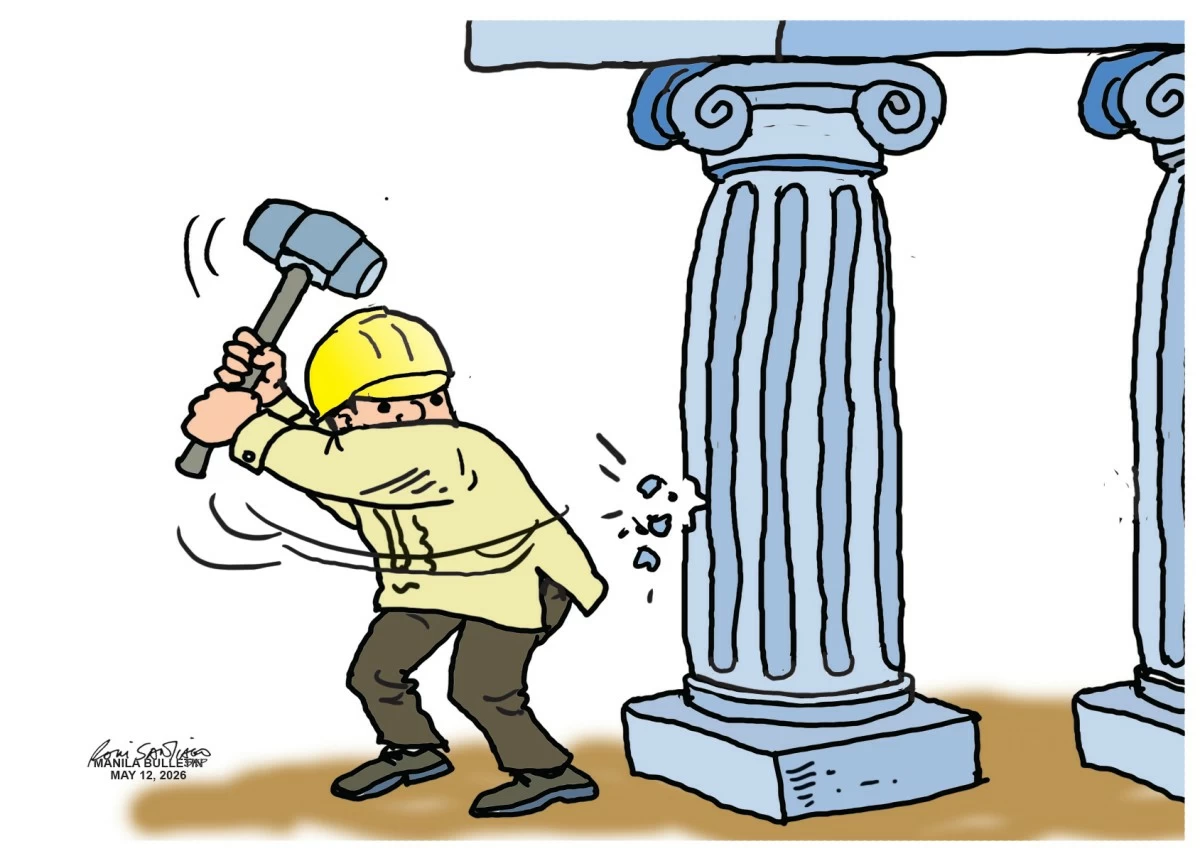
The proposal of the Commission on Higher Education (CHED) to dilute the General Education (GE) curriculum beginning School Year 2027–2028 has sparked serious concern among educators, parents, and industry leaders. While the intention may be to streamline academic programs and align college education more closely with labor market demands, reducing the breadth and depth of GE subjects risks undermining the very foundation of higher learning.
General Education is not mere academic ornamentation. It is the core that molds students into critical thinkers, ethical citizens, effective communicators, and socially responsible Filipinos. Courses in literature, history, philosophy, ethics, communication, and the social sciences provide the intellectual grounding necessary for navigating an increasingly complex world. To weaken this foundation in favor of narrow technical specialization is to mistake training for education.
The timing of the proposal is particularly troubling. The world today is being reshaped by artificial intelligence, geopolitical uncertainty, climate change, and rapid technological disruption. In such an environment, societies need graduates who can think critically, discern truth from misinformation, appreciate cultural diversity, and uphold democratic values. Technical competence alone will not suffice.
Ironically, many global employers now emphasize the importance of “human skills” — communication, collaboration, adaptability, creativity, and ethical judgment — precisely because automation is rapidly taking over routine technical tasks. These competencies are cultivated not only in laboratories and professional courses, but also through exposure to the humanities and liberal arts. A diluted GE curriculum may produce graduates who are technically capable yet intellectually underprepared for leadership and civic engagement.
The Philippines has long struggled with deficiencies in reading comprehension, historical awareness, and civic literacy. International assessments have repeatedly shown gaps in critical thinking and analytical skills among Filipino learners. At such a critical juncture, strengthening — not weakening — General Education should be the national priority.
CHED must also recognize that universities are not factories designed merely to produce workers for the marketplace. Higher education institutions are nation-building institutions. They shape the values, character, and worldview of future leaders, professionals, entrepreneurs, teachers, journalists, and public servants. An overemphasis on utilitarian outcomes reduces education to a transactional enterprise and neglects its transformative mission.
To be sure, curriculum reform is necessary. Some GE subjects may indeed require updating to remain relevant to contemporary realities. Redundancies can be removed, teaching methodologies modernized, and interdisciplinary approaches encouraged. Digital literacy, media literacy, sustainability, and ethics in artificial intelligence may even be integrated into the GE framework. But reform should enhance intellectual breadth, not constrict it.
A more prudent path would be for CHED to undertake extensive consultations with educators, employers, students, and civil society groups before implementing sweeping changes. Academic efficiency should never come at the expense of intellectual depth and civic formation.
The challenge before Philippine higher education is not simply to produce employable graduates, but enlightened citizens capable of contributing meaningfully to national development. In a democracy increasingly threatened by disinformation, polarization, and historical distortion, the role of General Education becomes even more indispensable.
Education must prepare students not only for work, but also for life, citizenship, and leadership. To dilute General Education is to risk diluting the quality of the nation’s future generations.