






Manila Bulletin
 Technews
GCash champions responsible AI to bridge financial inclusion gap in the Philippines and Southeast Asia
Technews
GCash champions responsible AI to bridge financial inclusion gap in the Philippines and Southeast Asia
Technews
GCash champions responsible AI to bridge financial inclusion gap in the Philippines and Southeast Asia
GCash champions responsible AI to bridge financial inclusion gap in the Philippines and Southeast Asia
Published May 12, 2026 08:22 am


GCash chief data officer Sara Venturina takes the stage at the DepDev AGOS National Innovation Day at the Diamond Hotel Manila
GCash, a Philippines' finance super app and with a large cashless ecosystem, delivered a pointed message at the 2026 National Innovation Day: artificial intelligence must be built on accountability, or it risks making financial exclusion worse, not better.
Speaking before policymakers, tech leaders, and ASEAN stakeholders at the Diamond Hotel Manila, Mynt Chief Data Officer Sara Venturina warned that unchecked AI adoption could widen the very gaps it promises to close.
"If we don't use technology responsibly, it will lead to more inequality," Venturina said. "At GCash, we harness the power of data and AI to help move Filipinos toward financial progress, while ensuring that inclusion remains at the center of innovation."
What Is National Innovation Day 2026?
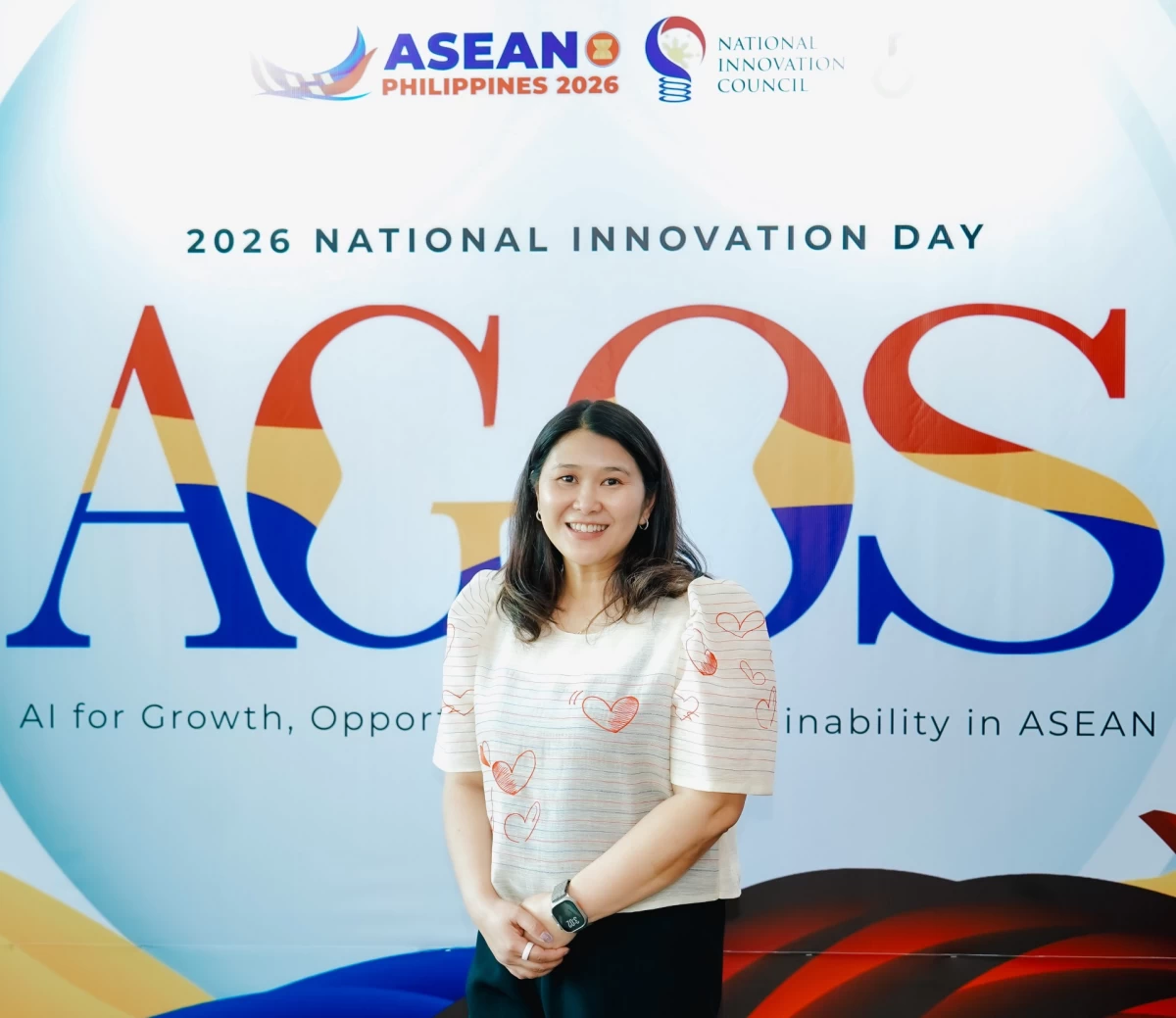
The event was organized by the Depdev National Innovation Council in partnership with ASEAN under the theme "AI for Growth, Opportunity, and Sustainability in ASEAN (AGOS)," a framework focused on scaling emerging technologies safely across the region. Attendees included Department of Science and Technology Secretary Dr. Renato Solidum, Department of Education Secretary Atty. Juan Edgardo Angara, and President Ferdinand R. Marcos Jr.
The forum comes as the Philippines holds the ASEAN Chairmanship for 2026, with AI governance topping the regional digital agenda. Earlier this year, ASEAN Digital Ministers adopted the Hanoi Digital Declaration to advance coordinated and inclusive digital transformation across member states.
GCash's AI Strategy: Inclusion Over Efficiency
Unlike AI strategies centered purely on automation and cost-cutting, GCash says its approach is customer-outcome-first. According to Venturina, the company carefully evaluates every AI deployment against strict standards for data privacy and protection, prioritizing accessibility and trust over speed.
This matters in a country like the Philippines, where millions of Filipinos remain underbanked or financially underserved. A 2025 BSP Consumer Finance and Inclusion Survey showed that while financial account ownership is growing — particularly among young adults and women — significant gaps remain, especially in rural areas and among low-income households.
GCash, which serves tens of millions of Filipinos, makes its AI governance decisions consequential at a national scale.
The bigger question: Who governs AI?
Venturina used the platform to push for stronger, standardized AI governance frameworks across the industry, not just within GCash.
"As AI scales, the question is not just how we build these systems, but how we ensure they remain fair, safe, and accessible," she said.
The call echoes a growing regional consensus. ASEAN's Expanded Guide on AI Governance and Ethics, published in early 2026, established a common set of principles for responsible AI development — though experts note that voluntary frameworks may not be enough as adoption accelerates. Research from the ISEAS–Yusof Ishak Institute also highlights wide disparities in AI regulatory readiness across Southeast Asian nations, underscoring why calls for standardized evaluation matter.
On data sovereignty, Venturina was direct: "Whether the data resides locally or in a data center, the responsibility to protect that data remains with us, and we take that seriously."
Privacy-preserving technology: The next frontier
GCash also spotlighted emerging privacy-preserving technologies that allow institutions to extract insights from data without exposing individual user information. These tools are increasingly seen as essential infrastructure for responsible fintech innovation — a way to innovate without eroding user trust.
Why this matters for the ASEAN Region
Southeast Asia is one of the world's fastest-growing digital economies. AI is projected to contribute 10–18% to ASEAN's GDP by 2030, potentially adding over $1 trillion in economic value. But that growth is not guaranteed to be equitable — and policy fragmentation across member states remains a key barrier to inclusive AI adoption.
GCash's participation in a multilateral ASEAN-aligned forum signals the company's ambition to influence regional policy conversations. As AI adoption accelerates, GCash reaffirmed its commitment to partnering with government and industry to advance responsible innovation — strengthening financial literacy, improving data governance, and expanding digital financial services for more Filipinos.