






Manila Bulletin
 Environment and Sustainability
ASEAN-EU Sustainability Summit 2026 bridges borders for a greener future
Environment and Sustainability
ASEAN-EU Sustainability Summit 2026 bridges borders for a greener future
Environment and Sustainability
ASEAN-EU Sustainability Summit 2026 bridges borders for a greener future
ASEAN-EU Sustainability Summit 2026 bridges borders for a greener future
Published May 12, 2026 03:52 pm


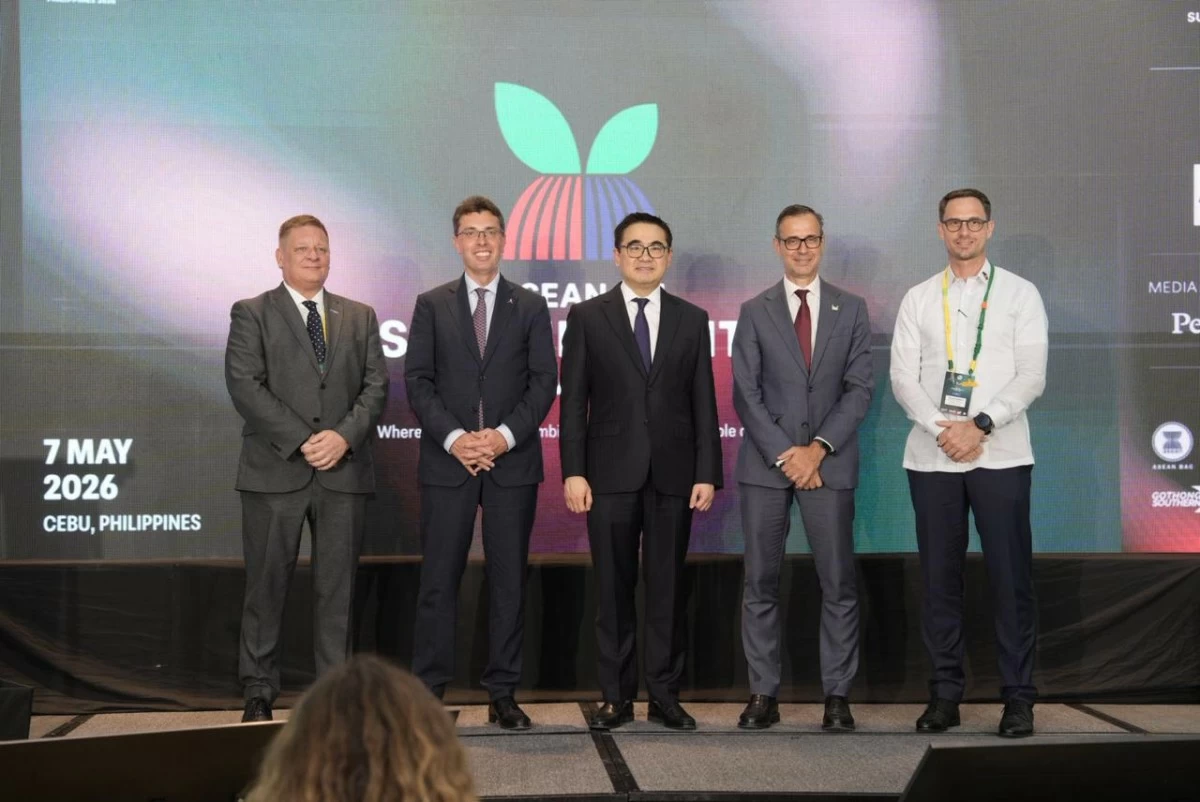
L-R: EU-ABC Executive Director Chris Humphrey, EU Ambassador to the Philippines Massimo Santoro, Philippine Secretary of Finance Frederick Go, Mr Paulo Duarte, ECCP President, and ECCP Executive Director Florian Gottein, at the ASEAN-EU Sustainability Summit 2026.
Sustainability is no longer a secondary consideration in policymaking or business strategy. It is increasingly becoming a central goal shaping how governments and industries plan for the future. This was among the key messages highlighted during the ASEAN-EU Sustainability Summit 2026 in Cebu, where regional leaders and industry stakeholders gathered to discuss how collaboration between governments and businesses can support long-term, sustainable growth.
Held as an official side event of the 48th ASEAN Leaders’ Summit, the inaugural forum brought together more than 200 delegates from ASEAN member states and the European Union to discuss climate action, energy transition, sustainable trade, and resilient economic development.
Towards a greener and more sustainable future
Opening the ASEAN-EU Sustainability Summit 2026, Department of Trade and Industry (DTI) Assistant Secretary Christian Ablan underscored the growing urgency of sustainability amid global economic and energy challenges, saying that “sustainability is no longer optional. It is central to economic resilience.”
Speaking before government officials, business leaders, and international partners, Ablan described sustainability not only as an environmental concern, but also as a long-term economic strategy tied to investment, innovation, and industrial transformation.
He pointed to geopolitical tensions, supply chain disruptions, and the Philippines’ recent declaration of a national energy emergency as signs that economies must adopt greener and more resilient systems.
Ablan also highlighted government initiatives aimed at advancing sustainability, including the implementation of the Extended Producers’ Responsibility Act, renewable energy investments, green infrastructure projects, and support for micro, small, and medium enterprises (MSMEs) adopting sustainable practices.
He also emphasized the importance of ASEAN-EU cooperation, particularly in sustainable trade, climate finance, and green technologies, noting that resilience and sustainability “must go hand in hand.”
Closing his remarks, Ablan called for stronger public-private collaboration to transform current challenges into opportunities for “innovation, cooperation, and sustainable growth,” while reaffirming the Philippines’ commitment as ASEAN Chair to building “a greener, more resilient, and more prosperous ASEAN.”
Discussions across sectors and countries
Strong participation from both private corporations and government institutions reflected how sustainability efforts are increasingly becoming a shared responsibility.
Organizers from the EU-ASEAN Business Council and the European Chamber of Commerce of the Philippines said meaningful progress will require coordinated action, innovation, and investment from both the public and private sectors.
During the summit’s third flagship panel on food security, animal health, and climate resilience, speakers emphasized that food security is no longer solely an agricultural concern, but is also closely linked to climate change, public health, and economic stability.
Philippine Agriculture Undersecretary Roger Navarro said, “Food security and animal health and the resilience of our farms against climate change are among the foundations on which the welfare and prosperity of our people depend on.”
Navarro highlighted the country’s development of climate-resilient rice varieties, methane-reducing farming systems, and animal health programs, including measures addressing African swine fever.
Representatives from Malaysia and Thailand also shared sustainability initiatives aimed at strengthening regional food systems.
Malaysia’s Dato Sri Norazman Ayub said sustainability and climate action have become “a key strategic priority” in the country’s agriculture policies, while Thailand’s Dr. Kanjana Kwan Muang stressed that “climate resilience and sustainability must be integrated across the entire food system.” She also pointed to the need to encourage younger generations to enter agriculture, noting that many farmers in the region belong to an aging workforce.
Meanwhile, scientist Dr. Serge Morand warned that climate change, biodiversity loss, and shifting ecosystems are increasing disease risks across agriculture and livestock systems. He emphasized the importance of “upstream prevention” and improved environmental monitoring systems as climate-related disruptions continue to affect food production and animal health across ASEAN countries. Throughout the discussion, panelists underscored the importance of sustainability, innovation, and regional cooperation in building a more resilient food system for the region.
Long-term cooperation
With the Philippines’ hosting of ASEAN in 2026 now concluded, the summit reflected a broader regional shift toward sustainability-centered development.
More than a venue for discussion, the event highlighted a growing recognition among ASEAN and European leaders that sustainability is no longer simply an option to consider when convenient, but an increasingly important direction for economies, industries and communities moving forward.
Speakers throughout the summit also emphasized that achieving this goal would require long-term commitment, reliable cooperation, and sustained partnerships among governments, businesses, development institutions, and local communities.
As climate and economic challenges continue to evolve, leaders said sustainable progress would depend not only on innovation but also on the strength and longevity of collaborations built on shared responsibility and mutual trust.