






Manila Bulletin
 Philippines
National
Academics, faculty groups march to CHED to oppose proposed GE cuts
Philippines
National
Academics, faculty groups march to CHED to oppose proposed GE cuts
Philippines
National
Academics, faculty groups march to CHED to oppose proposed GE cuts
Academics, faculty groups march to CHED to oppose proposed GE cuts
Published May 12, 2026 04:42 pm


At A Glance
- One of the major concerns raised by the groups was the proposal to reduce GE units in college curricula from 36 to as low as 18 units, which could lead to the removal, consolidation, or dilution of subjects such as Philosophy, Literature, Ethics, History, and the Arts.
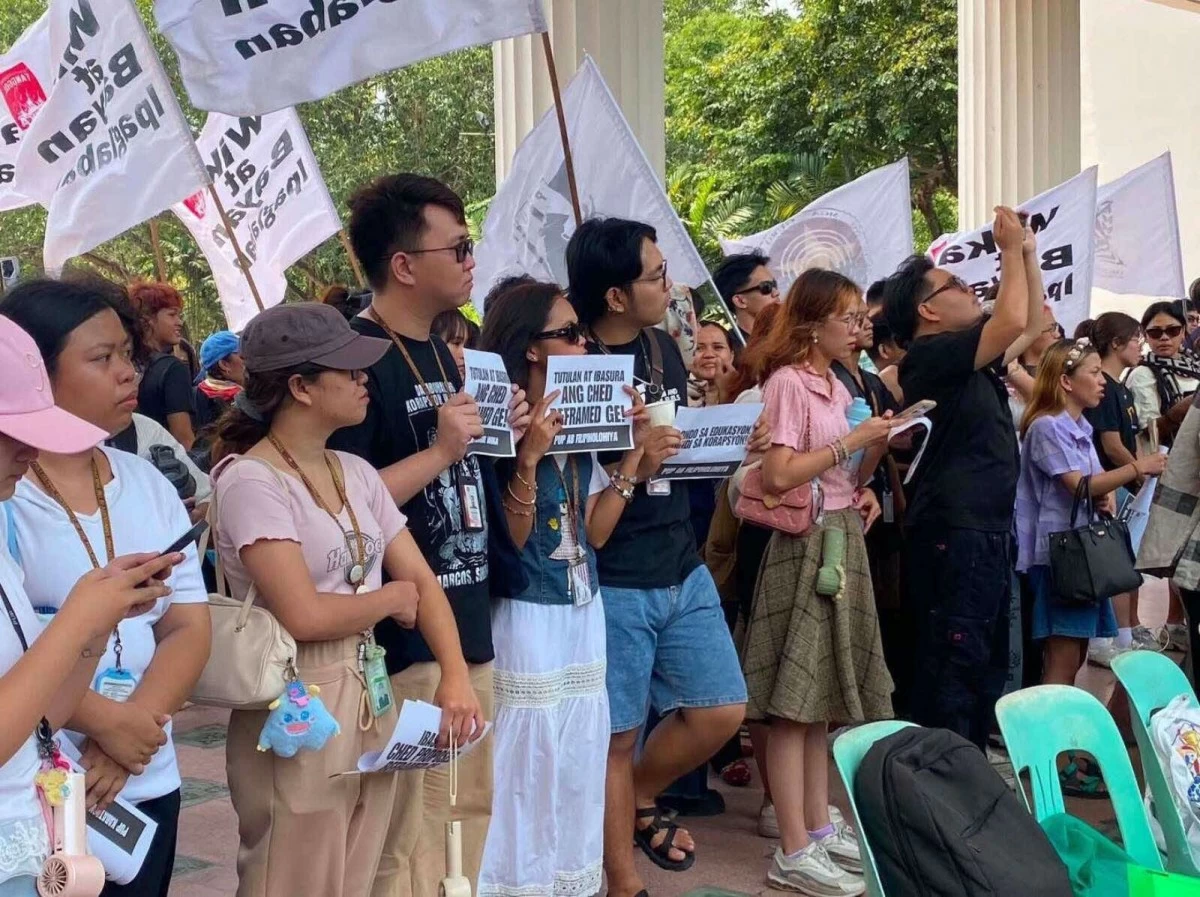
Educators, academic workers, and student groups march to the Commission on Higher Education (CHED) main office in Quezon City on Tuesday, May 12, to oppose the proposed Reframed General Education Curriculum. (The Catalyst)
Educators, academic organizations, and faculty unions marched to the Commission on Higher Education (CHED) main office in Quezon City on Tuesday, May 12, to oppose the proposed Reframed General Education (GE) Curriculum.
One of the major concerns raised by the groups was the proposal to reduce GE units in college curricula from 36 to as low as 18 units, which could lead to the removal, consolidation, or dilution of subjects such as Philosophy, Literature, Ethics, History, and the Arts.
The protesters first gathered at the University of the Philippines Diliman before marching to CHED, where they submitted petitions, position papers, and statements calling for the withdrawal of the proposed curriculum revisions.
Among the groups that joined the mobilization were Tanggol Wika, Tanggol Kasaysayan, Pambansang Samahan para sa Linggwistika at Literaturang Filipino (PSLLF), People’s Education Commission, Kilos para sa Makabayang Edukasyon, faculty unions from major universities, and academic employees’ organizations.
Critical education under threat
The groups urged CHED to junk the proposed curriculum revisions, saying the cuts would weaken the role of higher education in developing critical thinking, historical awareness, and civic consciousness among students.
General Education Movement convenor Prof. Jonathan Geronimo said educators view the proposal as a growing “market-driven” direction in Philippine higher education.
“CHED frames the proposal as modernization and streamlining, but beneath this language is a deeper restructuring of higher education according to neoliberal and market-oriented priorities,” Geronimo said.
He said the planned reduction in GE units would shift universities further toward labor market training at the expense of critical and humanistic education.
“The university is being reduced into a training center for flexible labor instead of remaining a space for critical inquiry, democratic reflection, and social responsibility,” he added.
The groups argued that humanities and social science subjects play a key role in developing communication skills, ethical reasoning, political awareness, and critical thinking, especially amid what they described as worsening disinformation, historical distortion, ecological crises, and democratic decline.
“It is deeply contradictory that CHED itself acknowledges deficiencies in critical thinking, reading comprehension, and communication among students while simultaneously proposing the reduction of the very disciplines that develop these capacities,” Geronimo said.
Faculty displacement feared
Faculty organizations also raised concerns over the proposal’s possible impact on instructors, particularly part-time, contractual, and non-tenured faculty members handling GE courses.
The groups said thousands of educators could face load reductions, reassignment, non-renewal of contracts, or displacement if the curriculum revisions are implemented.
“For years, educators have already endured contractualization, excessive workloads, budget constraints, and worsening precarity in the academe,” Geronimo said.
“The proposed GE cuts will intensify these conditions while treating educators merely as operational costs that can be minimized in the name of efficiency,” he added.
Urgent demands
The groups called on CHED to conduct a broader and more consultative review of the GE curriculum involving educators, academic departments, unions, and other stakeholders.
They also demanded for the withdrawal of the draft Reframed General Education Curriculum Component.
They also called for the retention of current GE units, restoration and institutionalization of subjects such as Filipino, Panitikan, and Philippine Government and Constitution, and protections against faculty displacement arising from curriculum revisions.
The groups also urged students, educators, and academic workers to oppose the proposed cuts and support a “nationalist, scientific, and mass-oriented education” system.
READ MORE: