







Poland marks Constitution Day in PH with shared history
Published May 11, 2026 01:25 pm


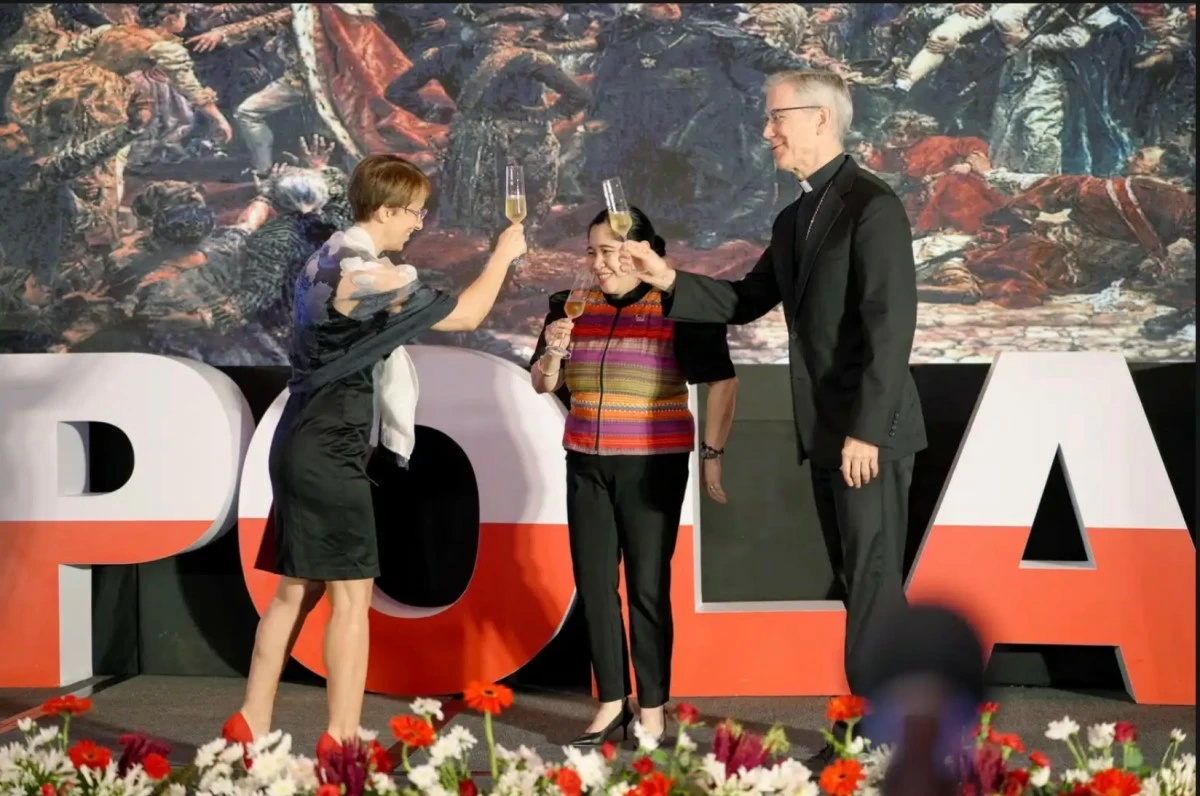
Chargé d’Affaires Katarzyna Wilkowiecka, DFA Undersecretary Ma. Theresa Dizon-de Vega, and Apostolic Nuncio Charles Brown share a toast during the celebration
On May 7, the Embassy of Poland in Manila marked the 235th anniversary of the Polish Constitution of 1791 with a reception at the ballroom of Fairmont Makati. Ratified on May 3, 1791, the document is recognized as the first modern constitution in Europe. The occasion also underscored the growing relationship between Poland and the Philippines, whose own constitutional history includes the Malolos Constitution of 1899, regarded as the foundation of the first constitutional republic in Asia.
The evening blended constitutional history, diplomacy, culture, and contemporary geopolitical realities, while also highlighting the growing engagement between Poland and the Philippines across political, economic, educational, and cultural sectors.
In her remarks, Chargé d’Affaires Katarzyna Wilkowiecka reflected on Poland’s long historical journey—from the baptism of Poland’s first ruler in 966 to the adoption of the May 3 Constitution in 1791, and later to the country’s disappearance from the map of Europe for 123 years following the partitions by neighboring powers.
She noted that despite foreign rule, Polish language, culture, science, and identity endured through generations.
“We are proud of this journey, and we are open to share our experiences, lessons learned, and even mistakes,” Wilkowiecka said, referring to Poland’s post-1989 democratic transformation and economic development.
She cited Poland’s progress in governance, education, healthcare, and anti-corruption reforms, as well as the role of European Union membership in modernizing the country’s economy and institutions.
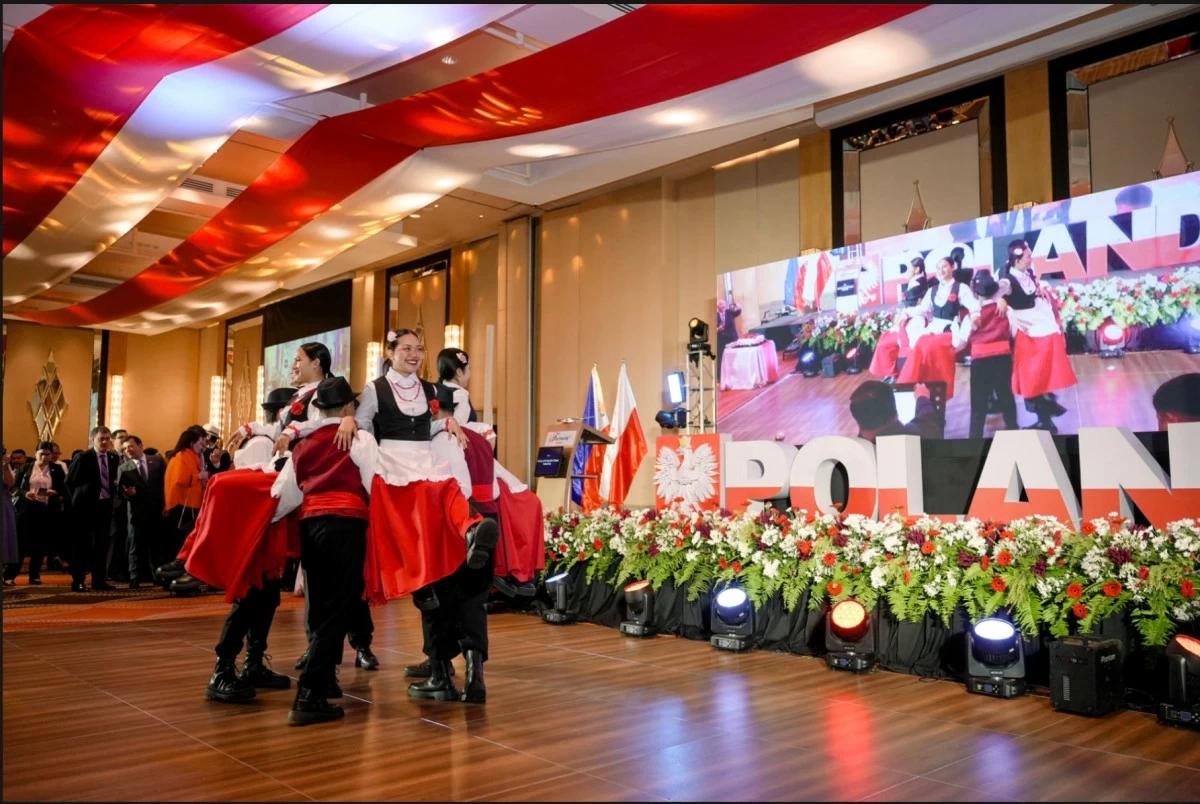
Dancers from the Lyceum of the Philippines University Cavite perform traditional Polish dances for the crowd
At the same time, Wilkowiecka acknowledged that Europe’s geopolitical environment has shifted dramatically since Russia’s invasion of Ukraine in 2022.
“Although the world’s attention is currently focused on the Middle East, we must not lose sight of Russia’s brutal and unjust war of aggression against Ukraine and keep it high on our agenda,” she said.
Representing the Philippine government, DFA Undersecretary Ma. Theresa Dizon-De Vega drew parallels between Poland’s constitutional legacy and the Philippines’ own democratic history.
“This milestone resonates for the Philippines, which is recognized as the first constitutional republic in Asia following the adoption of the Malolos Constitution in 1899,” she said.
De Vega described the 1791 Constitution as “a turning point in Poland’s great history” and “a testament to its enduring commitment to liberty, democracy and national identity.”
Formal diplomatic relations between the Philippines and Poland were established on Sept. 22, 1973, according to the Philippine Embassy in Warsaw. Since then, ties between the two countries have expanded across trade, defense, education, agriculture, legal cooperation, maritime affairs, science and technology, and culture.
De Vega noted that the relationship has evolved into “a dynamic and forward-looking partnership,” strengthened by high-level engagements and growing sectoral cooperation.
Among the recent milestones she cited were the visit of Polish Foreign Minister Radosław Sikorski to the Philippines in September 2024 and the 6th Philippines-Poland Political Consultations held in Warsaw in November 2024.
The relationship also carries historical and cultural dimensions.
De Vega recalled that Polish Jesuit missionary Wojciech Męciński arrived in Manila as early as 1642, creating one of the earliest links between the two countries. She also highlighted the visits of Pope Saint John Paul II to the Philippines in 1981 and 1995, moments that reinforced ties between two predominantly Catholic nations.
People-to-people connections continue to deepen as well. Poland is now home to more than 15,000 Filipinos, according to the DFA, many of whom work in healthcare, logistics, hospitality, and other sectors.
The Philippines also acknowledged Poland’s humanitarian support during times of crisis, including assistance following Typhoon Yolanda and vaccine donations during the COVID-19 pandemic. In 2021, Poland donated more than 500,000 doses of AstraZeneca vaccines to the Philippines.
The evening’s cultural program reflected the growing familiarity between the two countries.
The Lyceum of the Philippines University Cavite Chorale Group performed the national anthems of Poland and the Philippines, while the LPU Cavite Dance Company presented traditional Polish dances.
De Vega also noted that the Philippines supports Poland’s application to accede to the Treaty of Amity and Cooperation in Southeast Asia, expressing hope that the instrument of accession may be signed during the Philippine ASEAN chairship in 2026.
For Wilkowiecka, the future of Poland-Philippines relations lies in practical cooperation. She identified sectors such as agriculture, ship repair and maintenance, medical equipment, ICT, defense, culture, and even space and creative industries as potential areas for deeper engagement.
And rather than frame these as aspirations alone, she said she hoped to return next year with concrete outcomes already in motion.
For two countries separated by geography, Poland and the Philippines continue to find common ground through constitutional history, resilience, migration, faith, and an increasingly broad diplomatic agenda.