






Manila Bulletin
 Philippines
National
Phivolcs warns crater glow at Kanlaon Volcano may signal rising magmatic activity
Philippines
National
Phivolcs warns crater glow at Kanlaon Volcano may signal rising magmatic activity
Philippines
National
Phivolcs warns crater glow at Kanlaon Volcano may signal rising magmatic activity
Phivolcs warns crater glow at Kanlaon Volcano may signal rising magmatic activity
Published May 11, 2026 07:59 am


At A Glance
- Phivolcs said the alert status could be raised to Alert Level 3 should signs of an impending magmatic eruption become evident.
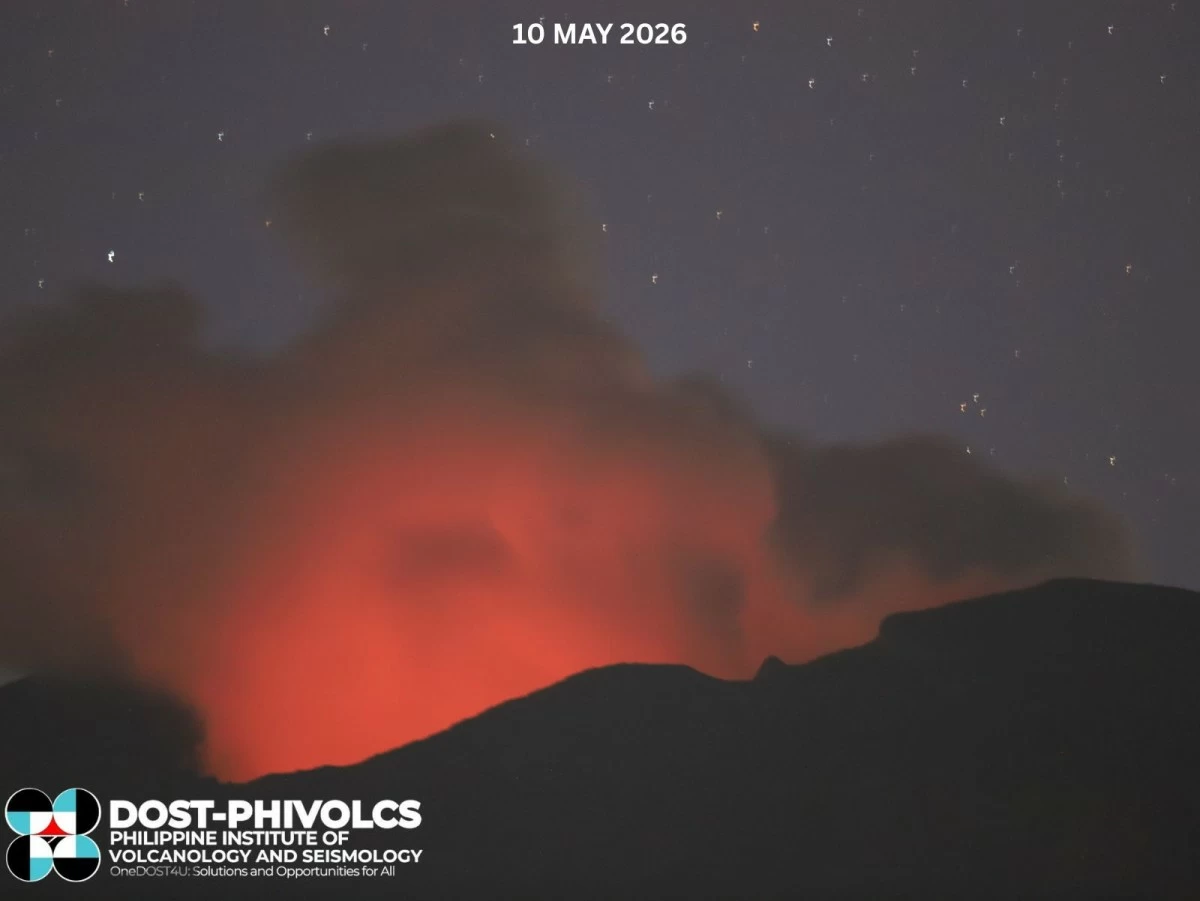
Crater glow or “banaag” is observed at the summit of Kanlaon Volcano on May 10, 2026. (Philippine Institute of Volcanology and Seismology)
The Philippine Institute of Volcanology and Seismology (Phivolcs) on Monday, May 11, warned of possible rising magmatic activity at Kanlaon Volcano after a visible crater glow or “banaag” was observed at the summit over the weekend.
Personnel at the Kanlaon Volcano Observatory in Negros Occidental observed the crater glow with the naked eye at around 7 p.m. on May 10, following months of monitoring superheated volcanic gas emissions at the summit crater through infrared and high-resolution cameras.
“Such a phenomenon when it becomes visible to the naked eye is called crater glow or ’banaag,’ a common precursor of magmatic eruption at Kanlaon Volcano,” state volcanologists said.
Phivolcs said superheated gas activity has persisted since November 2024 and became more frequent beginning April 13 this year.
While calling the development new, the agency said monitoring parameters at Kanlaon have remained generally unchanged since the volcano’s moderately explosive eruption on March 15.
Seismic activity has remained at “the steady rate of six volcano-tectonic earthquakes/day,” while sulfur dioxide emissions averaged 1,646 tons daily and slightly increased to 2,382 tonnes per day over the past week, Phivolcs said.
Ground deformation data also continued to indicate “a sustained and slow-rate inflation of the volcano edifice since 2022,” it added.
Higher alert status possible
Although monitoring parameters remain stable, Phivolcs warned that a sustained and intensifying crater glow could indicate that magma is already near the crater.
“If crater glow becomes sustained and intensifies, this would indicate that magma is close or at the crater and could warn of increasing chances of magmatic unrest within days,” it said.
Alert Level 2 remains in effect over Kanlaon Volcano, however, Phivolcs said the alert status could be raised to Alert Level 3 should signs of an impending magmatic eruption become evident.
Phivolcs reiterated that communities within the four-kilometer Permanent Danger Zone must remain evacuated due to the threat of pyroclastic density currents, lava flows, ballistic projectiles, ashfall, and rockfalls in the event of an eruption.
It also urged local government units and disaster response agencies to prepare for possible escalation of unrest, while warning of potential lahars and sediment-laden streamflows during heavy rains.
Civil aviation authorities were also advised to prevent aircraft from flying near the volcano’s summit because ash from sudden eruptions may pose hazards to flights.