







Values as destiny: A call for personal and social transformation
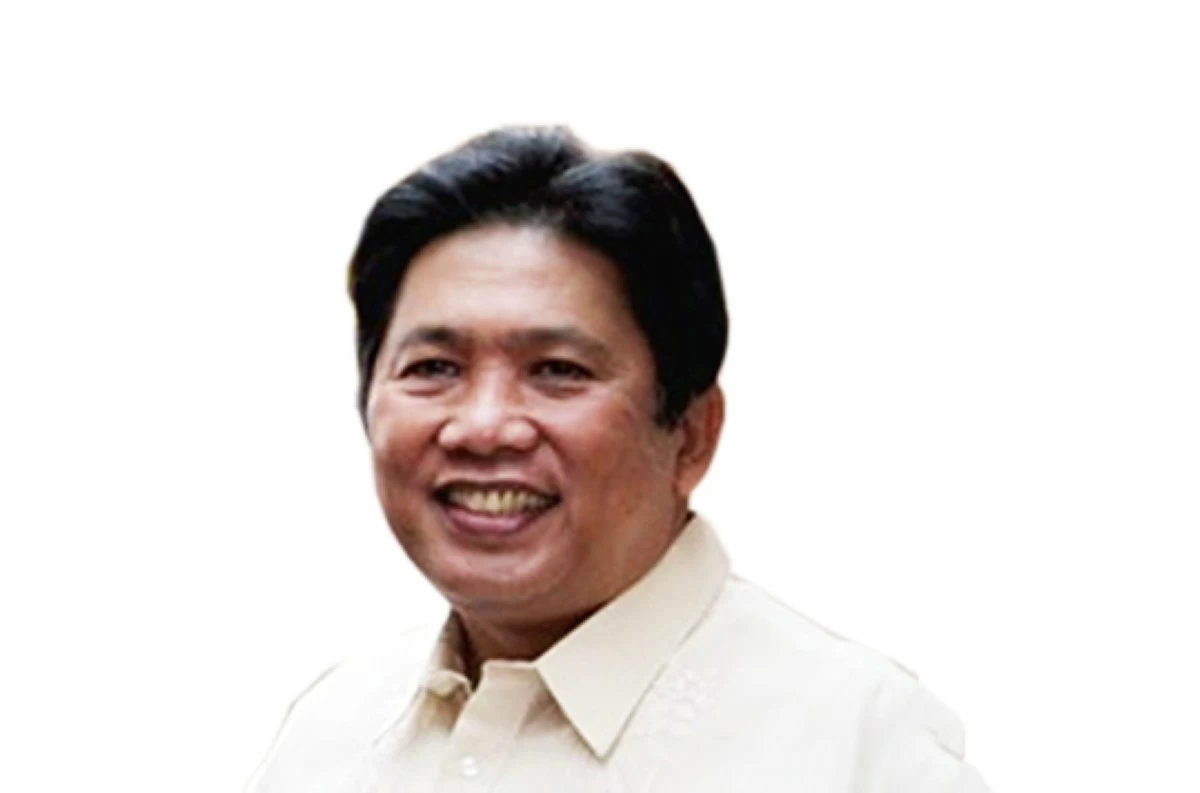
By Sonny Coloma
Published May 10, 2026 12:05 am


ENDEAVOR
What truly drives lasting change?
In an era fixated on digital transformation, economic indicators, and institutional reform, the instinct is to look outward—to systems, technologies, and policies. Yet experience consistently points us inward. The most decisive factor in shaping outcomes, whether in governance, business, or community life, remains values.
This is not a rhetorical assertion. It is a practical reality.
More than a decade ago, I wrote Diwa and Kapwa to frame this vital proposition: that sustainable progress begins with inner discipline and finds fulfillment in shared humanity. These works have since been actively propagated by the People Management Association of the Philippines (PMAP) as part of its continuing advocacy for values-based leadership across organizations.
The core ideas are straightforward.
Diwa calls for integrity, purpose, and excellence—the internal anchors that guide conduct when rules are insufficient. Kapwa affirms interconnectedness, urging empathy, respect, and responsibility in dealing with others. One speaks to the strength of character; the other, to the depth of relationship. Together, they form a coherent framework for personal transformation and societal change.
The relevance of this framework is best seen not in theory, but in practice.
The experience of the erstwhile Bangko Kabayan, which began as the Rural Bank of Ibaan (Batangas) offers a compelling case. Its growth was built not merely on financial acumen, but on trust—earned through disciplined governance and a consistent regard for client dignity. In an industry where short-term gains can easily overshadow long-term stewardship, it demonstrated that values-driven management is both viable and effective.
Equally instructive is the work of the Center for Community Transformation (CCT), led by Ruth Callanta who served for many years at the Philippine Business for Social Progress (PBSP) before joining the faculty of the Asian Institute of Management (AIM). Its model of community development integrates livelihood support with values formation, recognizing that economic upliftment cannot be sustained without personal accountability and social cohesion. By embedding honesty, discipline, and stewardship into its programs, CCT has enabled thousands of families not only to improve their material conditions, but to rebuild dignity and self-worth.
These are not isolated success stories. They point to a broader truth: development that is anchored on values is more resilient, more inclusive, and ultimately more enduring.
For public governance, the implications are clear. Transparency, accountability, and service orientation are not procedural requirements alone; they are expressions of institutional values. When consistently practiced, they build public trust. When neglected, they erode legitimacy—regardless of how well-crafted policies may be.
For the private sector, values define culture and shape performance. Organizations that uphold ethical standards, respect stakeholders, and take a long-term view are better positioned to sustain growth and credibility. This is precisely why global frameworks on environmental, social, and governance standards increasingly emphasize values as a core determinant of success.
At the individual level, the argument is even more direct. Values function as a compass in situations where complexity defies simple rules. They enable consistency in decision-making and steadiness in leadership. In times of uncertainty, they provide direction. In moments of pressure, they demand discipline.
Yet values do not form themselves. They must be intentionally cultivated.
This places a shared responsibility on key institutions. Families initiate the process. Schools reinforce it. Organizations operationalize it. Communities test and validate it. Media, for its part, shapes the narrative environment within which values are either strengthened or undermined.
The challenge lies in alignment. When what is taught in principle diverges from what is practiced in reality, values weaken. But when consistency is achieved—across home, school, workplace, and public life—values take root and begin to influence behavior at scale.
Recently, a long-time mentor and friend, who served in the government corporate sector during the Noynoy Aquino administration after a distinguished career as one of the senior leaders of the advertising industry, invited me to be a part of a movement to rediscover and propagate Filipino values.
I shared with Virgilio Yuzon, whom I fondly call Tito Gil, my continuing participation in the Diwa-Kapwa advocacy. He was enthused in realizing that his efforts to “kickstart a values revolution” in Philippine society are being mounted on fertile ground.
In essence, the growing number of those who appreciate the important impact of values formation in bringing about societal change are focusing their energies on promoting values education among children and youth. Aside from embedding the teaching of values in the curriculum, they believe that this may be propagated with even greater effectiveness in practical applications outside the classroom.
Imagine the tremendous impact if every teacher would conscientiously serve as a values educator. Such teacher would not only be an purveyor of knowledge but would serve as a role model of a values-driven exemplar.
As the country continues to pursue inclusive growth and institutional reform, this dimension cannot be overlooked. Investments in infrastructure, digitalization, and human capital must be matched by a parallel commitment to values formation and ethical leadership.
This is not a peripheral concern. It is foundational. For without integrity, systems fail. Without accountability, institutions weaken. Without empathy, progress excludes. In the final analysis, nation-building is not only about what we construct, but about who we become.
Diwa reminds us that character is destiny. Kapwa affirms that our destiny is shared.
If these values are consistently lived—in our institutions, our organizations, and our daily lives—then progress will not only be achieved. It will endure, and more importantly, it will uplift.
Comments may be sent to [email protected]