

ADVERTISEMENT

'Meet BRP Rajah Lakandula:' PH Navy welcomes newest offshore patrol ship named after Tondo's last ruler

Published May 10, 2026 02:00 pm

At A Glance

  • The Philippine Navy officially welcomed its second offshore patrol vessel, the future BRP Rajah Lakandula (PS-21), during a ceremony at Naval Operating Base-Subic after arriving in the country on May 4.
  • Built by South Korea's HD Hyundai Heavy Industries under the Navy's Offshore Patrol Vessel Acquisition Project, the ship is part of a six-vessel modernization deal signed in 2022 and scheduled for completion by 2028.
  • The ship was named after Rajah Lakandula, the last ruler of the Kingdom of Tondo during the early Spanish era.
  • The 2,400-ton vessel is 94.4 meters long, can travel up to 22 knots, and has a range of 5,500 nautical miles.
  • She is designed for maritime patrol, anti-piracy operations, fisheries protection, search and rescue, disaster response, and can operate helicopters and drones.
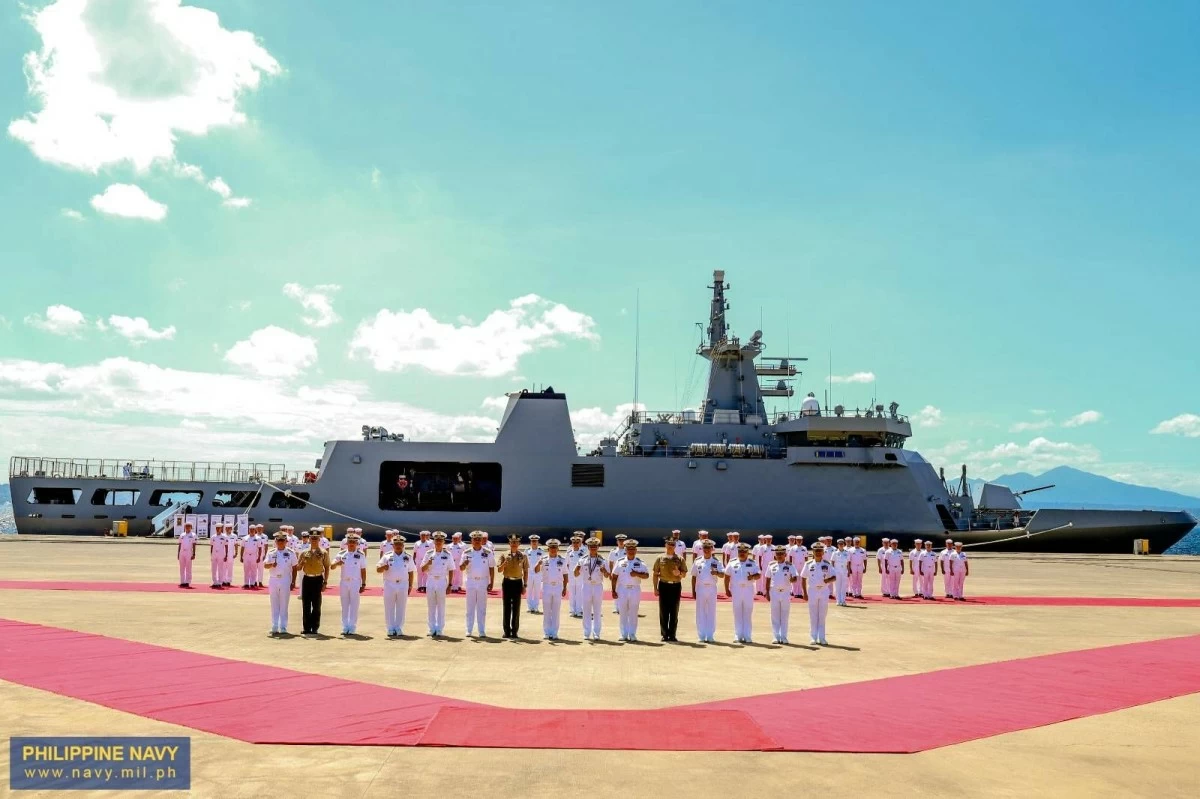
BRP Rajah Lakandula (Photo: Philippine Navy)
The Philippine Navy (PN) has welcomed its newest offshore patrol vessel (OPV), the future BRP Rajah Lakandula (PS-21), during an arrival ceremony in Zambales over the weekend.
The warship was delivered to the country on May 4 and was welcomed at the Naval Operating Base-Subic on May 8. She is the second offshore patrol vessel under the Navy’s Offshore Patrol Vessel Acquisition Project with South Korean shipbuilder HD Hyundai Heavy Industries after BRP Rajah Sulayman, which was commissioned into service in February.
Philippine Military Academy (PMA) Superintendent Vice Admiral Caesar Bernard N. Valencia served as keynote speaker during the arrival ceremony in Subic, that was also attended by PN Flag Officer in Command (FOIC) Vice Admiral Jose Ma. Ambrosio Q. Ezpeleta and Philippine Fleet (PF) Commander Rear Admiral Joe Anthony C. Orbe.
Valencia, who previously served as the first chairman of the Defense Acquisition System Assessment Team for the Offshore Patrol Vessel Acquisition Project in 2017, linked the ship’s arrival to the Navy’s modernization push.
“We are not just witnessing the arrival of a new vessel, we are experiencing institutional evolution of our Navy,” said Valencia, who also led technical working groups and project management teams behind the Navy’s frigate and corvette acquisition programs.
Named after Rajah Lakandula, the last ruler of the Kingdom of Tondo during the early Spanish period, the vessel joined a growing fleet of modern ships acquired under the Armed Forces of the Philippines (AFP) revised modernization program.
“When this ship sails, the spirit of Rajah Lakandula sails with it — steadfast, wise, and unyielding,” Valencia said.
“We are telling the world that we are a peace-loving nation. Our resolve to protect what is ours is as deep as the trenches of the Philippines,” he added.
The 2,400-ton offshore patrol vessel measures 94.4 meters long and 14.3 meters wide. It has a top speed of 22 knots, a cruising speed of 15 knots and an operational range of 5,500 nautical miles, based on specifications earlier released by HD Hyundai Heavy Industries.
The ship is designed for maritime patrol, anti-piracy missions, fisheries protection, search and rescue operations, and disaster response. It can also carry a helicopter and unmanned aerial vehicles.
The vessel is expected to become part of the Rajah Sulayman-class patrol ships that will boost the Navy’s offshore patrol force. Six vessels are scheduled for delivery through 2028 under a deal signed in 2022. The other OPVs will be named BRP Rajah Humabon, BRP Sultan Kudarat, BRP Datu Marikudo, and BRP Datu Sikatuna.
The Navy said the arrival of the future BRP Rajah Lakandula “underscores the Philippine Navy’s commitment to enhancing maritime security operations and maintaining a credible naval presence.”
“With the addition of this asset, the Philippine Navy continues to strengthen its ability to safeguard the nation’s maritime domain and support national security objectives,” added Capt. Marie Angelica Sisican, chief of Naval Public Affairs Office.

Related Tags

Philippine Navy BRP Rajah Lakandula offshore patrol vessel
ADVERTISEMENT
.most-popular .layout-ratio{ padding-bottom: 79.13%; } @media (min-width: 768px) and (max-width: 1024px) { .widget-title { font-size: 15px !important; } }

{{ articles_filter_1561_widget.title }}

.most-popular .layout-ratio{ padding-bottom: 79.13%; } @media (min-width: 768px) and (max-width: 1024px) { .widget-title { font-size: 15px !important; } }

{{ articles_filter_1562_widget.title }}

.most-popular .layout-ratio{ padding-bottom: 79.13%; } @media (min-width: 768px) and (max-width: 1024px) { .widget-title { font-size: 15px !important; } }

{{ articles_filter_1563_widget.title }}

{{ articles_filter_1564_widget.title }}

.mb-article-details { position: relative; } .mb-article-details .article-body-preview, .mb-article-details .article-body-summary{ font-size: 17px; line-height: 30px; font-family: "Libre Caslon Text", serif; color: #000; } .mb-article-details .article-body-preview iframe , .mb-article-details .article-body-summary iframe{ width: 100%; margin: auto; } .read-more-background { background: linear-gradient(180deg, color(display-p3 1.000 1.000 1.000 / 0) 13.75%, color(display-p3 1.000 1.000 1.000 / 0.8) 30.79%, color(display-p3 1.000 1.000 1.000) 72.5%); position: absolute; height: 200px; width: 100%; bottom: 0; display: flex; justify-content: center; align-items: center; padding: 0; } .read-more-background a{ color: #000; } .read-more-btn { padding: 17px 45px; font-family: Inter; font-weight: 700; font-size: 18px; line-height: 16px; text-align: center; vertical-align: middle; border: 1px solid black; background-color: white; } .hidden { display: none; }
function initializeAllSwipers() { // Get all hidden inputs with cms_article_id document.querySelectorAll('[id^="cms_article_id_"]').forEach(function (input) { const cmsArticleId = input.value; const articleSelector = '#article-' + cmsArticleId + ' .body_images'; const swiperElement = document.querySelector(articleSelector); if (swiperElement && !swiperElement.classList.contains('swiper-initialized')) { new Swiper(articleSelector, { loop: true, pagination: false, navigation: { nextEl: '#article-' + cmsArticleId + ' .swiper-button-next', prevEl: '#article-' + cmsArticleId + ' .swiper-button-prev', }, }); } }); } setTimeout(initializeAllSwipers, 3000); const intersectionObserver = new IntersectionObserver( (entries) => { entries.forEach((entry) => { if (entry.isIntersecting) { const newUrl = entry.target.getAttribute("data-url"); if (newUrl) { history.pushState(null, null, newUrl); let article = entry.target; // Extract metadata const author = article.querySelector('.author-section').textContent.replace('By', '').trim(); const section = article.querySelector('.section-info ').textContent.replace(' ', ' '); const title = article.querySelector('.article-title h1').textContent; // Parse URL for Chartbeat path format const parsedUrl = new URL(newUrl, window.location.origin); const cleanUrl = parsedUrl.host + parsedUrl.pathname; // Update Chartbeat configuration if (typeof window._sf_async_config !== 'undefined') { window._sf_async_config.path = cleanUrl; window._sf_async_config.sections = section; window._sf_async_config.authors = author; } // Track virtual page view with Chartbeat if (typeof pSUPERFLY !== 'undefined' && typeof pSUPERFLY.virtualPage === 'function') { try { pSUPERFLY.virtualPage({ path: cleanUrl, title: title, sections: section, authors: author }); } catch (error) { console.error('ping error', error); } } // Optional: Update document title if (title && title !== document.title) { document.title = title; } } } }); }, { threshold: 0.1 } ); function showArticleBody(button) { const article = button.closest("article"); const summary = article.querySelector(".article-body-summary"); const body = article.querySelector(".article-body-preview"); const readMoreSection = article.querySelector(".read-more-background"); // Hide summary and read-more section summary.style.display = "none"; readMoreSection.style.display = "none"; // Show the full article body body.classList.remove("hidden"); } document.addEventListener("DOMContentLoaded", () => { let loadCount = 0; // Track how many times articles are loaded const offset = [1, 2, 3, 4, 5, 6, 7, 8, 9, 10]; // Offset values const currentUrl = window.location.pathname.substring(1); let isLoading = false; // Prevent multiple calls if (!currentUrl) { console.log("Current URL is invalid."); return; } const sentinel = document.getElementById("load-more-sentinel"); if (!sentinel) { console.log("Sentinel element not found."); return; } function isSentinelVisible() { const rect = sentinel.getBoundingClientRect(); return ( rect.top < window.innerHeight && rect.bottom >= 0 ); } function onScroll() { if (isLoading) return; if (isSentinelVisible()) { if (loadCount >= offset.length) { console.log("Maximum load attempts reached."); window.removeEventListener("scroll", onScroll); return; } isLoading = true; const currentOffset = offset[loadCount]; window.loadMoreItems().then(() => { let article = document.querySelector('#widget_1690 > div:nth-last-of-type(2) article'); intersectionObserver.observe(article) loadCount++; }).catch(error => { console.error("Error loading more items:", error); }).finally(() => { isLoading = false; }); } } window.addEventListener("scroll", onScroll); });

Sign up by email to receive news.