ADVERTISEMENT

ASEAN studying regional fuel reserve system amid global supply threats — Marcos

Published May 9, 2026 06:24 am
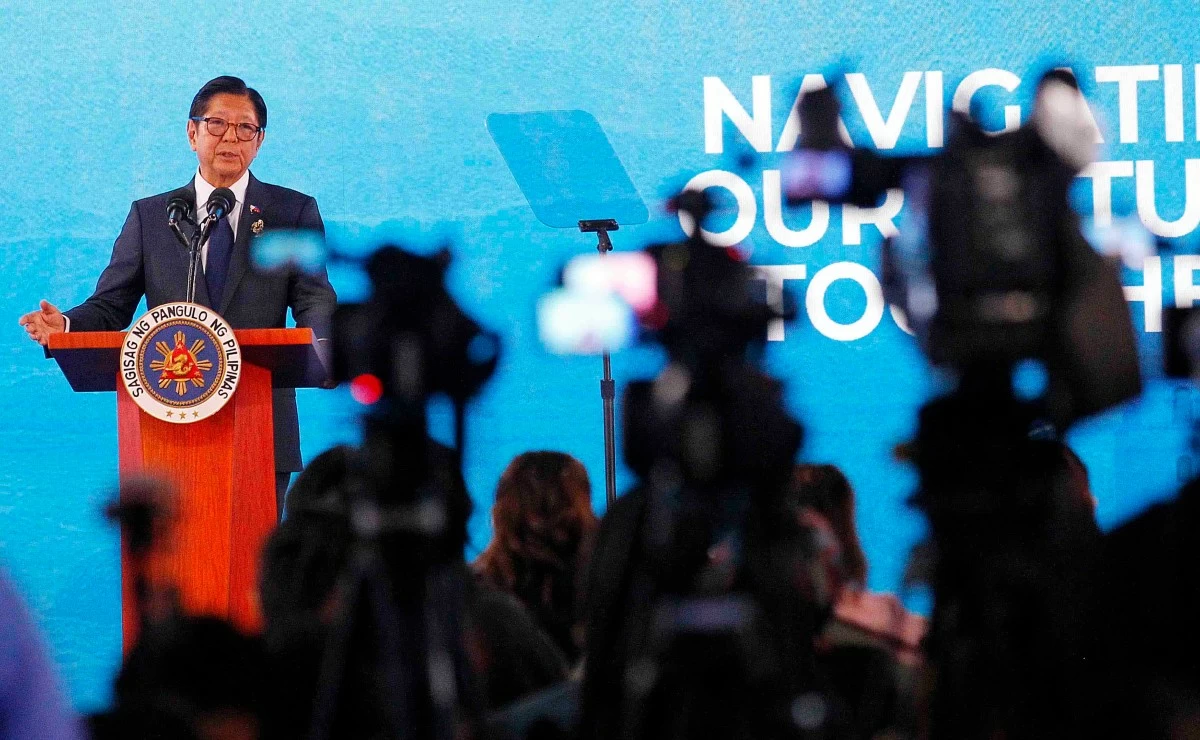
President Ferdinand 'Bongbong' Marcos Jr. speaks during a press conference at the International Media Center following the conclusion of the 2026 ASEAN Summit and Related Meetings in Cebu City, on May 8, 2026. (Mark Balmores)

LAPU-LAPU CITY, Cebu — The leaders of the Association of Southeast Asian Nations (ASEAN) are exploring the creation of a regional fuel reserve system to strengthen energy security and cushion member-states from future supply disruptions caused by wars and geopolitical tensions, President Marcos said.

Speaking during a press conference after the 48th ASEAN Summit here, Marcos said the proposed mechanism would function similarly to ASEAN’s emergency rice reserve system.

“The one thing that we talked about that concerned fuel supply was a fuel reserve,” he said on May 8.

“To put together a fuel reserve is something like the emergency rice reserve,” he added.

According to the President, ASEAN leaders discussed the possibility of maintaining reserves for various petroleum products ranging from crude oil to highly refined fuels such as jet fuel.

The proposal comes amid ongoing global uncertainty stemming from the Middle East conflict and concerns about disruptions to vital trade routes, such as the Strait of Hormuz.

“But beyond that is the reserve, so that we have something in reserve,” Marcos said.

“And when something like this happens, a war happens, a trade route like the Strait of Hormuz is closed, and with all the attendant effects, we have somewhere to immediately run to for emergency supply,” he added.

Balancing supply differences

President Marcos said ASEAN countries currently face varying fuel supply conditions, with some nations experiencing surpluses while others face shortages.

“Because the situation right now is very different from each country,” the President said.

“Some countries have a surplus of a certain kind of fuel, other people have a shortage, and we’re trying to balance that out,” he added.

Marcos clarified that ASEAN member-states would still continue pursuing their own fuel supply arrangements while developing a regional cooperative mechanism.

“So we are trying to even out those differences between countries,” he said.

“We are making our own arrangements, but at the same time we are coming together and developing the idea that we will have a fuel reserve,” he added.

From crude oil to jet fuel

Marcos said the proposed reserve system could eventually include different kinds of fuel products.

“All the kinds of fuels, all the different kinds of fuel: crude oil, all the way to jet fuel, all the way to the most refined fuel,” he said.

The President expressed hope that large-scale disruptions would not happen again but emphasized the importance of preparedness through regional cooperation.

“And should such a thing happen again, then there is a reserve that we can all avail of,” he said.

Related Tags

President Marcos Bongbong Marcos ASEAN oil crisis oil supply fuel reserve
ADVERTISEMENT
.most-popular .layout-ratio{ padding-bottom: 79.13%; } @media (min-width: 768px) and (max-width: 1024px) { .widget-title { font-size: 15px !important; } }

{{ articles_filter_1561_widget.title }}

.most-popular .layout-ratio{ padding-bottom: 79.13%; } @media (min-width: 768px) and (max-width: 1024px) { .widget-title { font-size: 15px !important; } }

{{ articles_filter_1562_widget.title }}

.most-popular .layout-ratio{ padding-bottom: 79.13%; } @media (min-width: 768px) and (max-width: 1024px) { .widget-title { font-size: 15px !important; } }

{{ articles_filter_1563_widget.title }}

{{ articles_filter_1564_widget.title }}

.mb-article-details { position: relative; } .mb-article-details .article-body-preview, .mb-article-details .article-body-summary{ font-size: 17px; line-height: 30px; font-family: "Libre Caslon Text", serif; color: #000; } .mb-article-details .article-body-preview iframe , .mb-article-details .article-body-summary iframe{ width: 100%; margin: auto; } .read-more-background { background: linear-gradient(180deg, color(display-p3 1.000 1.000 1.000 / 0) 13.75%, color(display-p3 1.000 1.000 1.000 / 0.8) 30.79%, color(display-p3 1.000 1.000 1.000) 72.5%); position: absolute; height: 200px; width: 100%; bottom: 0; display: flex; justify-content: center; align-items: center; padding: 0; } .read-more-background a{ color: #000; } .read-more-btn { padding: 17px 45px; font-family: Inter; font-weight: 700; font-size: 18px; line-height: 16px; text-align: center; vertical-align: middle; border: 1px solid black; background-color: white; } .hidden { display: none; }
function initializeAllSwipers() { // Get all hidden inputs with cms_article_id document.querySelectorAll('[id^="cms_article_id_"]').forEach(function (input) { const cmsArticleId = input.value; const articleSelector = '#article-' + cmsArticleId + ' .body_images'; const swiperElement = document.querySelector(articleSelector); if (swiperElement && !swiperElement.classList.contains('swiper-initialized')) { new Swiper(articleSelector, { loop: true, pagination: false, navigation: { nextEl: '#article-' + cmsArticleId + ' .swiper-button-next', prevEl: '#article-' + cmsArticleId + ' .swiper-button-prev', }, }); } }); } setTimeout(initializeAllSwipers, 3000); const intersectionObserver = new IntersectionObserver( (entries) => { entries.forEach((entry) => { if (entry.isIntersecting) { const newUrl = entry.target.getAttribute("data-url"); if (newUrl) { history.pushState(null, null, newUrl); let article = entry.target; // Extract metadata const author = article.querySelector('.author-section').textContent.replace('By', '').trim(); const section = article.querySelector('.section-info ').textContent.replace(' ', ' '); const title = article.querySelector('.article-title h1').textContent; // Parse URL for Chartbeat path format const parsedUrl = new URL(newUrl, window.location.origin); const cleanUrl = parsedUrl.host + parsedUrl.pathname; // Update Chartbeat configuration if (typeof window._sf_async_config !== 'undefined') { window._sf_async_config.path = cleanUrl; window._sf_async_config.sections = section; window._sf_async_config.authors = author; } // Track virtual page view with Chartbeat if (typeof pSUPERFLY !== 'undefined' && typeof pSUPERFLY.virtualPage === 'function') { try { pSUPERFLY.virtualPage({ path: cleanUrl, title: title, sections: section, authors: author }); } catch (error) { console.error('ping error', error); } } // Optional: Update document title if (title && title !== document.title) { document.title = title; } } } }); }, { threshold: 0.1 } ); function showArticleBody(button) { const article = button.closest("article"); const summary = article.querySelector(".article-body-summary"); const body = article.querySelector(".article-body-preview"); const readMoreSection = article.querySelector(".read-more-background"); // Hide summary and read-more section summary.style.display = "none"; readMoreSection.style.display = "none"; // Show the full article body body.classList.remove("hidden"); } document.addEventListener("DOMContentLoaded", () => { let loadCount = 0; // Track how many times articles are loaded const offset = [1, 2, 3, 4, 5, 6, 7, 8, 9, 10]; // Offset values const currentUrl = window.location.pathname.substring(1); let isLoading = false; // Prevent multiple calls if (!currentUrl) { console.log("Current URL is invalid."); return; } const sentinel = document.getElementById("load-more-sentinel"); if (!sentinel) { console.log("Sentinel element not found."); return; } function isSentinelVisible() { const rect = sentinel.getBoundingClientRect(); return ( rect.top < window.innerHeight && rect.bottom >= 0 ); } function onScroll() { if (isLoading) return; if (isSentinelVisible()) { if (loadCount >= offset.length) { console.log("Maximum load attempts reached."); window.removeEventListener("scroll", onScroll); return; } isLoading = true; const currentOffset = offset[loadCount]; window.loadMoreItems().then(() => { let article = document.querySelector('#widget_1690 > div:nth-last-of-type(2) article'); intersectionObserver.observe(article) loadCount++; }).catch(error => { console.error("Error loading more items:", error); }).finally(() => { isLoading = false; }); } } window.addEventListener("scroll", onScroll); });

Sign up by email to receive news.