







Global conflicts now impossible to isolate, Marcos tells ASEAN


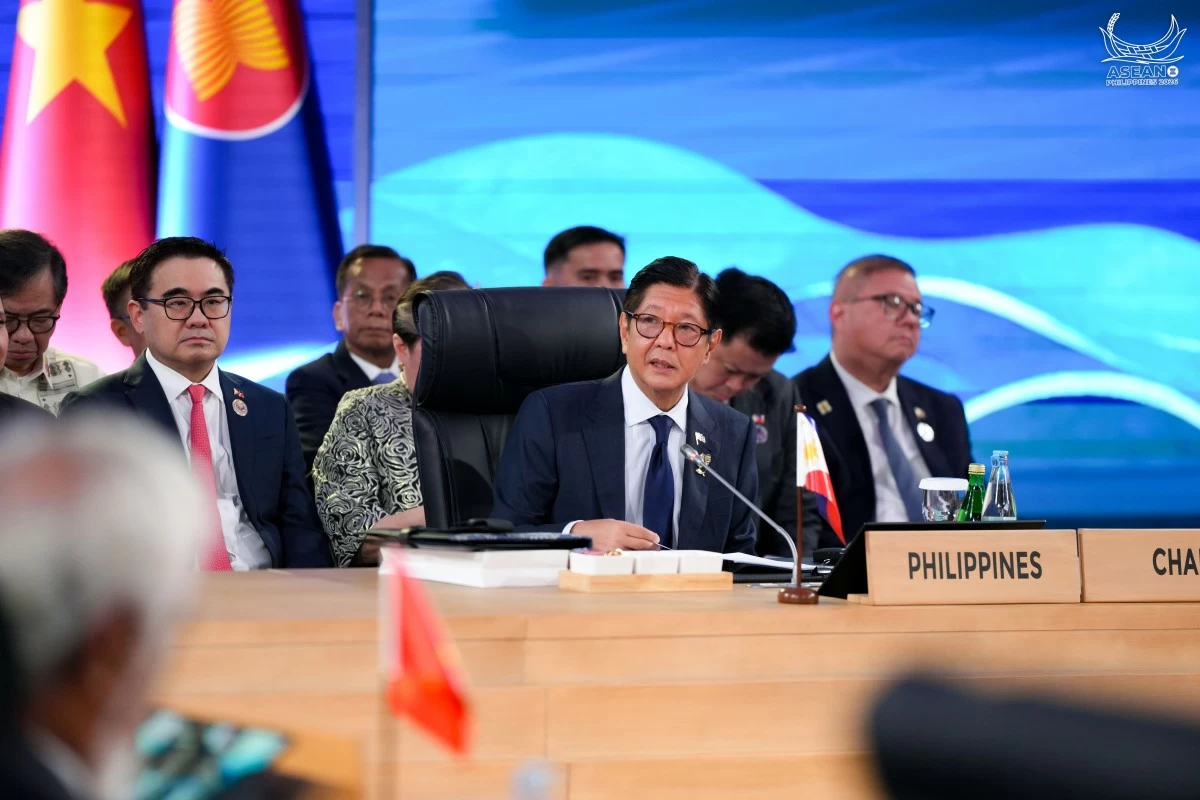
LAPU-LAPU CITY, Cebu — President Marcos has warned Southeast Asian leaders that no country can shield itself from the ripple effects of global conflicts, saying crises beyond the region are now directly affecting the daily lives of the people in the region.
Speaking at the Retreat Session of the 48th Association of Southeast Asian Nations (ASEAN) Summit here, Marcos said the ongoing geopolitical tensions and oil supply disruptions have demonstrated how deeply interconnected economies and societies have become.
“We gather at a time of uncertainty—a time when events far beyond our region remind us once again of how deeply interconnected we are,” the President said on Friday, May 8.
“Neither distance nor partnerships alone insulate any nation from the ripple effects of conflicts halfway around the world,” he added.
The President said instability in one part of the globe can quickly reverberate across supply chains, financial markets, and ordinary households.
“In an increasingly connected world, instability in one part of the globe will quickly reverberate across supply chains, financial markets, and the daily lives of our peoples,” he said.
Oil disruptions affecting ASEAN
Marcos said ASEAN nations have already experienced firsthand the effects of oil supply disruptions caused by ongoing global tensions.
“We have seen firsthand the vulnerability of our nations to external factors,” he said.
“The domino effect of oil supply disruptions on the various sectors of our countries has affected how we conduct business, how we work, [and] how we live,” he added.
The President warned that even if geopolitical tensions eventually ease, the long-term effects of the crisis would continue to be felt.
“Even if the tensions de-escalate in time, the damage to critical infrastructure, to vital systems, and trust in general will continue to be felt for years to come,” Marcos said.
LEAD-SAIL-RISE framework
Marcos also introduced the Philippines’ LEAD-SAIL-RISE framework, which seeks to align ASEAN’s political-security, economic, and socio-cultural pillars into a unified strategy.
Under the framework:
“LEAD” aims to reinforce a rules-based and resilient Political-Security Community; “SAIL” seeks to drive an integrated and innovation-led Economic Community; and “RISE” focuses on a people-centered and inclusive Socio-Cultural Community.
“Together, the framework translates ASEAN’s long-term vision into mutually reinforcing actions on peace, prosperity, and people empowerment,” Marcos said.
Food, energy, and migrant welfare
The President said ASEAN leaders held “candid and productive” discussions on regional energy security, food security, and the safety of ASEAN nationals working abroad.
“These are no longer abstract concerns. They are immediate responsibilities that call for foresight, coordination, and concrete and collective action,” he said.
Marcos also called on ASEAN member-states to strengthen institutions and improve crisis coordination to better withstand future shocks.
“May this afternoon’s exchange give us an opportunity to reflect on how we can move forward — not only in how we respond to immediate disruptions, but in how we can strengthen our institutions, maximize existing mechanisms, and effectively implement action plans so that future shocks do not become future crises,” he said.