






Manila Bulletin
 Philippines
National
AFP, US military conclude Balikatan drills with warning: 'This is warfighting in the 21st century'
Philippines
National
AFP, US military conclude Balikatan drills with warning: 'This is warfighting in the 21st century'
Philippines
National
AFP, US military conclude Balikatan drills with warning: 'This is warfighting in the 21st century'
AFP, US military conclude Balikatan drills with warning: 'This is warfighting in the 21st century'
Published May 8, 2026 03:58 pm


At A Glance
- The 41st Exercise Balikatan between the Philippines and the United States officially concluded on May 8, 2026 at Camp Aguinaldo in Quezon City.
- Balikatan brought together about 17,000 troops from the Philippines, US, and partner nations including Australia, Japan, Canada, France, and New Zealand.
- The drills focused on improving interoperability, maritime security, and readiness for modern multi-domain warfare.
- US Indo-Pacific Command chief Adm. Samuel Paparo described the exercise as a major evolution into a multinational mission rehearsal aimed at strengthening deterrence and defending the Philippines amid rising regional tensions.
- Department of National Defense (DND) Secretary Gilberto Teodoro Jr. credited President Ferdinand Marcos Jr. for sustaining the large-scale drills and emphasized the importance of advanced, precise military capabilities, including long-range strike systems.
- Armed Forces of the Philippines (AFP) Chief, Gen. Romeo Brawner Jr. stressed that readiness and trust among allies cannot be built quickly and said future exercises may expand further.
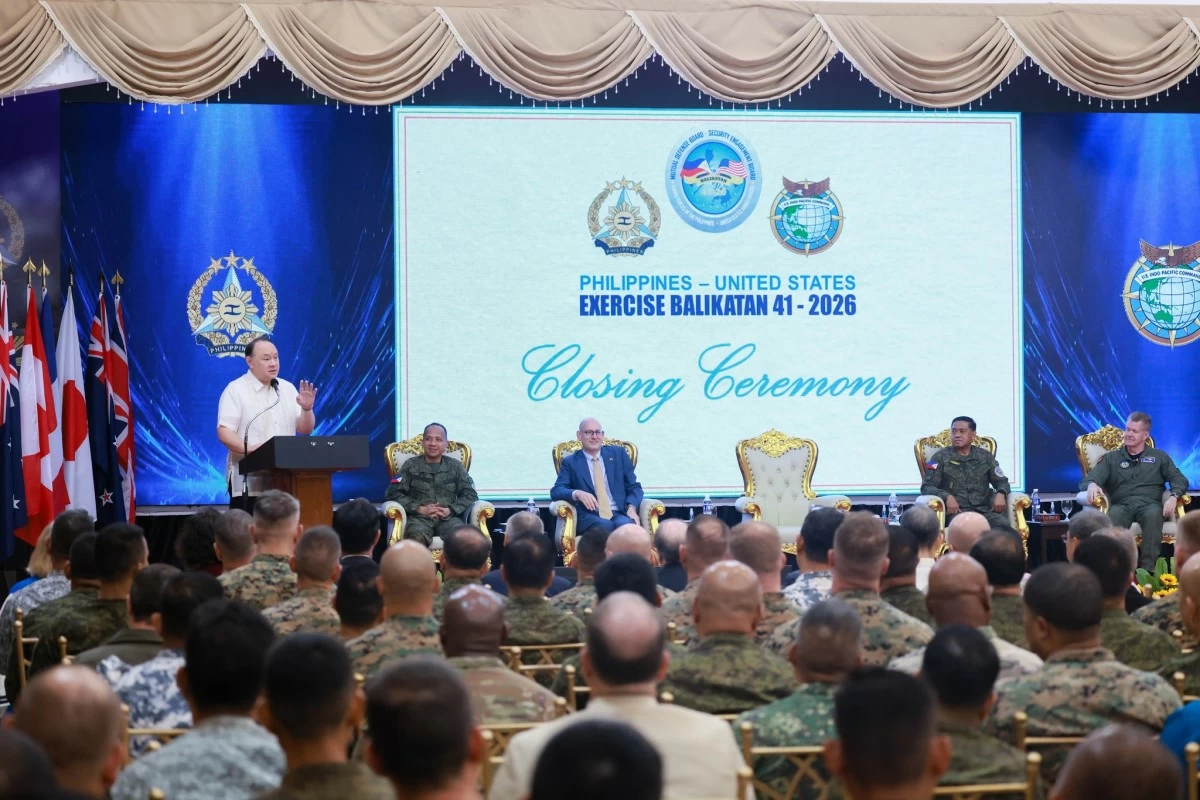
Department of National Defense (DND) Sec. Gilberto Teodoro Jr. delivers a speech during the closing ceremony of the 41st iteration of the Exercise Balikatan at Camp Aguinaldo in Quezon City on May 8, 2026. (Photo: DND)
The Armed Forces of the Philippines (AFP) and the United States military wrapped up the 41st iteration of “Exercise Balikatan” on Friday, May 8, at Camp Aguinaldo in Quezon City as defense and military leaders described the drills as preparation for “warfighting in the 21st century” amid rising regional tensions.
Held from April 20 to May 8, this year’s exercise brought together around 17,000 troops from the Philippines, United States, and partner countries including Australia, Japan, Canada, France, and New Zealand to strengthen interoperability, maritime security, and regional defense cooperation.
Department of National Defense (DND) Secretary Gilberto Teodoro Jr. led the closing ceremony which featured the ceremonial furling of the Balikatan flag by Admiral Samuel Paparo, commander of the US Indo-Pacific Command (Indopacom), and AFP Chief, General Romeo Brawner Jr. to symbolize the end of the two-week-long drills.
In his speech, Paparo described the drills as a turning point in allied operations, calling Balikatan “a strategic evolution from a bilateral exercise to a full-scale multinational mission rehearsal for the defense of the Republic of the Philippines.”
“This Balikatan had a series of watershed moments across the multinational joint force, and you all made clear that deterrence is our highest duty,” he said.
Paparo said operations spanned land, sea, air, cyber, and space domains, and involved multinational coordination across forces.
During the exercise, participating forces conducted Integrated Air and Missile Defense, multinational maritime event, maritime key terrain security operations, counter-landing live fire exercises, maritime strike operations, and humanitarian and civic assistance activities.
This year’s iteration also marked the first-time participation of the Japan Ground Self-Defense Force’s Type 88 Surface-to-Ship Missile System and the employment of the U.S. Tomahawk Land Attack Missile capability.
“This growth reflects the dangerous security environment we live in, and it also requires the sovereign choices of partner nations,” he said.
“Balikatan 26 made us faster and better, and this is warfighting in the 21st century,” he pointed out.
For deterrence
Meanwhile, Teodoro underscored President Ferdinand Marcos Jr.’s role in sustaining the large-scale exercises despite competing national crises.
“Firstly, I think we should give credit where credit is due. I have to publicly thank the President of the Republic of the Philippines for exercising rock-solid and steadfast leadership in ensuring that not only Balikatan, but our military resilience and deterrence objectives go on as scheduled and unhampered,” Teodoro said at Camp Aguinaldo.
Teodoro linked the conduct of the drills to broader national policy, saying the President “embodies the collective will and desire of the Filipino people for deterrence, for preserving the rule of law in this part of the world.”
He then highlighted the growing sophistication of the exercises, citing live-fire demonstrations and long-range strike capabilities as proof of evolving warfare demands.
“This demonstration, complex as it is, really will underscore the need to preserve our military spaces and to invest in higher technology because with precision comes safety. With precision, of course, comes lethality,” he said.
Teodoro also emphasized the importance of investing in credible defense capabilities, citing the successful Tomahawk missile launch using the US Typhon mid-range capability from Tacloban City, Leyte that precisely hit a target 600 kilometers away in Laur, Nueva Ecija.
During a media briefing, Teodoro also dismissed China's criticisms of allied military activities, particularly comments opposing Japan’s participation and missile-related drills.
“Wala silang pakialam doon,” he said, accusing Beijing of destabilizing activities in the region, citing actions in the West Philippine Sea (WPS) and other Southeast Asian waters.
“Eh pakialam sila ng pakialam, 'yung kanilang sariling bakuran, lalo na 'yung panunupil sa kanilang mga kababayan na hindi nila tinitigilan (They keep interfering and meddling in other people’s affairs, when they should be taking care of their own backyard—especially the repression of their own citizens, which they never stop doing,” he said.
AFP: ‘Preparedness cannot be improvised’
For his part, Brawner said the exercise showed the need for constant readiness and trust among allies.
“Over the past week, Balikatan 41 has demonstrated what preparedness looks like when nations train with purpose, operate with trust, and stand with clarity beside one another,” Brawner said.
“Readiness cannot be improvised. Interoperability cannot be developed overnight. Trust cannot be built only in moments of crisis,” he added.
He also emphasized that Balikatan serves not only as a training platform but also as a deterrence exercise.
Brawner said future exercises may expand in scope, including possible new areas of operation beyond the traditional training sites in the country.
ASEAN role and future expansion
Meanwhile, Teodoro said ASEAN participation in the future iterations of Balikatan remains limited but open.
“Depende rin naman sa kanilang mga liderato (It depends on their leaders),” he said, when asked whether Southeast Asian states would be included in future expansions.
Brawner said ASEAN engagement remains largely bilateral and focused on humanitarian assistance and disaster response, but stressed that “we are not excluding anyone from Balikatan.”
As the drills concluded, Teodoro signaled continued expansion of interoperability and communications networks among allies, with future exercises expected to widen both scope and coordination.
“Peace is not a free dividend. It comes with resources, it comes with commitment, it comes with sacrifice,” he said.
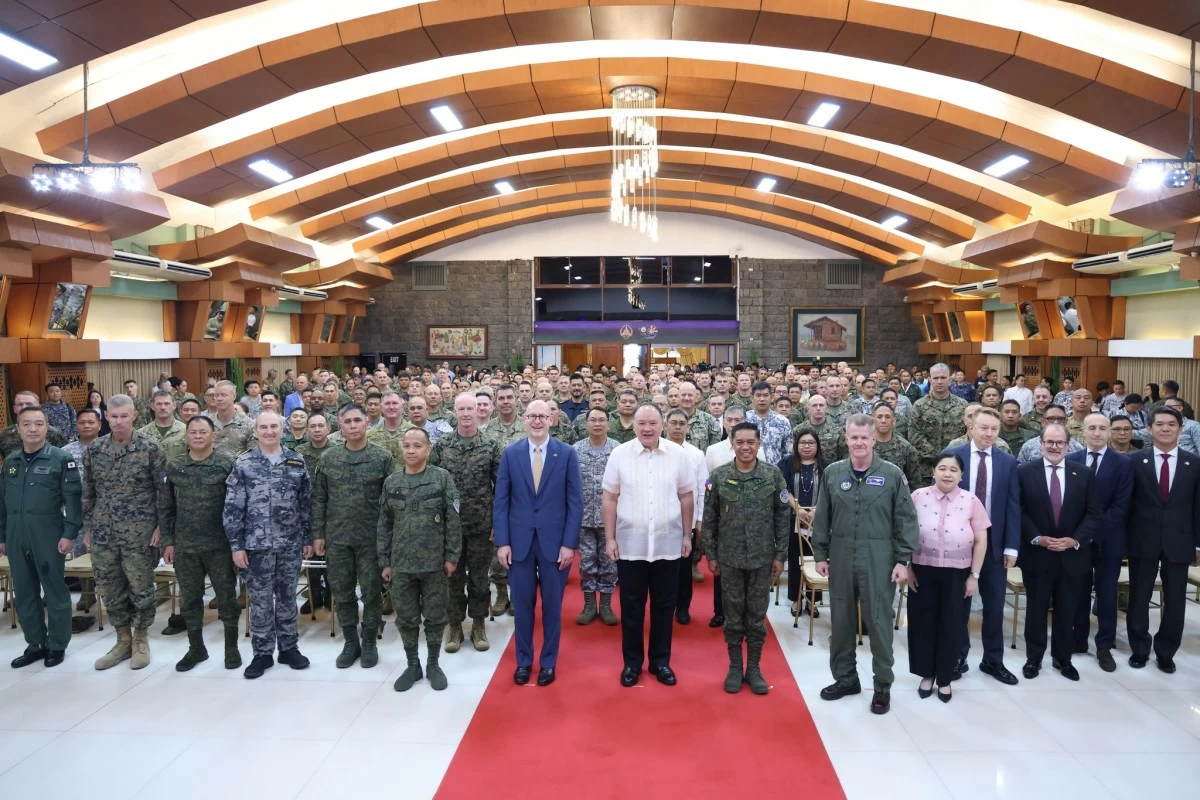
The Armed Forces of the Philippines (AFP) and the United States military wrap up the 41st iteration of “Exercise Balikatan” on May 8, 2026 at Camp Aguinaldo in Quezon City as defense and military leaders described the drills as preparation for “warfighting in the 21st century” amid rising regional tensions. Department of National Defense (DND) Secretary Gilberto Teodoro Jr. led the closing ceremony which featured the ceremonial furling of the Balikatan flag by Admiral Samuel Paparo, commander of the US Indo-Pacific Command (Indopacom), and AFP Chief, General Romeo Brawner Jr. to symbolize the end of the two-week-long drills. (Photo: DND)
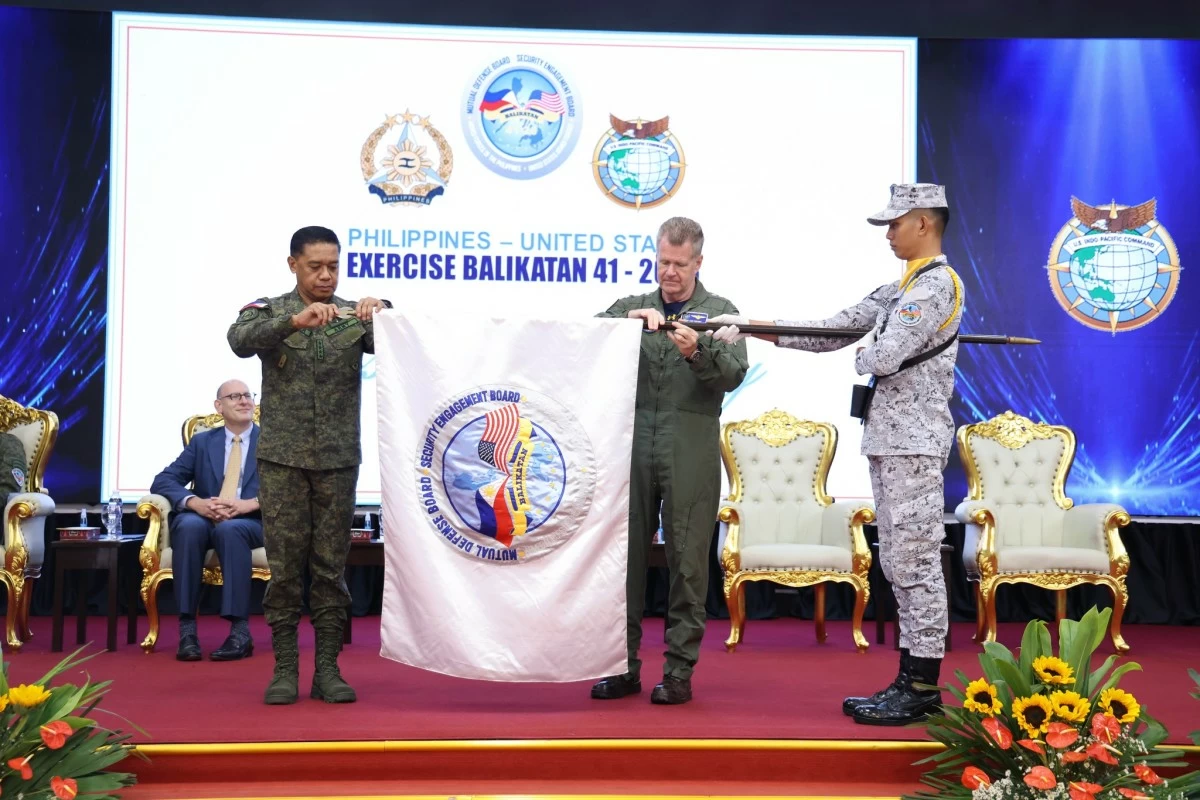
The Armed Forces of the Philippines (AFP) and the United States military wrap up the 41st iteration of “Exercise Balikatan” on May 8, 2026 at Camp Aguinaldo in Quezon City as defense and military leaders described the drills as preparation for “warfighting in the 21st century” amid rising regional tensions. Department of National Defense (DND) Secretary Gilberto Teodoro Jr. led the closing ceremony which featured the ceremonial furling of the Balikatan flag by Admiral Samuel Paparo, commander of the US Indo-Pacific Command (Indopacom), and AFP Chief, General Romeo Brawner Jr. to symbolize the end of the two-week-long drills. (Photo: DND)
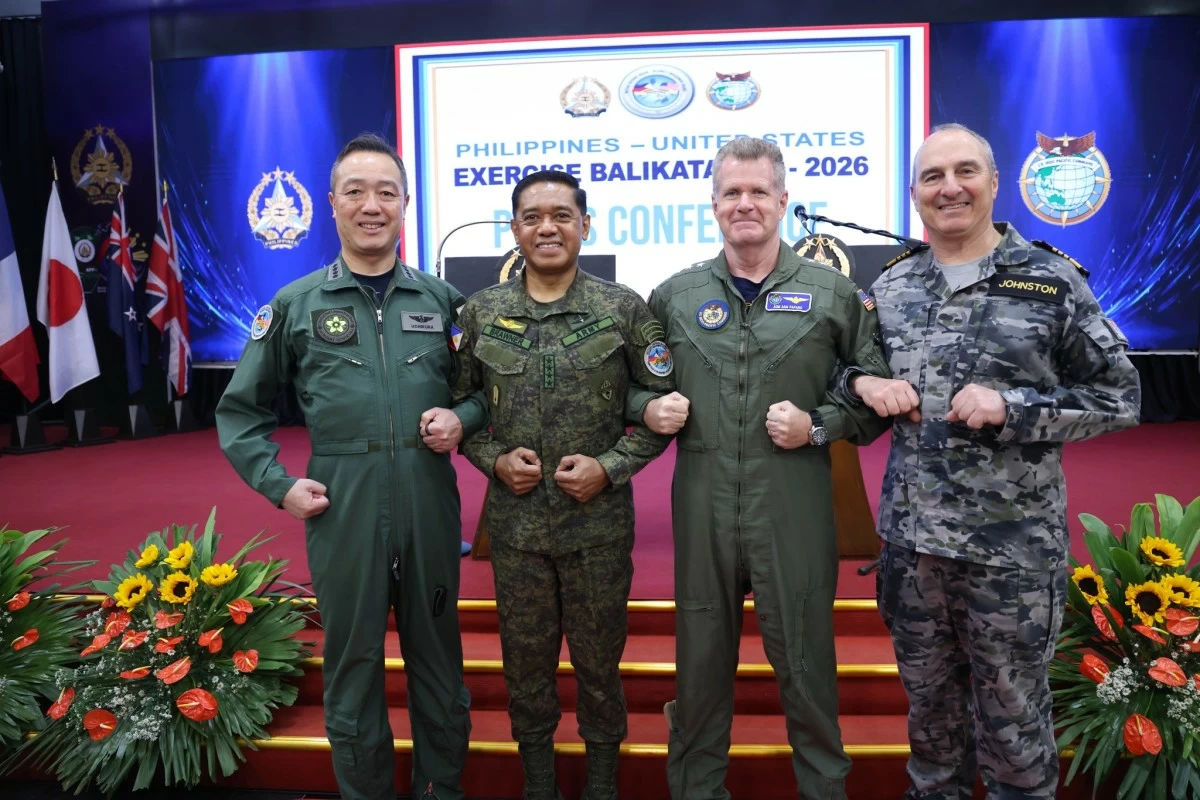
The Armed Forces of the Philippines (AFP) and the United States military wrap up the 41st iteration of “Exercise Balikatan” on May 8, 2026 at Camp Aguinaldo in Quezon City as defense and military leaders described the drills as preparation for “warfighting in the 21st century” amid rising regional tensions. Department of National Defense (DND) Secretary Gilberto Teodoro Jr. led the closing ceremony which featured the ceremonial furling of the Balikatan flag by Admiral Samuel Paparo, commander of the US Indo-Pacific Command (Indopacom), and AFP Chief, General Romeo Brawner Jr. to symbolize the end of the two-week-long drills. (Photo: DND)
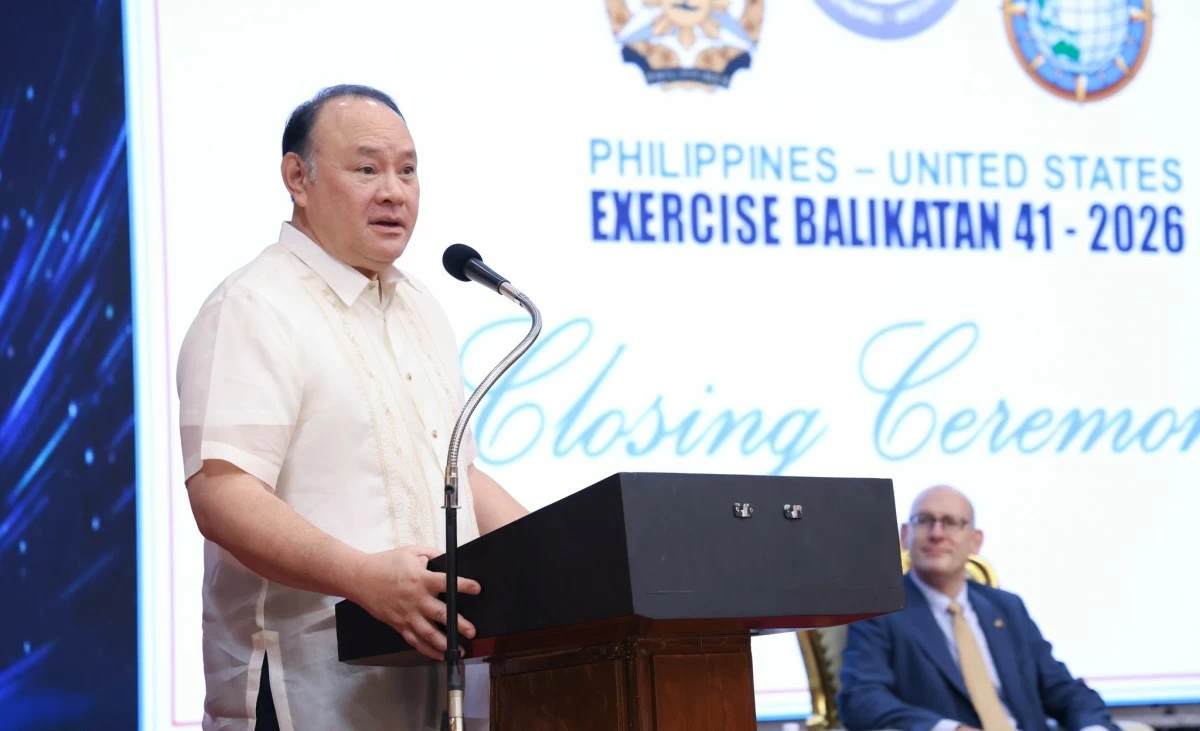
The Armed Forces of the Philippines (AFP) and the United States military wrap up the 41st iteration of “Exercise Balikatan” on May 8, 2026 at Camp Aguinaldo in Quezon City as defense and military leaders described the drills as preparation for “warfighting in the 21st century” amid rising regional tensions. Department of National Defense (DND) Secretary Gilberto Teodoro Jr. led the closing ceremony which featured the ceremonial furling of the Balikatan flag by Admiral Samuel Paparo, commander of the US Indo-Pacific Command (Indopacom), and AFP Chief, General Romeo Brawner Jr. to symbolize the end of the two-week-long drills. (Photo: DND)