







The world can't log off
Published May 7, 2026 03:25 pm


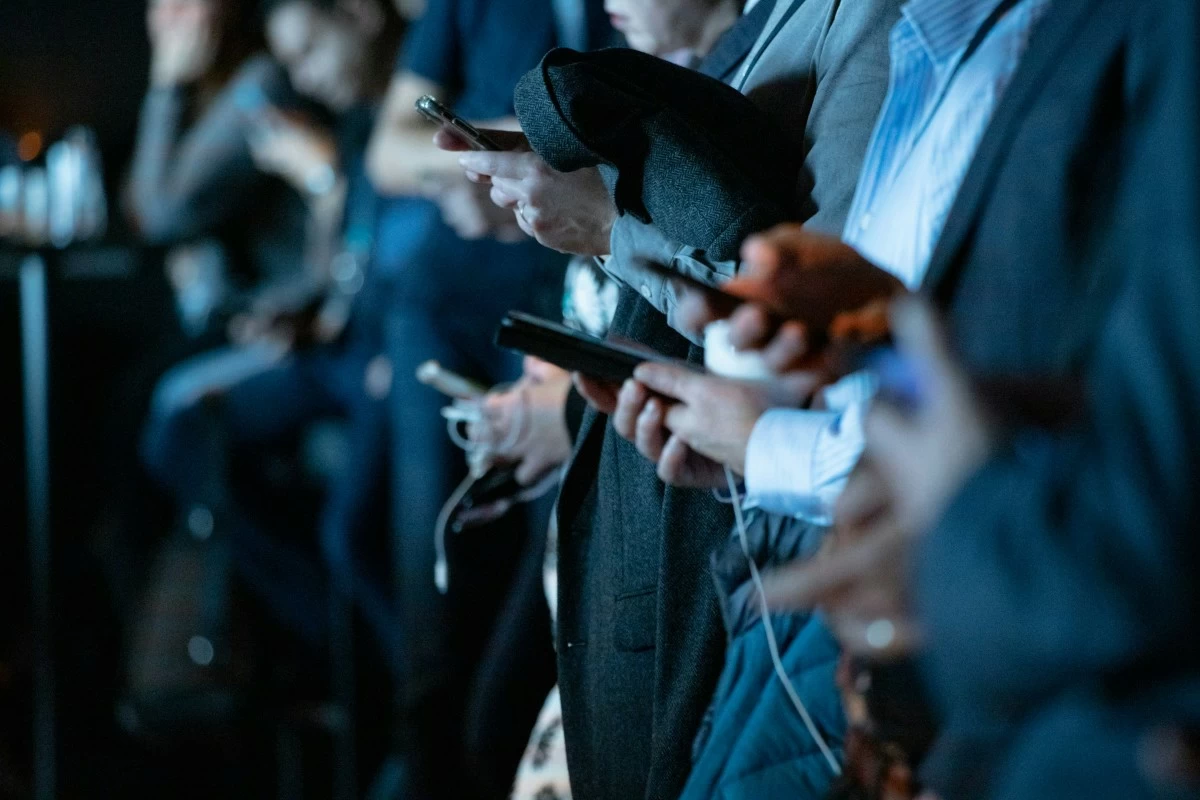
Photo by Camilo Jimenez on Unsplash
Philippines has the honor of being the number 2 in spending the most time in social media globally, with an average of 4 hours and 50 minutes. Kenya sits a little higher with 5 hours and 10 minutes. Shouldn't be too hard to overtake then, eh?
This report maps the nations most consumed by social media, and the findings reveal a world scrolling itself into exhaustion.
There is a number that stops you cold when you first encounter it: 5.66 billion. That is the estimated count of people on Earth who now use social media (According to the report, which was published earlier this year. A Google Search would reveal the number is 5.79 billion, perhaps it might have grown in the two months' time?). To put it another way, roughly 67.8 percent of the planet's population spends part of each day scrolling through feeds, reacting to strangers, and consuming content at a rate no human brain was built to process. By early 2026, 6.04 billion people are connected to the internet, and the overwhelming majority of them have found their way onto at least one social platform.
The scale of this shift prompted the team at PlayersTime to ask an obvious but underexamined question: Where are people spending the most time? Drawing on data from Similarweb, DataReportal, and Statista, the study tracked average daily social media activity across 68 nations and mapped the platforms driving that usage. What emerged is a portrait of a world that has reorganised significant portions of its waking life around a handful of apps, and is only beginning to grapple with what that means.
Not who you'd expect
The countries with the most social media users are not necessarily the ones most consumed by it. China leads the world in total user numbers with approximately 1.28 billion accounts, followed by India with around 500 million and the United States with 254 million. Indonesia, Brazil, and Russia each count their users in the hundreds of millions. And yet when the question shifts from headcount to hours, these giants largely vanish from the top of the table.
Kenya sits at the summit. Its users spend an average of 5 hours and 10 minutes on social media every single day, more than any other country in the study. The Philippines follows at 4 hours and 50 minutes. Brazil and Nigeria come in at 4 hours and 9 minutes each, while South Africa averages 4 hours and 2 minutes. These are not marginal differences. These are countries where social media has become something closer to a second full-time occupation.
The United States lands near the middle of the ranking, averaging 2 hours and 52 minutes per day. China, despite its enormous user base and a domestic social media ecosystem that rivals anything in the West, records just 1 hour and 53 minutes of daily engagement. Japan sits at the very bottom: 1 hour and 6 minutes. The pattern that emerges is striking, wealth and platform dominance do not predict compulsion. Something else is driving the heaviest use, and it appears concentrated in younger, faster-growing economies where social media arrived not as a complement to existing media habits but as the primary one.
The platform wars
Facebook remains the most-used platform on the planet, with 3.07 billion monthly active users. Instagram and WhatsApp each claim 3 billion. YouTube draws 2.58 billion, and TikTok, the relative newcomer, reaches 1.99 billion. But among these apps, which holds the most attention?
By that measure, TikTok wins. Its users average 97 minutes of engagement per day. YouTube comes second at 85 minutes, Instagram at 73, and Facebook at 67. TikTok's short-form video format has proven more addictive than anything that came before it, particularly among younger users who have made it their platform of choice.
At the other end of the engagement spectrum sit Telegram, with around 30 minutes of daily use, and Discord, with 15 minutes. Discord also has the smallest user base in the major platform group, at approximately 200 million monthly users.
Who's scrolling, and why
The study's breakdown by gender reveals predictable but meaningful divergences. Men account for 54.4 percent of all social media users globally, women 45.6 percent. But that overall figure conceals enormous variation by platform. Pinterest's user base is 77 percent female. Discord, X, and Reddit are each dominated by men 66, 64, and 63 percent respectively. Snapchat and Instagram hover near parity, while Telegram splits almost evenly.
Age tells an even more interesting story. Among American teenagers aged 13 to 17, YouTube's popularity is universal. A Pew Research survey found that 90 percent of teens in that age group use it, making it the dominant platform of adolescence by a wide margin. TikTok ranks second at approximately 63 percent, followed by Instagram at 61 and Snapchat at 55. Facebook, for all its scale, reaches just 32 percent of American teens, less than a third. WhatsApp is used by 23 percent, X (formerly Twitter) by 17, Reddit by 14, and Meta's Threads by a mere 6 percent.
Generational patterns in usage speak to deeper questions about what social media has become for different cohorts. Generation Z, now in their twenties, increasingly turn to platforms rather than search engines when seeking information or news. For them, TikTok and Instagram are not supplements to traditional media; they are the media. Millennials use social platforms for something closer to identity curation.
Generation X, now in their forties and fifties, take a more transactional approach. They are more likely to be browsing products, researching brands, and making purchasing decisions, a habit that makes them the most commercially valuable age group for e-commerce advertisers. Baby Boomers, meanwhile, use social media primarily as a communication tool, prioritising connection with family and friends over content creation or consumption trends.
How we got here
The architecture of today's social media landscape was built on decades of rapid, sometimes chaotic innovation. SixDegrees.com, often cited as the first true social network, appeared in the late 1990s. MySpace launched in 2003 and caused a genuine revolution: It changed how people found each other, communicated, and presented themselves to the world. Between 2004 and 2009, it was the largest social media website on earth.
Then Facebook arrived. By mid-2010, it had reached 500 million users, more than 40 percent of the 1.21 billion social media users worldwide at the time. Instagram launched that same year and was soon acquired by Facebook in 2012 (Facebook, the company, before being rebranded to Meta), marking the beginning of the mobile-first era. By 2015, Facebook was closing in on 1.5 billion users, while China had developed its own parallel ecosystem, QZone, WeChat, and Douyin, while less known by Western users but enormous in scale.
Then 2020 happened, driving screen time to levels that had no historical precedent. TikTok, in particular, recorded extraordinary growth.
By 2025, the global total had reached 5.66 billion social media identities.
The backlash begins
That trajectory has not gone unexamined. Governments are waking up to the implications of a world in which billions of people, and particularly children, spend hours each day in algorithmically managed environments designed to maximise engagement. Australia became the first country to act in a sweeping way, banning social media access for users under 16. The move was unprecedented and immediately sparked debate about both its enforceability and its wisdom. Other governments are now watching closely and considering their own versions of similar legislation, the Philippines included.
The data from PlayersTime's study offers no easy conclusions. The numbers document a world that has adopted social media on a scale that would have seemed implausible even fifteen years ago, with adoption rates still rising and daily usage times that, in some countries, rival a working day. What those numbers cannot tell us is whether this level of engagement represents something sustainable — or a tide that, in some form, is already beginning to turn.