







RSA passes Petron presidency to son, John Paul Ang
Published May 7, 2026 04:38 pm


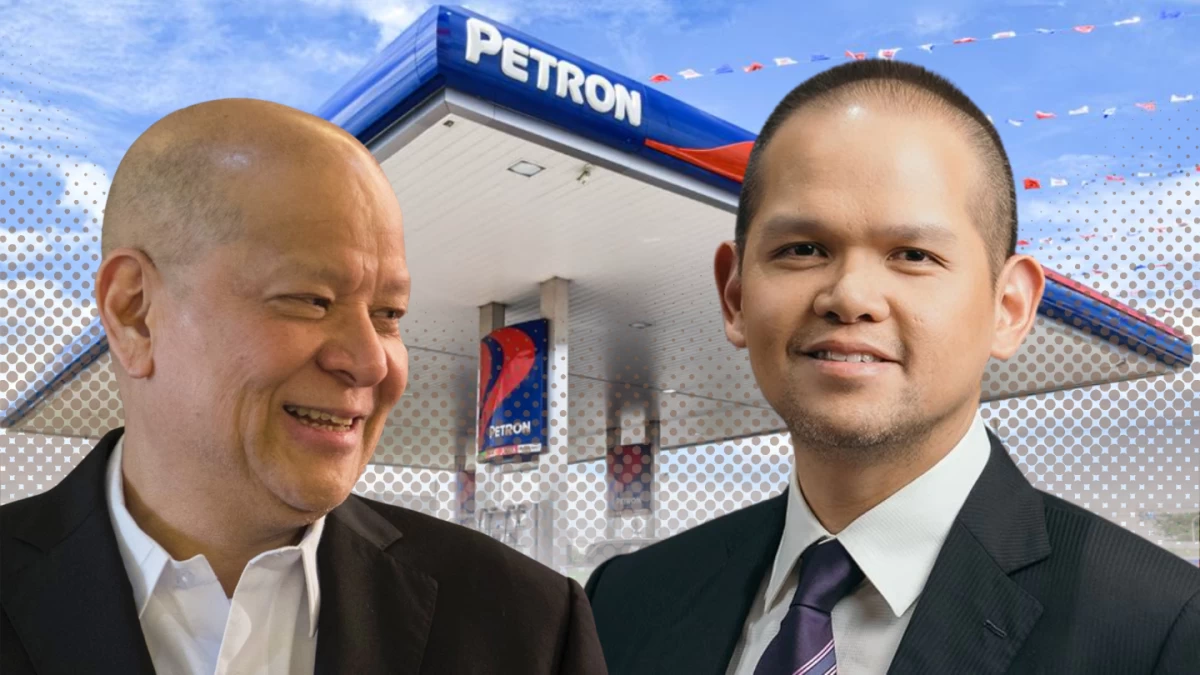
Ramon S. Ang and John Paul Ang
Petron Corp., the Philippines’ only remaining oil refiner, appointed John Paul Ang as its new president on Thursday, a leadership transition for the energy giant as it navigates a sharp decline in quarterly earnings and persistent global market volatility.
The younger Ang, the son of billionaire tycoon Ramon S. Ang, assumed the presidency during the company’s annual stockholders’ meeting on Thursday, May 7. While the senior Ang is relinquishing the president title after more than a decade at the helm, he will retain his positions as chairman and chief executive officer of the company.
The move further solidifies the younger Ang’s rising profile within the San Miguel Corp. empire, where he already serves as president and chief operating officer of the parent conglomerate and holds top executive roles at San Miguel Food & Beverage Inc. and Eagle Cement Corp.
The leadership change comes as Petron struggles with operational headwinds that have eroded its bottom line. The company reported that net income for the first quarter plummeted 56 percent to ₱1.8 billion from ₱4.1 billion in the same period a year ago.
Petron attributed the decline largely to external pressures and technical disruptions at its refining facilities.
Operations were hampered by the prolonged shutdown of the Port Dickson Refinery in Malaysia, which has remained offline since November due to market volatility. Domestically, the Bataan Refinery in Limay underwent scheduled maintenance during the quarter, further curbing production capacity. These factors contributed to a seven percent decline in total sales volume, which fell to 25.7 million barrels from 27.6 million barrels in the previous year.
To mitigate the impact on the domestic market, Petron curtailed its fuel exports to ensure a steady supply for its Philippine retail network.
Despite the recent financial dip, the elder Ang used the meeting to reiterate a standing proposal to the government regarding the future of the refinery.
Last month, he reaffirmed his willingness to sell Petron back to the state, an offer first floated in 2021 as a means to bolster national energy security.
Ang noted that San Miguel remains ready to negotiate a divestment if the government seeks greater control over fuel prices and supply stability amid escalating geopolitical tensions in the Middle East.
Under the proposal, the state would regain a strategic asset it privatized decades ago, potentially shielding the local economy from the price shocks that have characterized the global oil trade in recent years.