






Manila Bulletin
 Business
The Economy
Philippine economic growth slows to 2.8%, weakest since pandemic
Business
The Economy
Philippine economic growth slows to 2.8%, weakest since pandemic
Business
The Economy
Philippine economic growth slows to 2.8%, weakest since pandemic
Philippine economic growth slows to 2.8%, weakest since pandemic
By Derco Rosal
Published May 7, 2026 10:01 am
|
Updated May 7, 2026 03:55 pm


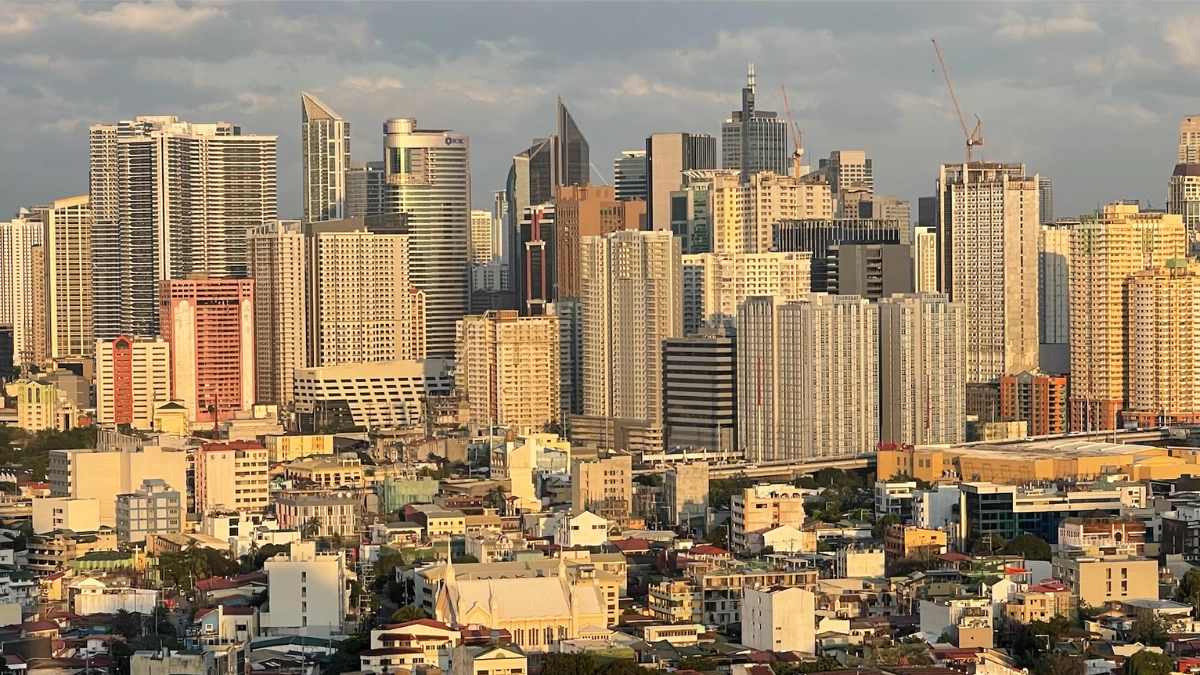
The country’s economic growth slowed to its weakest pace since the height of the Covid-19 pandemic in the first quarter of the year, prompting the government’s top planner to dismiss concerns that the nation is entering a period of stagflation or reverting to its historical status as the “sick man of Asia.”
The economy, as measured by the gross domestic product (GDP), expanded 2.8 percent in the January-to-March period, National Statistician Claire Dennis S. Mapa said at a briefing on Thursday, May 7.
The reading was lower than the three percent recorded in the final quarter of 2025 and a sharp deceleration from the 5.4 percent growth seen a year earlier. The performance fell significantly short of the government’s minimum growth target of five percent, leaving the Philippines trailing regional peers including Vietnam, Indonesia, and China.
Data from the PSA showed that the weak performance was largely driven by contractions in two of the three major industrial sectors. The agriculture, forestry, and fishing sector shrank by 0.2 percent, while industry recorded a 0.1 percent decline.
Notably, the services sector remained the only engine of growth at 4.5 percent, though this decelerated from the 6.2 percent growth recorded in the first quarter of 2025.
Household spending moderated to four percent from 5.3 percent a year earlier. Government spending saw a sharp slowdown from 18.7 percent in 2025 to less than five percent in the January-to-March period.
Further, investment in the economy, measured as gross capital formation, turned negative with a 3.3 percent contraction, compared to 4.5 percent growth a year ago.
External trade was a minor silver lining, as exports of goods and services expanded by 7.8 percent, slightly higher than the 7.1 percent recorded in the previous year. Meanwhile, growth in imports of goods and services slowed to 6.1 percent from double digits last year.
This anemic expansion was blamed on a mix of governance issues carried over from 2025, a slump in government spending, and the eruption of the Middle East conflict, which severely affected economies heavily reliant on imported oil. The Philippines sources nearly all its oil from the Middle East Gulf region.
Economy, Planning, and Development Secretary Arsenio M. Balisacan told a press briefing that “the lingering effects of the flood control corruption controversy weighed on consumer sentiment and business and investment confidence.”
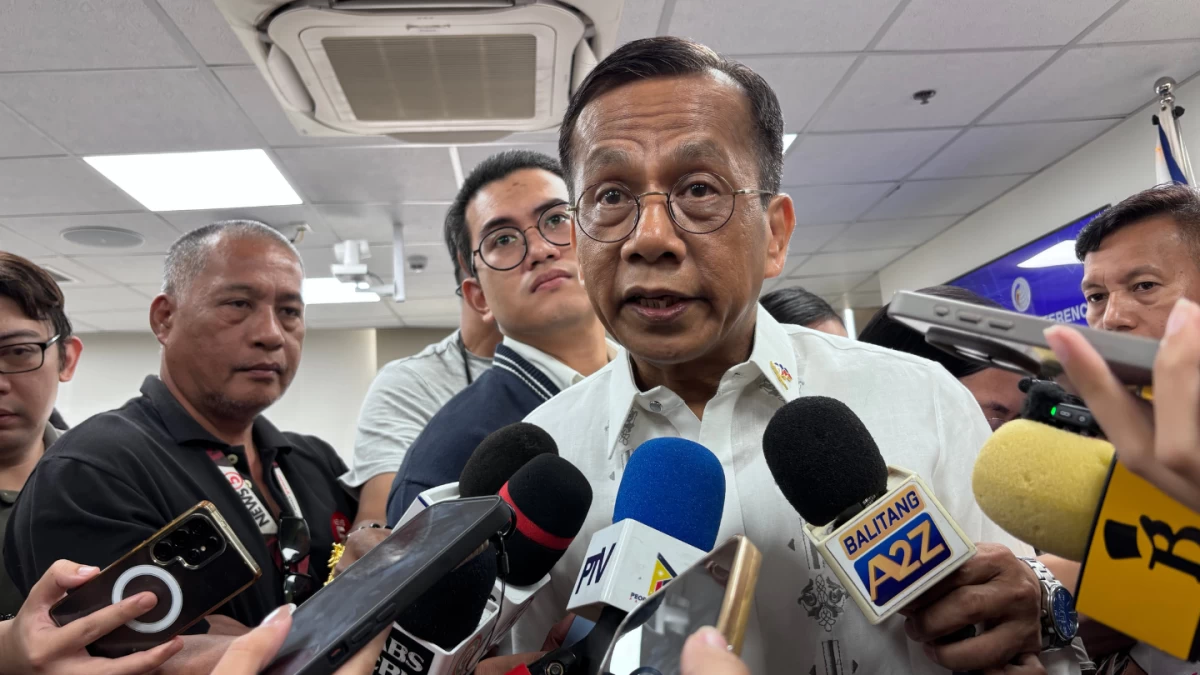
Socioeconomic Planning Secretary Arsenio Balisacan addresses questions from the media during an ambush interview following a press conference in Quezon City on Thursday, May 7. Balisacan dismissed concerns over “stagflation” despite data showing Philippine GDP growth slowed to 2.8 percent in the first quarter, the weakest pace since the pandemic. (Photo by Derco Rosal)
Closely tied to the graft concerns were the government’s sweeping efforts to constrain spending, particularly on infrastructure projects. This resulted in a sharp slowdown in infrastructure spending, further dragging output growth.
Balisacan noted that “delays in the passage and subsequent release of the 2026 national budget slowed the rollout of critical government programs and infrastructure projects.” Even before these concerns eased, American missiles struck Iranian territory, triggering an incessant volley of military hostilities.
According to the country’s chief economist, these geopolitical tensions sparked increases in energy prices and reignited supply chain pressures. “These challenges are real, and the Marcos Administration is confronting them directly and decisively,” he said.
Asked whether the combination of elevated consumer prices, which are seen breaching double digits within the year, and muted economic growth now places the Philippines in a stagflation scenario, Balisacan refused to affirm the bleak assessment.
“I don’t see it that way. Stagflation is a standard textbook concept. It’s usually thought of as the presence of three things simultaneously: high inflation, slow or stagnant economic growth, and high unemployment,” Balisacan said.
Balisacan said unemployment has remained below previous peak levels, while job quality continues to improve.
He also explained that there is no standard gauge for how many quarters an economy must remain in a stagflationary environment before it can officially be considered under stagflation.
Private-sector observers earlier warned that the Philippines was reverting to the “sick man of Asia” narrative after 2025 economic growth slowed to 4.4 percent, significantly below the 5.5 percent minimum target.
It bears recalling that the “sick man of Asia” label was first attached to the Philippines during the martial law regime of Ferdinand E. Marcos Sr. This unwanted reputation emerged following an economic collapse as the dictatorship waned in the mid-1980s.
The label was closely associated with crony capitalism, heavy reliance on foreign debt, and a balance-of-payments (BOP) crisis—raising questions over whether these vulnerabilities are resurfacing.
Balisacan rejected the revival of the label. “I don’t think it’s correct to say that we are back to being a sick man. That is still so remote,” Balisacan told reporters, arguing that the country’s economic fundamentals are “far different” from what they were when the Philippines was considered economically “ill.”
He noted that the Philippines had maintained sustained economic expansion for several years, with the economy regaining momentum before the pandemic.
“You can’t say you’re sick when you’ve just gotten to bed for one quarter, two quarters, or even just three quarters,” Balisacan asserted. “When assessing economic performance, you look at developments over many years.”
“Over the past 15 years, except during the pandemic, the economy has generally performed well,” he added.
Balisacan also differentiated the current struggle from the financial crises of 1997 and 2008, pointing out that today’s challenges are more geopolitical and digitally integrated. However, he said the government is now better equipped to respond.
“We have learned much from the Asian financial crisis (AFC) of 1997 and the global financial crisis (GFC) of 2007-2008. We have taken those lessons quite seriously, and we are better able to respond to crises now as a result,” he said.
Meanwhile, Finance Secretary Frederick D. Go said during his speech at the 2026 ASEAN-EU sustainability forum in Lapu Lapu City, Cebu that the economic team remains upbeat on the local economic growth trajectory.
While the first quarter number disappointed, Go maintained that the President’s inner circle is “totally optimistic that once the war in Iran is over, the growth of our economy will resume its previous path.”
“So that means we’re looking at the mid-five percent levels as soon as all these uncertainties are over,” Go said. Balisacan noted that the country’s output growth potential still stands at six percent.
Forgoing goals
Despite the still rosy long-term outlook, the government is preparing for a harsh reality check regarding its 2026 targets. Balisacan admitted that the consecutive moderation in growth warrants a downward adjustment.
“I think it’s a foregone conclusion because of the reality that we are facing. Our program is dynamic in the sense that we have to adjust when situations change. You can’t keep insisting on something that’s no longer attainable.”
He cited the profound shock from the Middle East conflict as a primary disruptor that rendered previous assumptions obsolete.
According to the co-chair of the Cabinet-level Development Budget Coordination Committee (DBCC), the President’s economic team is currently analyzing how various factors—including interest rates, oil prices, and the exchange rate—will factor into the revised assumptions.
To cushion the blow from the rising risk of stagflation, the government is banking on the UPLIFT program. Measures also include a push for a rapid “catch-up” in infrastructure spending.
The Department of Economy, Planning, and Development (DEPDev) also said in a May 7 statement that tackling “corruption firmly and transparently” is important in regaining confidence among businesses, investors, and consumers.
Think tank Oxford Economics believes a rebound in public spending will remain minimal due to narrowing fiscal space. “Government spending to support growth is likely to be constrained by the already limited fiscal space,” Jun Hao Ng, the think tank’s assistant economist, said.
On the monetary policy front, the government is bracing for potential intervention from the Bangko Sentral ng Pilipinas (BSP) if inflation continues to breach targets.
While Balisacan said he does not want to preempt monetary authorities, he noted that elevated inflation could require further action from the BSP, which could mean higher policy rates. The benchmark rate now stands at 4.5 percent, with private-sector economists pricing in more hawkish moves, including back-to-back 50-basis-point (bps) hikes.
Such tightening, though painful for short-term growth, is needed because “the damage to the economy caused by high inflation is controlled so that sustainability of growth moving forward is better assured,” he said.
Contrary to Balisacan’s view, think tank Capital Economics said the Philippines is now “going through a period of stagflation, with a combination of slowing (and very weak) GDP growth and high and rising inflation placing the central bank in an unenviable position.”
Ng likewise said the downward growth trend is likely to worsen over the coming quarters as the spillover effects of the war become more pronounced beginning in April. He added that the economic slowdown would persist as elevated energy costs and rate hikes dampen consumer sentiment.
Gareth Leather, senior Asia economist at Capital Economics, noted that even if the war dust settles soon, the BSP still appears poised to raise borrowing costs again “imminently.” Such a move is expected to tame surging prices but could further stifle the economy.
If global oil prices do not fall, Leather expects a total of half a percentage point (ppt) in hikes to bring rates to five percent this year. This outlook revises his previous assumption that April’s move would be a one-off adjustment.