ADVERTISEMENT

McIlroy recharged, hungry for more following Masters repeat

Published May 7, 2026 12:06 pm
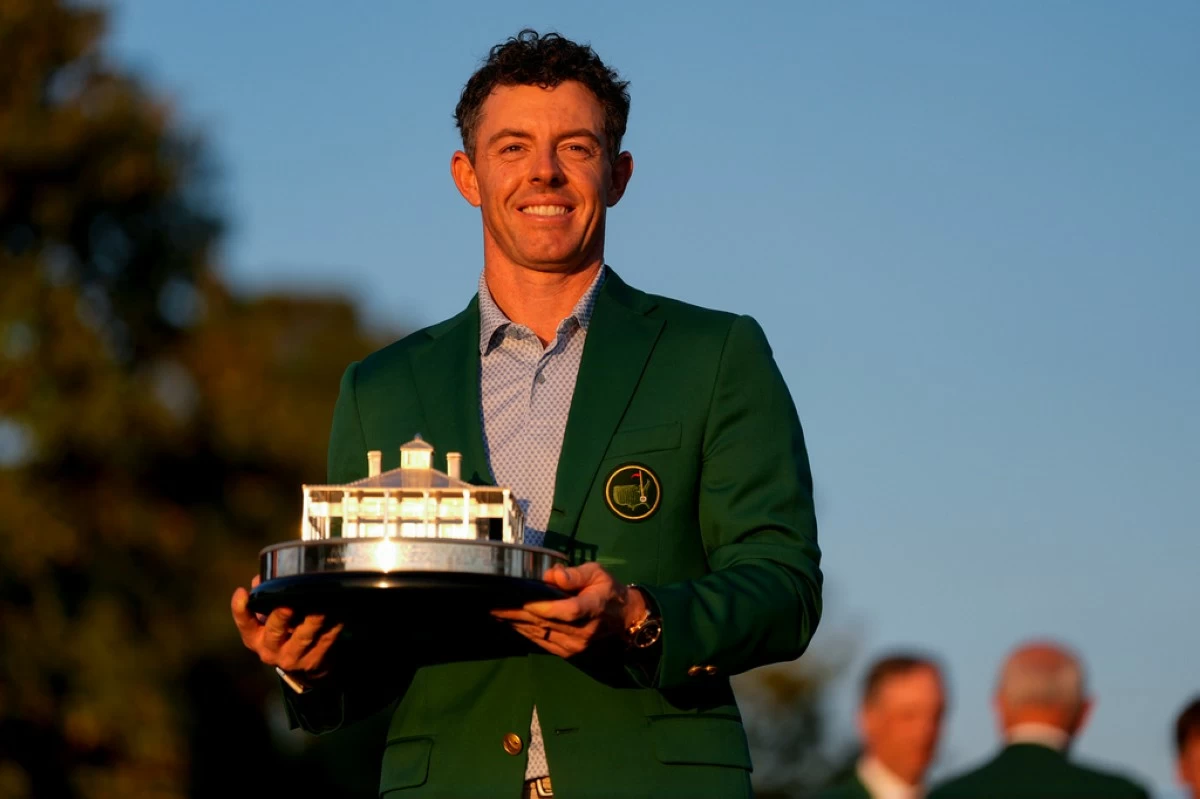
Rory McIlroy, of Northern Ireland, holds the trophy after winning the Masters golf tournament at the Augusta National Golf Club, Sunday, April 12, 2026, in Augusta, Ga. (AP Photo/Ashley Landis)
CHARLOTTE, North Carolina (AP) — Rory McIlroy appeared rested and relaxed as he prepared for his first tournament since repeating as Masters champion.
Just don't let that be confused with complacency.
The world's No. 2-ranked player said he feels “more motivated" than ever heading into a major stretch that includes the PGA Championship next week outside of Philadelphia and the U.S. Open next month at Shinnecock Hills. First up though is this week's Truist Championship at Quail Hollow, where McIlroy earned his first PGA Tour victory 16 years ago and has won four times.
“I'm excited for the road ahead,” the six-time major champion said Wednesday, May 6, after his Pro-Am round.
It's been more than three weeks since McIlroy slipped on the green jacket for a second time after becoming just the fourth player in 90 years to go back-to-back at the Masters.
He described this year's post-Masters break from golf as “less hectic" than last year's whirlwind tour.
The 37-year-old McIlroy spent most of his time at his home in Jupiter, Florida, although he did visit New York with his wife Erica Stoll and attended a White House state dinner held for King Charles III and Queen Camilla.
But it's what he didn't do that has left him feeling refreshed.
He didn't travel back home to Northern Ireland to celebrate his Masters win like he did in 2025, largely because his parents were already in the United States to see it in person. They skipped last year's Masters so as not to jinx their son's chances of completing the career grand slam after years of disappointment.
He also didn't do the media rounds, electing for more “chill” time at home, allowing him to take his daughter Poppy to tennis lessons.
“I gave myself a good 10 days to enjoy myself and then thought I needed to get back on the range and start to practice and get ready for this stretch coming up,” McIlroy said.
The stretch begins Thursday with the tuneup at Quail Hollow, a place where McIlroy is adored by fans and often serenaded with the “Happy Birthday” song given the tournament often falls during his birthday.
He was 20 when he won his first PGA tournament here, earning him immediate popularity in Charlotte.
In some ways, he's become the city's adopted golfer.
He has won here four times on a course that sets up perfectly to complement his length off the tee, including a dominant seven-shot victory in 2015 in which he established a new tournament record at 21-under 267 after a third-round 61.
“I really feel like this tournament got my career going,” McIlroy said. “This is 16 years I’ve been coming here, so it’s been a fun place, I’ve had success. It’s somewhere I always love coming back to.”
He enters this week as the slight favorite to win (+600) over the red-hot Cameron Young (+850), who won last week at Doral.
McIlroy feels good about his chances despite the three-week layoff that included skipping the RBC Heritage and the Cadillac Championship.
He won the Truist Championship by five shots over Xander Schauffele the last time it was played at Quail Hollow in 2024, but surprisingly struggled here at the 2025 PGA Championship, finishing tied for 47th.
“Slightly different setup than the PGA last year, and slightly different conditions,” McIlroy said. “It’s been very dry here by all accounts, so the greens are very firm. The rough is down a little bit. Sort of more, probably more in keeping with what the golf course was like in 2024, when the tournament was last here. The course is great.”
McIlroy said returning to action after winning the Masters a second time feels much different than a year ago.
“I felt like winning the Grand Slam was going to be this life-changing thing and in some ways it was, but in other ways I had to remember like, ‘No, I still have a lot of my career left and I want to keep playing and keep competing,’” he said. “So this year I think winning was validation for all the work that I’ve put in over the last few years to get myself back to this place where I’m winning majors.”
Schauffele said it will be a tall task beating McIlroy this week and moving forward if he plays the way he did at Augusta National.
“His best club (driver) was his worst club, and he still won the tournament," Schauffele said. "That’s a little scary, obviously, if you’re competing against him.”

Related Tags

Rory McIlroy Masters
ADVERTISEMENT
.most-popular .layout-ratio{ padding-bottom: 79.13%; } @media (min-width: 768px) and (max-width: 1024px) { .widget-title { font-size: 15px !important; } }

{{ articles_filter_1561_widget.title }}

.most-popular .layout-ratio{ padding-bottom: 79.13%; } @media (min-width: 768px) and (max-width: 1024px) { .widget-title { font-size: 15px !important; } }

{{ articles_filter_1562_widget.title }}

.most-popular .layout-ratio{ padding-bottom: 79.13%; } @media (min-width: 768px) and (max-width: 1024px) { .widget-title { font-size: 15px !important; } }

{{ articles_filter_1563_widget.title }}

{{ articles_filter_1564_widget.title }}

.mb-article-details { position: relative; } .mb-article-details .article-body-preview, .mb-article-details .article-body-summary{ font-size: 17px; line-height: 30px; font-family: "Libre Caslon Text", serif; color: #000; } .mb-article-details .article-body-preview iframe , .mb-article-details .article-body-summary iframe{ width: 100%; margin: auto; } .read-more-background { background: linear-gradient(180deg, color(display-p3 1.000 1.000 1.000 / 0) 13.75%, color(display-p3 1.000 1.000 1.000 / 0.8) 30.79%, color(display-p3 1.000 1.000 1.000) 72.5%); position: absolute; height: 200px; width: 100%; bottom: 0; display: flex; justify-content: center; align-items: center; padding: 0; } .read-more-background a{ color: #000; } .read-more-btn { padding: 17px 45px; font-family: Inter; font-weight: 700; font-size: 18px; line-height: 16px; text-align: center; vertical-align: middle; border: 1px solid black; background-color: white; } .hidden { display: none; }
function initializeAllSwipers() { // Get all hidden inputs with cms_article_id document.querySelectorAll('[id^="cms_article_id_"]').forEach(function (input) { const cmsArticleId = input.value; const articleSelector = '#article-' + cmsArticleId + ' .body_images'; const swiperElement = document.querySelector(articleSelector); if (swiperElement && !swiperElement.classList.contains('swiper-initialized')) { new Swiper(articleSelector, { loop: true, pagination: false, navigation: { nextEl: '#article-' + cmsArticleId + ' .swiper-button-next', prevEl: '#article-' + cmsArticleId + ' .swiper-button-prev', }, }); } }); } setTimeout(initializeAllSwipers, 3000); const intersectionObserver = new IntersectionObserver( (entries) => { entries.forEach((entry) => { if (entry.isIntersecting) { const newUrl = entry.target.getAttribute("data-url"); if (newUrl) { history.pushState(null, null, newUrl); let article = entry.target; // Extract metadata const author = article.querySelector('.author-section').textContent.replace('By', '').trim(); const section = article.querySelector('.section-info ').textContent.replace(' ', ' '); const title = article.querySelector('.article-title h1').textContent; // Parse URL for Chartbeat path format const parsedUrl = new URL(newUrl, window.location.origin); const cleanUrl = parsedUrl.host + parsedUrl.pathname; // Update Chartbeat configuration if (typeof window._sf_async_config !== 'undefined') { window._sf_async_config.path = cleanUrl; window._sf_async_config.sections = section; window._sf_async_config.authors = author; } // Track virtual page view with Chartbeat if (typeof pSUPERFLY !== 'undefined' && typeof pSUPERFLY.virtualPage === 'function') { try { pSUPERFLY.virtualPage({ path: cleanUrl, title: title, sections: section, authors: author }); } catch (error) { console.error('ping error', error); } } // Optional: Update document title if (title && title !== document.title) { document.title = title; } } } }); }, { threshold: 0.1 } ); function showArticleBody(button) { const article = button.closest("article"); const summary = article.querySelector(".article-body-summary"); const body = article.querySelector(".article-body-preview"); const readMoreSection = article.querySelector(".read-more-background"); // Hide summary and read-more section summary.style.display = "none"; readMoreSection.style.display = "none"; // Show the full article body body.classList.remove("hidden"); } document.addEventListener("DOMContentLoaded", () => { let loadCount = 0; // Track how many times articles are loaded const offset = [1, 2, 3, 4, 5, 6, 7, 8, 9, 10]; // Offset values const currentUrl = window.location.pathname.substring(1); let isLoading = false; // Prevent multiple calls if (!currentUrl) { console.log("Current URL is invalid."); return; } const sentinel = document.getElementById("load-more-sentinel"); if (!sentinel) { console.log("Sentinel element not found."); return; } function isSentinelVisible() { const rect = sentinel.getBoundingClientRect(); return ( rect.top < window.innerHeight && rect.bottom >= 0 ); } function onScroll() { if (isLoading) return; if (isSentinelVisible()) { if (loadCount >= offset.length) { console.log("Maximum load attempts reached."); window.removeEventListener("scroll", onScroll); return; } isLoading = true; const currentOffset = offset[loadCount]; window.loadMoreItems().then(() => { let article = document.querySelector('#widget_1690 > div:nth-last-of-type(2) article'); intersectionObserver.observe(article) loadCount++; }).catch(error => { console.error("Error loading more items:", error); }).finally(() => { isLoading = false; }); } } window.addEventListener("scroll", onScroll); });

Sign up by email to receive news.