







Arthur Yap assails fairness of electricity bills
Published May 7, 2026 09:37 am


At A Glance
- Rep. Arthur Yap questions the fairness of electricity bills, highlighting public anger over rising rates and numerous pass‑through charges.
- He stresses that bills now include policies, subsidies, regulatory charges, and taxes, arguing these should be funded through the national budget instead of consumer payments.
- Yap calls for support for HB No.8415 to remove VAT on systems loss charges and HR No.965 to investigate burdensome pass‑through costs.
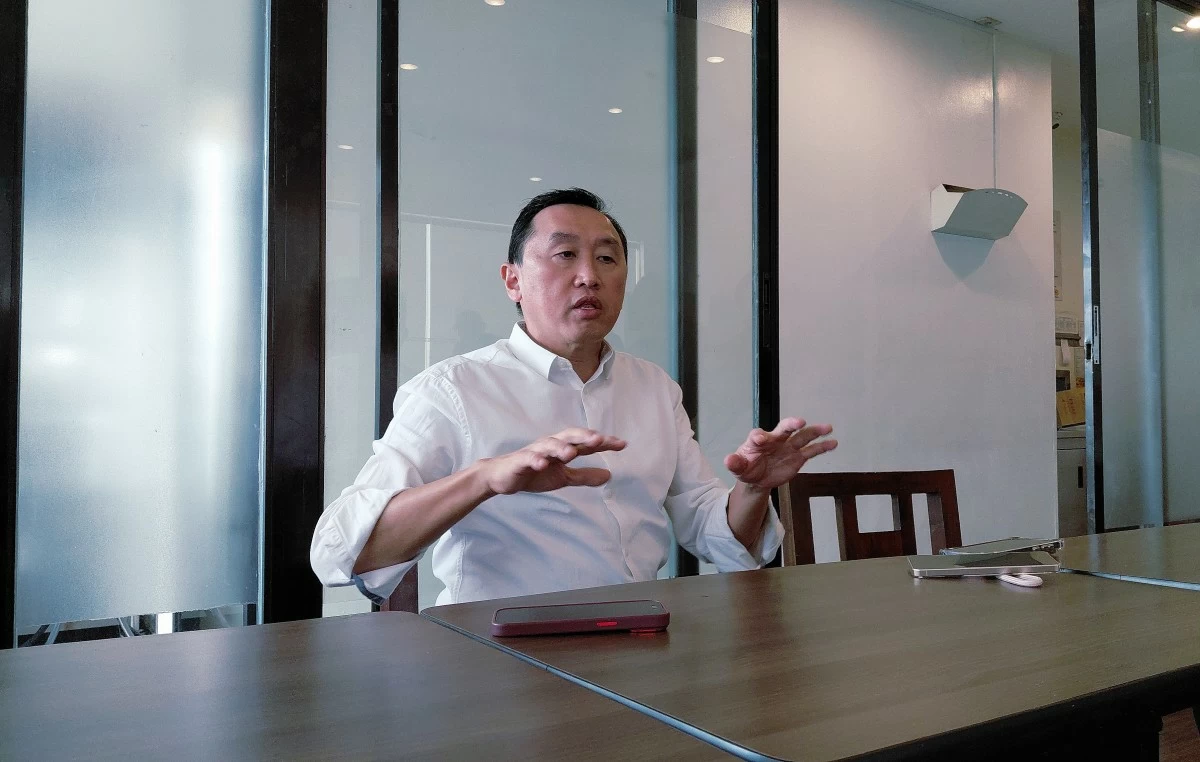
Murang Kuryente Party-list Rep. Arthur Yap (Ellson Quismorio/ MANILA BULLETIN)
Are the charges on electricity bills still fair?
This was the question left by Murang Kuryente Party-list Rep. Arthur Yap on the minds of people following his privilege speech Wednesday night, May 7 at the House of Representatives.
Yap, a member of the so-called power bloc in the 300-plus strong lower chamber, pressed the issue of fairness in electricity billing, as he joined fellow lawmakers in raising concern over rising power costs and the growing list of charges passed on to consumers.
"Senyales po siguro to ng galit ng taumbayan na sunod-sunod po kami na nagtatalumpati, nireregister po yung galit namin sa issue na to. At may dahilan po na magalit ng taumbayan. Sa bawat tahanan, sa bawat tindahan, sa bawat MSME, sa bawat manggagawang Pilipino, iisa ang tanong--bakit napakataas ng singil ng kuryente?" the veteran solon said.
(This is perhaps a sign of the people’s anger, as we speak one after another, registering our outrage over this issue. And the people have reason to be angry. In every home, in every store, in every MSME, in every Filipino worker, there is one question—why are electricity rates so high?)
Yap pointed to mounting public frustration over “puzzling” electricity bill components that have recently drawn attention online.
He noted that Manila Electric Company (Meralco) has maintained that only about 12 percent of the total bill goes to the utility as actual distribution charge, while roughly 88 percent consists of pass-through charges.
For Yap, the issue goes beyond legal compliance.
“Dahil ang tunay na tanong ay hindi lamang: ‘May legal basis ba?’ Ang tunay na tanong ay: ‘Makatarungan pa ba ito? (Because the real question is not only: ‘Is there a legal basis?’ The real question is: ‘Is this still just?)’” he asked.
While acknowledging that certain charges are authorized under the Electric Power Industry Reform Act of 2001 (EPIRA), Yap flagged the continued imposition of other costs—such as subsidies for senior citizens, FIT-All, GEA-All, and systems loss—despite what he described as the absence of clear statutory basis for passing these on to consumers.
"Sa madaling salita, ang electric bill ng Pilipino ay hindi na lamang bayad sa kuryente. Ang electric bill ng consumer ngayon ay koleksyon ng samut-saring polisiya, subsidyo, regulatory charges at buwis," he noted.
(In other words, the Filipino’s electric bill is no longer just payment for electricity. The consumer’s electric bill today is a collection of various policies, subsidies, regulatory charges, and taxes.)
He argued that if these programs are genuine national priorities, they should be funded through the General Appropriations Act (GAA) or annual national budget rather than embedded in electricity bills.
Yap closed by calling for support for House Bill (HB) No. 8415, which seeks to remove the value-added tax (VAT) on systems loss charges, positioning the measure as a concrete step toward easing the burden on electricity consumers.
He also highlighted House Resolution (HR) No. 965, which called for a congressional inquiry in aid of legislation on the burdensome pass-through charges.
"Hindi po tayo inihalal upang protektahan lamang ang sistema; inihalal tayo upang itama ang sistemang hindi na patas. At ngayon hinahamon tayo ng panahon, ng kasaysayan na gawin mismo iyon," Yap said.
(We were not elected merely to protect the system; we were elected to correct a system that is no longer fair. And now we are challenged by the times, by history itself, to do exactly that.)