







To be one with the stars
Meet the Filipina Aerospace Engineer that was part of the Artemis II mission
Published May 6, 2026 04:30 pm


When you first meet Patricia, you would not think that she was an aerospace engineer, let alone that she played a role in the recent Artemis II mission, which captivated the world. Petite with short hair and a bright smile, Patricia looked like one of the cool and popular kids in school, but you wouldn’t think that math and science were her favorite subjects.
I got to meet Patricia during the Philippine premiere of Project Hail Mary, the blockbuster film about a science teacher, Ryland Grace (played by Ryan Gosling), who wakes up aboard a spacecraft with amnesia and pieces together how he got in that situation and discovers the gargantuan responsibility that sits on his shoulders.
The guests in the premiere were thrilled to have an aerospace engineer like Patricia in their presence; they clapped and cheered for her. During the screening, Patrica was also joined by Kristine Joy Atienza, the first Filipina analog astronaut and space nutritionist, and Dr. Mark Angelo Purio, a space systems engineer.
Early beginnings
Patricia spent her childhood in the Philippines. As a child, she was queer and closeted. Recognizing this early on, she knew she would not take the path society expected of her. She describes herself as playful and nerdy growing up, and as spending time playing the electronic organ. Always surrounded by friends, Patricia was curious about how things worked, and anything that she couldn’t understand became a source of frustration to her.
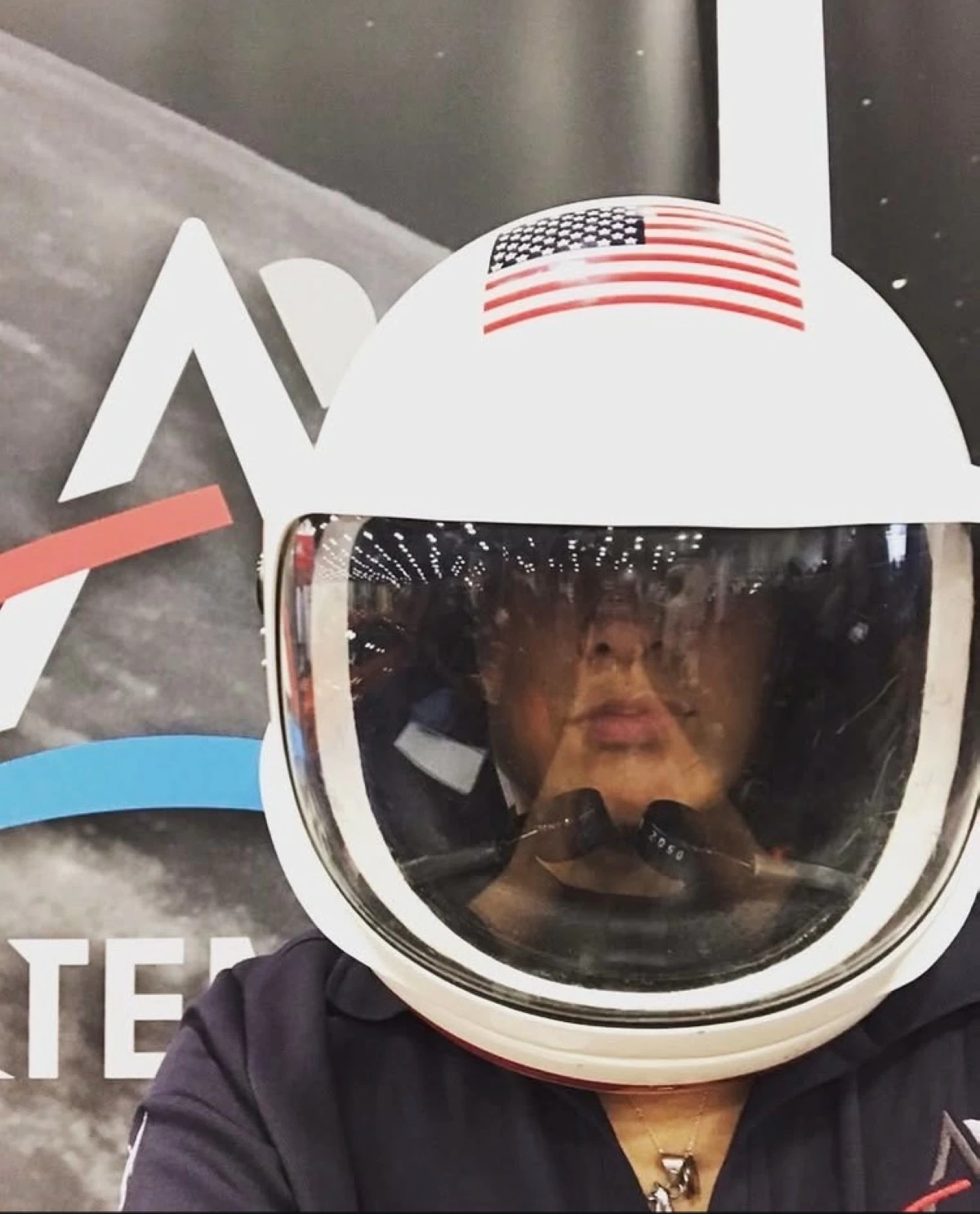
READY FOR TAKE OFF — Engineer Patricia Vicente was part of the team that built the simulation predicting the Space Launch System rocket trajectory.
Math and Science were subjects that Patricia naturally gravitated to; she treated math problems like puzzles, almost like games. She graduated with a B.S. in Electronics and Communications Engineering (ECE) at De La Salle University in 2007 and became a licensed ECE engineer in 2008. “I knew my gifts were enough to survive the rigor of engineering, so I worked extra hard,” Patricia said.
Patricia’s real interest in aerospace came during her final years as an engineering student at De La Salle University. “That’s when I realized aerospace engineering was the intersection of math, science, problem solving, curiosity, and purpose. I wanted to pursue this career in the hopes of becoming a NASA astronaut, and perhaps I could be one with the stars,” Patricia said.
In 2008, Patricia took one step closer to that dream and moved to the United States upon admission to the B.S. Aerospace Engineer (Astronautics track) at Embry-Riddle Aeronautical University (ERAU) in Prescott, Arizona. “I faced the usual challenges – being an immigrant and a queer woman in a field where there are few. But family, mentors, community, and a strong sense of identity carried me through,” Patricia said.
Sic itur ad astra (Thus one journeys to the stars)
“I saw Math and Science as languages, something you get better at with practice,” Patricia said. And she not only practiced, but also put in the extra work, she asked questions, met one-on-one with professors, and stayed curious.
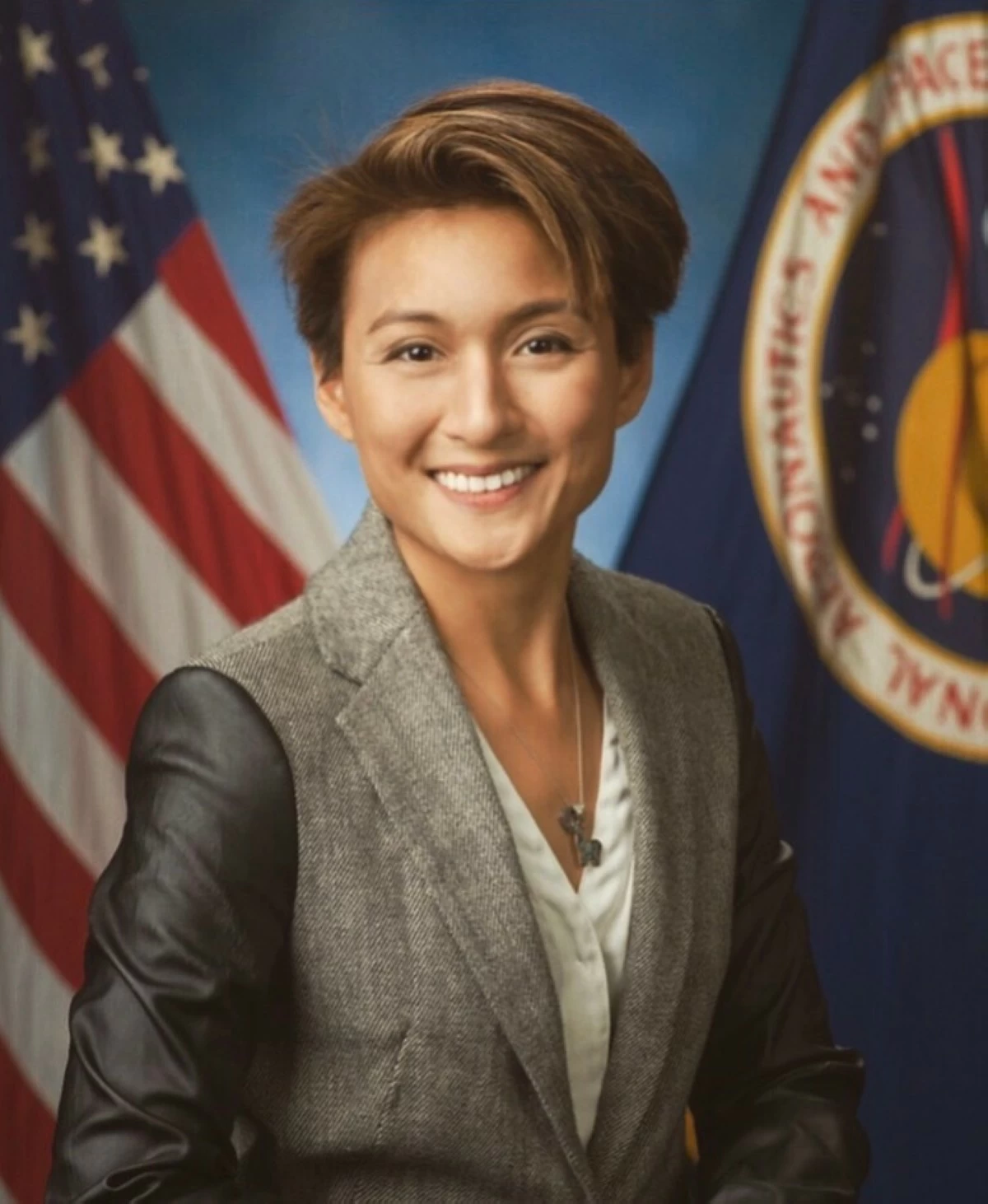
"Dare to be different." — Patricia VIcente is all smiles for her NASA Portrait.
Patricia’s first professional engineering role was as an Avionics Engineer at American Airlines in 2010. While working, she was also completing her studies for about three years. She graduated with a degree in Aerospace Engineering in 2013 and joined NASA’s Johnson Space Center in 2019 as a Trajectory Software Engineer. Under this role, she created simulations and models for the Space Launch System (SLS) rocket of the Artemis missions.
Artemis II and beyond
“The support for the Artemis II mission was very moving; you could feel the world rooting for exploration again,” Patricia said. When asked what her contribution to the mission was, Patricia shared: “I was part of the flight dynamics team that built the simulation predicting the Space Launch System (SLS) rocket trajectory — the rocket that launched the Orion spacecraft into orbit.
The same simulator also predicted Orion’s re-entry and splashdown location. “Hearing flight controllers report: Ascent Clean during Artemis I and II was the moment I knew our team fulfilled our part,” Patricia shared.
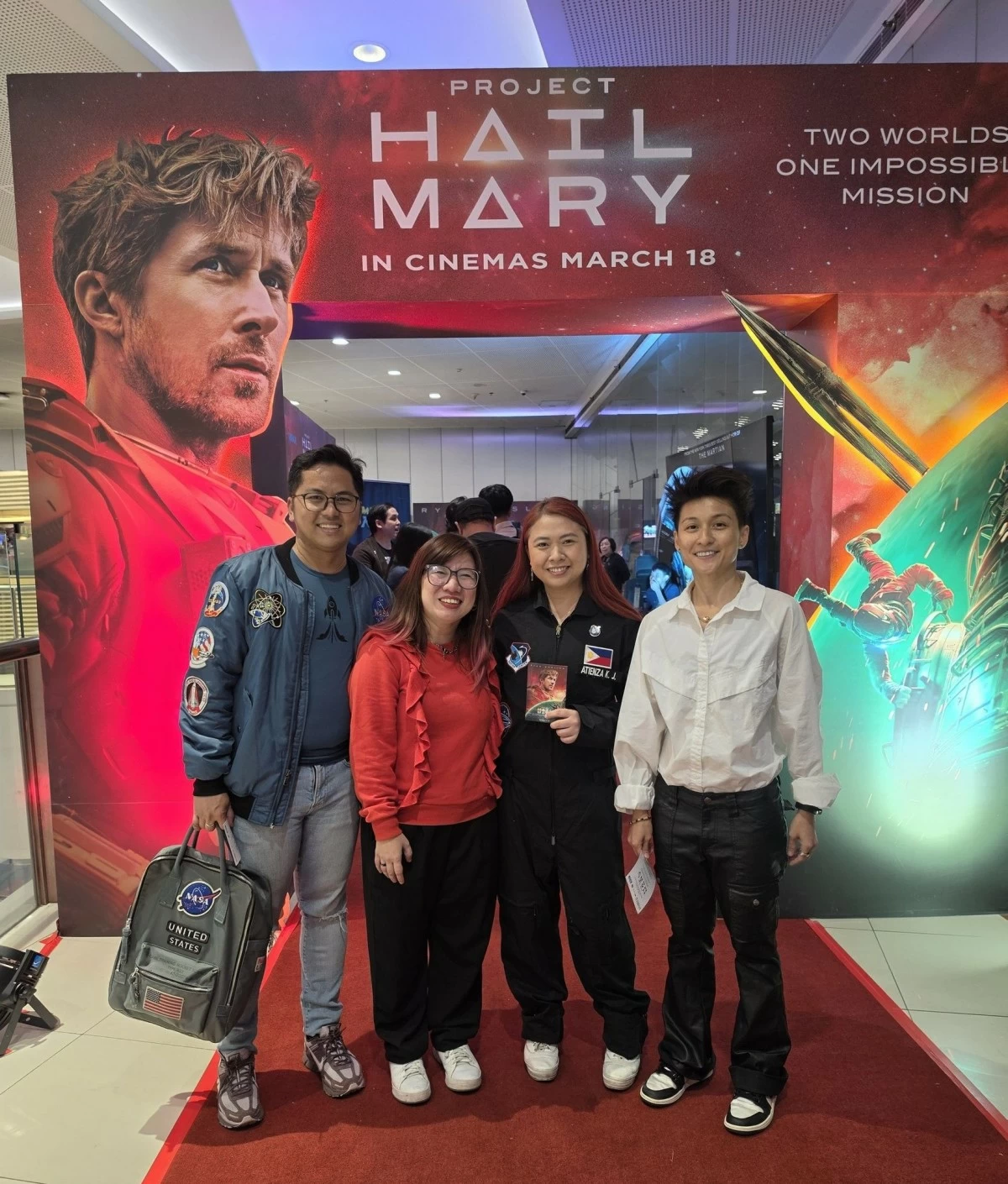
Mission Accomplished — At the Philippine premiere of Project Hail Mary. From left: Dr. Mark Angelo Purio, Ica Cheng, the author, Analog astronaut Kristine Jane Atienza, and Patricia Vicente, Deputy System Manager for NASA Johnson Space Center.
“The whole experience for me was especially meaningful to see people from a place I call home, the Philippines, celebrating a mission that once felt so far away from our shores,” Patricia said.
As for the young Filipinos also dreaming to be one with the stars like Patricia, this is what she has to say: “Your background is not your limitation, it’s your advantage. Stay curious, stay grounded, and don’t be afraid to take up space in rooms where you are different. Create opportunities, take advantage of them as they emerge. The future of exploration demands your willingness, your excellence, and your courage. Dare to be different. Pursuing your dreams is non-negotiable; it’s how you get to know the world and yourself. That’s the ultimate gift, and it keeps giving. It is worth it.” (Photos courtesy of Patricia Vicente)