






Manila Bulletin
 Philippines
National
Teodoro blasts China over 'vilification' of Japan during first 'Balikatan' participation
Philippines
National
Teodoro blasts China over 'vilification' of Japan during first 'Balikatan' participation
Philippines
National
Teodoro blasts China over 'vilification' of Japan during first 'Balikatan' participation
Teodoro blasts China over 'vilification' of Japan during first 'Balikatan' participation
Published May 6, 2026 12:34 pm
|
Updated May 6, 2026 02:38 pm


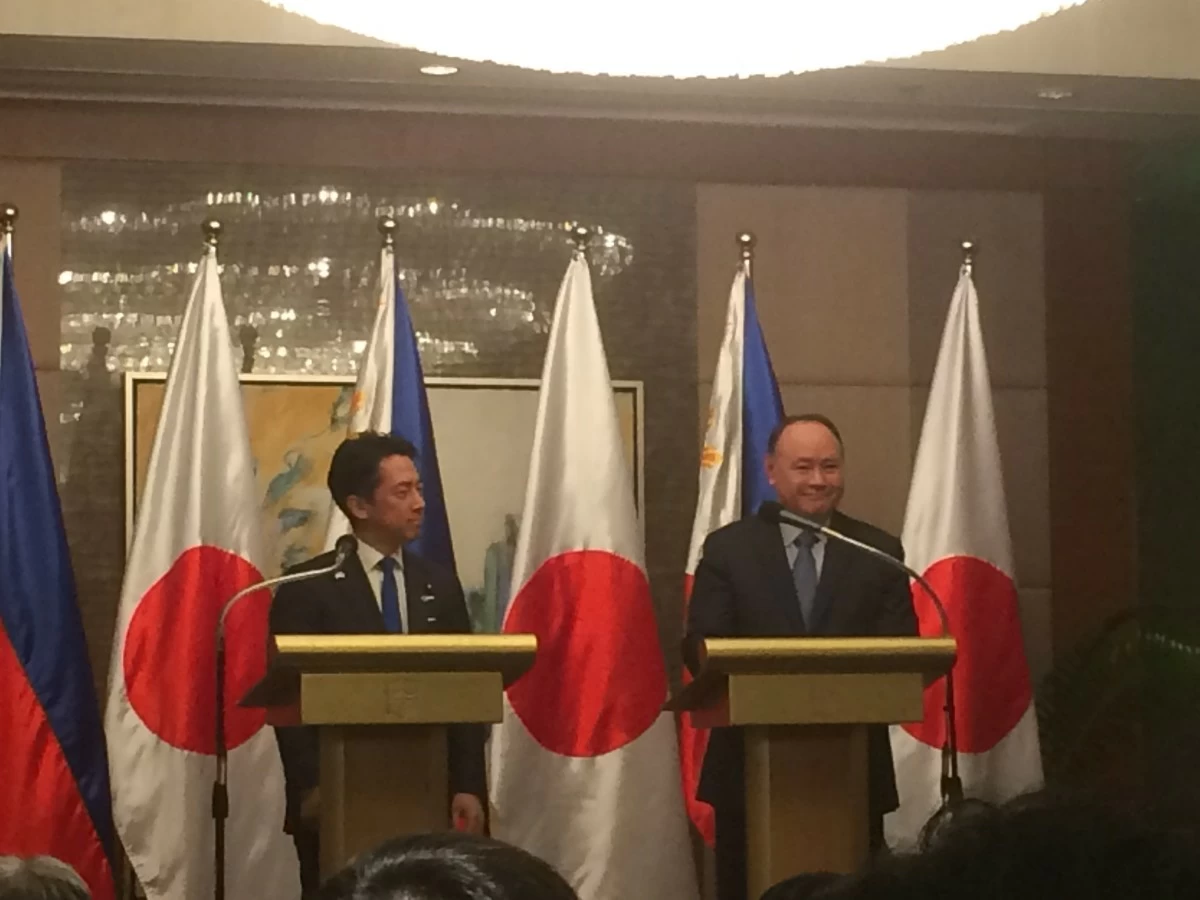
(L-R) Japan Minister of Defense Koizumi Shinjiro and Department of National Defense (DND) Secretary Gilberto Teodoro Jr. hold a press conference after their defense ministerial meeting in Makati City on May 5, 2026. (Photo: Martin A. Sadongdong / Manila Bulletin)
Department of National Defense (DND) Secretary Gilberto Teodoro Jr. launched a scathing rebuke against China on Tuesday night, May 5, for its attempts to “vilify” Japan as combat forces from Tokyo joined the annual Exercise Balikatan for the first time.
Teodoro characterized Beijing's recent rhetoric as a smoke screen for its own aggressive actions in the West Philippine Sea (WPS).
“I condemn the vilification of Japan, belated vilification, and inappropriate reference to the past by China's over reliance to war notes and to smoke screen what they themselves are despicably doing right now,” Teodoro told reporters in an ambush interview after his defense ministerial meeting with Japanese Defense Minister Koizumi Shinjiro.
Teodoro described China’s messaging as “unfair, uncalled for, and actually dishonest,” saying that Beijing’s “mislabeling” of Manila and Tokyo’s converged defense efforts was “ingenuous, albeit ineffective, propaganda.”
The tension stemmed from Japan’s historic participation to Balikatan, the annual drills between Manila and Washington, and the first time it returned to the country since its occupation during World War II. Around 1,400 Japanese troops are currently in the country to take part in drills, including a maritime strike in Ilocos Norte on Wednesday, May 6, which involved the firing of the Japanese Type 88 surface-to-ship missile to sink the decommissioned Philippine Navy vessel BRP Quezon (PS-70) as a mock enemy vessel.
Last May 2, China’s Ministry of National Defense spokesperson Zhang Xiaogang urged the Philippines to “not forget the lessons learned from the painful history of being invaded by Japan.”
Zhang cited the Bataan Death March and the Manila Massacre during the Battle of Manila in the Second World War as reasons to oppose Tokyo's military presence.
He claimed that “perpetrators of those atrocities have not shown genuine remorse” and urged regional neighbors to “jointly thwart Japan's ‘neomilitarism.’”
But Teodoro dismissed these historical references as a diversion, standing firmly behind the current partnership with Tokyo.
Unified front vs coercion
Meanwhile, Koizumi emphasized that Japan and the Philippines are working in close coordination as the security environment becomes "increasingly severe."
Koizumi and Teodoro reaffirmed their “strong opposition to any unilateral attempts to change the status quo by force or coercion in the East China Sea and the South China Sea.”
Their ministerial meeting focused on expanding cooperation in policy, operations, and defense technology and Koizumi noted that enhancing maritime domain awareness is now “essential to prevent contingencies and to maintain maritime order based on the rule of law.”
Manila and Tokyo also agreed to accelerate discussions on institutional arrangements for information sharing, including strengthening multilateral frameworks like the “SQUAD,” an informal regional defense bloc which involves Japan, the United States, Australia, and the Philippines.
“As the international security environment becomes increasingly complex and tense, cooperation between Japan and the Philippines as strategic partners is becoming ever more important. Japan remains humbly committed to further deepening defense cooperation with the Philippines and providing together to ensure peace and stability in the region,” Koizumi said.