







House OKs National Land Use Act for second Congress in a row
Published May 6, 2026 08:39 am


At A Glance
- The House of Representatives passes House Bill No. 8466, the proposed National Land Use Act, on third and final reading in the 20th Congress with a vote of 224-3-0, marking the second consecutive Congress to approve the measure.
- The bill establishes a National Land Use Commission under the Office of the President, mandates a 30-year National Physical Framework Plan, and harmonizes local land use plans with the national framework to ensure rational and sustainable land management.
- Key provisions protect prime agricultural lands from improper conversion, integrate climate and disaster risk planning, recognize ancestral domains, safeguard forests and heritage areas, and impose penalties for illegal land use while providing incentives and oversight for local government compliance.
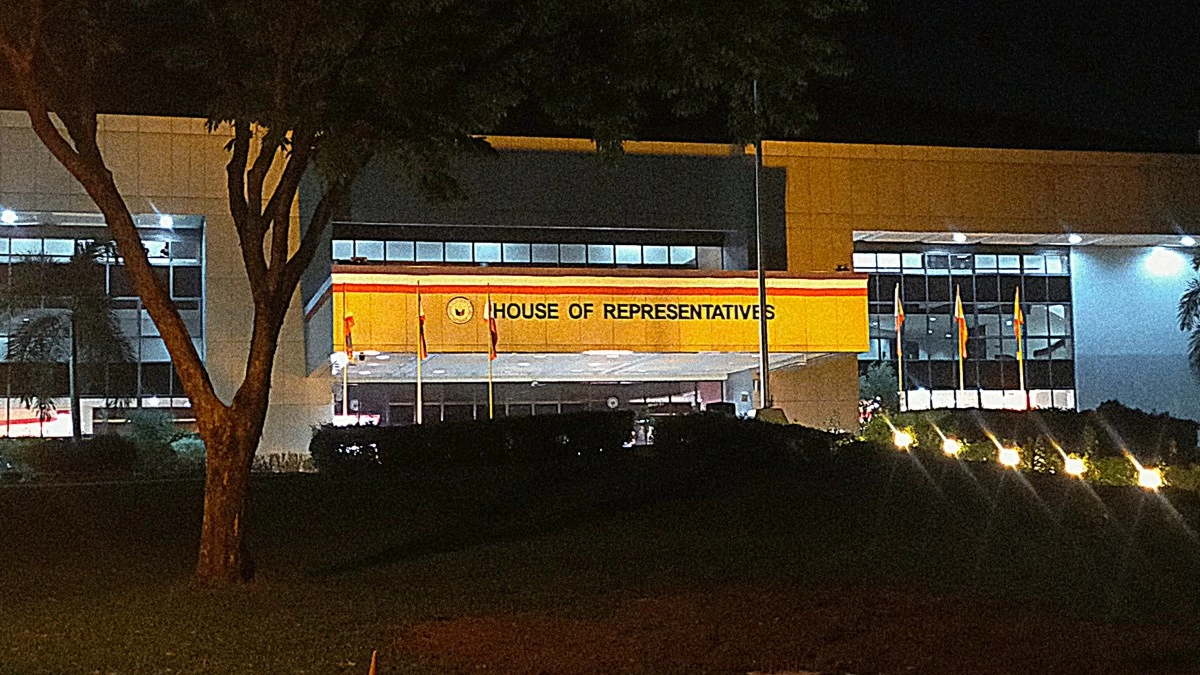
The House of Representatives (Ellson Quismorio/ MANILA BULLETIN)
For the second Congress in a row, the House of Representatives has granted final approval to a proposed National Land Use Act.
The latest version of the measure, HB No. 8466, was passed on third and final reading during plenary session on Tuesday night, May 6.
Deputy Speaker La Union 1st district Rep. Paolo Ortega, the presiding officer at that time, announced that 224 House members voted "yes" to the bill. Only three voted "no", while nobody abstained.
The development is seen as a serious attempt by the current 20th Congress to put order, science and long-term planning into how the country uses its land and natural resources.
On May 22, 2023 during the previous 19th Congress, the House also overwhelmingly approved a proposed National Land Use Act via vote of 262-3-0 (yes-no-abstain). However, it didn't prosper into a law.
House Majority Leader Ilocos Norte 1st district Rep. Sandro Marcos says the bill is a practical reform that will help address concerns on food security, disaster resilience, housing, infrastructure and the daily lives of communities that have long suffered from confused, conflicting and outdated land use policies.
“This is one of those bills that people may not talk about every day, but they will feel it when farms are protected, homes are built in safer places, roads are planned better and communities are spared from avoidable disasters,” said Marcos, who added that the measure was part of the Legislative Executive Development Advisory Council (LEDAC) bills.
HB No. 8466, establishes a national framework for the rational, holistic, just and sustainable use of land and natural resources across the country.

Ilocos Norte 1st district Rep. Sandro Marcos (Ellson Quismorio/ MANILA BULLETIN)
Former House Speaker Leyte 1st district Rep. Martin Romualdez, one of the principal authors, says the measure gives government a clearer way to balance development with protection, especially in a country where poor land use decisions often end up hurting farmers, settlers, commuters and disaster-prone communities.
“Land use sounds technical, but at its heart it is about fairness: where people can live safely, where farmers can keep producing food, where businesses can invest responsibly and where government can build without creating new problems,” he said.
“We have to push development that is planned, useful and felt by the people, not development that fixes one problem while creating another,” added the Lakas-Christian Muslim Democrats (Lakas-CMD) president.
At the center of the measure is the creation of the National Land Use Commission under the Office of the President (OP), which will serve as the highest policy-making body on land use and physical planning.
The commission will prepare a 30-year National Physical Framework Plan, to be updated every 10 years, that will guide the country’s planning for settlements, production areas, protection zones, infrastructure, transmission corridors and other major land uses.
The measure also requires regional, provincial, city and municipal land use plans to be harmonized with the national framework, so that local development, zoning and infrastructure decisions will no longer move in different directions.
It classifies land use into four major categories: protection land use, production land use, settlements development and infrastructure development.
A major feature of the bill is the protection of prime agricultural lands, especially areas critical to rice production and food security, from unnecessary or improper conversion.
The bill also penalizes illegal conversion of agricultural land into residential, commercial, industrial or other non-agricultural uses without the required clearance or conversion order.
The bill also integrates climate and disaster risk planning by requiring the use of hazard maps, geospatial data and environmental assessments in deciding how land should be used, especially in flood plains, critical watersheds, coastal zones and other hazard-prone areas.
It recognizes ancestral domains and the rights of Indigenous Cultural Communities and Indigenous Peoples by requiring that land use plans in ancestral domains be formulated with respect for traditional resource and management systems.
The measure also protects forests, watersheds, mangroves, coastal zones, national parks, heritage areas and cultural properties, while providing for a national base mapping program, a national geospatial information program and a national hazard mapping program.
To ensure implementation, the bill provides incentives and technical assistance to local government units that update and enforce their land use plans, imposes penalties for violations and creates a congressional oversight committee to monitor the law’s rollout.