






Manila Bulletin
 Lifestyle
Health and Wellness
Why is the University of the Philippines essential to nation-building?
Lifestyle
Health and Wellness
Why is the University of the Philippines essential to nation-building?
Lifestyle
Health and Wellness
Why is the University of the Philippines essential to nation-building?
Why is the University of the Philippines essential to nation-building?
Is the university a den for communist recruitment?
Published May 5, 2026 03:10 am


At A Glance
- UP teaches you to think critically and make choices by weighing different sides of an issue, and prepares you very well for life outside the campus.

UNIVERSITY FOR FILIPINOS Since 1908, the University of the Philippines has served as the country's national university (Photo Misael Bacani UP MPRO)
The University of the Philippines (UP) has been in the news lately because of a deadly encounter between the Philippine Army and the communist New People’s Army (NPA), which left 19 people dead. Among these fatalities were two UP students: UP Diliman student and student councilor Alyssa Alano and UP Open University student Maureen Keil Santuyo. Social media quickly blew up with those who accused the military of violating human rights versus those who accused UP of producing NPA leaders and corrupting students.
As a UP faculty member (I am a research professor at the National Institutes of Health) and alumnus (BS Biology in UP Diliman and Doctor of Medicine in UP Manila), I mourn the loss of life, especially the two students who were among the best and brightest in our country. UP has a long tradition of academic freedom, and we welcome people from all walks of life and across the entire spectrum of political persuasions. The idea is that to be truly educated, you need to be exposed to all sorts of ideas, and you should be able to come to your own conclusions without coercion, propaganda, or undue influence.
On the other hand, I am also a military brat. My father is a retired Philippine Air Force colonel. Growing up, I got to know a lot of soldiers, and for the most part, they are highly professional and very skilled. Several of my uncles were in the military, and two of them are retired PNP generals. I’ve always had a soft spot for veterans, and I appreciate their war stories and the adventures they had during their campaigns.
These different perspectives help me analyze the situation, especially with both camps pointing fingers at each other. Investigation will be difficult because of the political nature of the charges, and neither side will accept any investigation that finds the opposite of what they want to project. That doesn’t mean the authorities shouldn’t try, but it is important to set expectations and remain professional. What we should realistically strive for is to prevent incidents like these from happening again by addressing the root causes of these tragedies.
A lot of pro-military social media influencers are decrying the role of UP in the deaths of the students. This accusation is not warranted. The University of the Philippines will never knowingly send students to a conflict area. According to the official UP statement, Alyssa and Maureen’s community immersion was not a university-sanctioned exercise. Initial reports indicate that the community activities they were engaged in were through their respective organizations and not through any official partnerships. When I was in medical school, we had required community rotations, which were part of the curriculum. These were closely coordinated with the local government, and we worked with barangay captains and healthcare workers. We weren’t exposed to any dangerous situations, and we learned a lot from working in the trenches, so to speak.
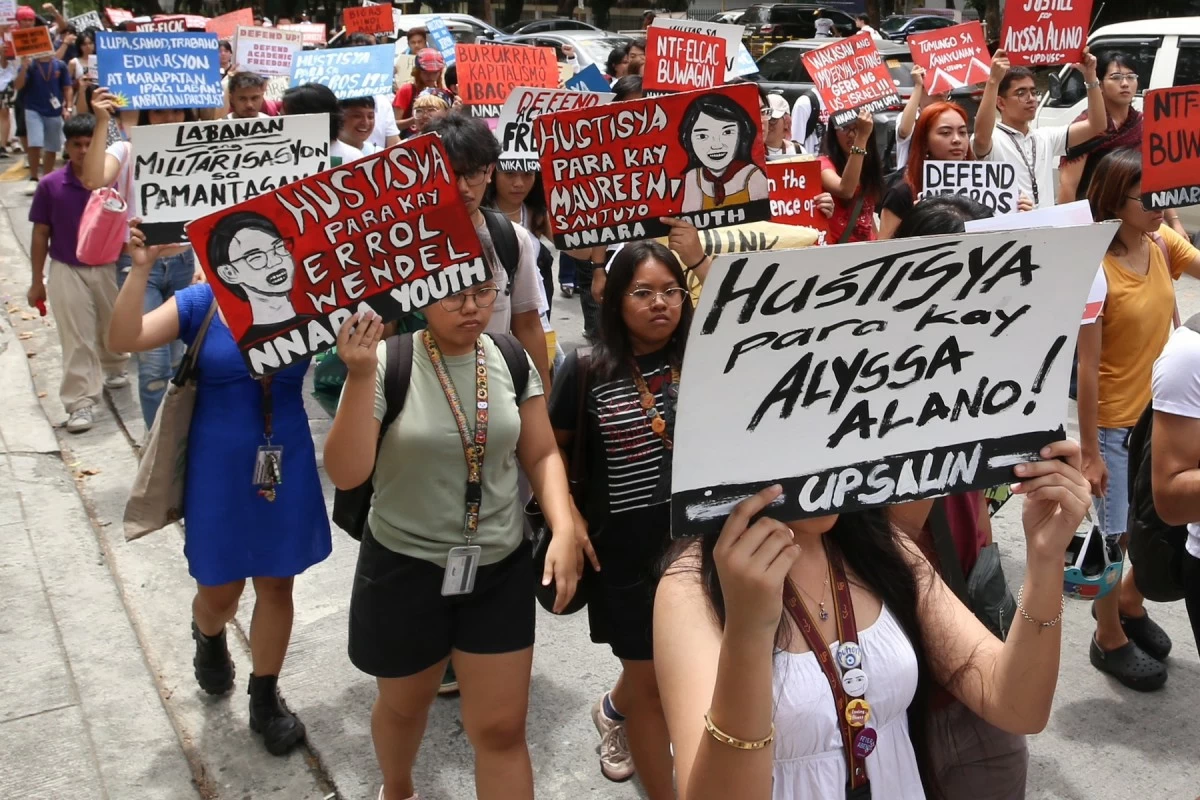
CALLS FOR JUSTICE Family members and students from the University of the Philippines Diliman march on campus grounds to call for justice for the 'Negros 19' on Tuesday, May 5, 2026 (Photo Santi San Juan)
A lot of UP professors, especially those in the social sciences, encourage their students to learn outside the classroom. UP is supportive of this as a valuable tool for raising social consciousness and expects that students will use their proper judgement to only engage in lawful and peaceful activities. Most of these are voluntary and represent learning opportunities that are not available within a formal academic environment. These activities are among the essential features of a well-rounded stay at the university. For instance, one of my former professors was Antonio (Tonchi) Tinio, who is now a congressman for the ACT Teachers Partylist. I didn’t always agree with his views, but I learned a lot from his classes. He taught us to look beyond mainstream narratives and encouraged us to visit picket lines and demonstrations.
I remember we were observing a strike in one of the big department stores when men in civilian clothes attacked the rallyists and beat them up with blunt weapons. Some of the protesters fought back, and one of the attackers suffered a head wound. The next day, I read about the incident in a national newspaper, and it portrayed the protesters as the aggressors, highlighting that one of the security personnel was injured in the attack, but failing to mention the casualties on the other side. This was a real eye-opener for my classmates and me and gave us a first-hand account of how media can be manipulated by those in power.
When I was in UP Diliman, the leftist clubs were one of many organizations competing for students’ time and attention. There is also a long-standing tradition of student activists storming the stage with slogans during official university events such as welcome ceremonies and graduation. These are tolerated and even expected as an expression of academic freedom and the idealism of youth. At no point did I feel unsafe, and I was more concerned about getting caught in a fraternity rumble (I’m unaffiliated, aka barbarian) than when engaging in discussions with my more radically inclined schoolmates and faculty. Whether I agreed with them or not, those discussions were always respectful and never a waste of time. They helped me understand where people’s perspectives were coming from and that there are many other valid viewpoints out there. Students like Alyssa and Maureen are mourned, but they are also celebrated for their strong social consciousness and desire to directly witness the condition of the masses. I might not share their politics, but that does not stop me from feeling the loss of two valued members of society.
With the recent release of the UPCAT results, I am sure that more than a few parents have been spooked by the recent killings and may discourage their children from enrolling in UP. Please do not let this tragic episode prevent you from considering a UP education for your child. Enrolling in UP does not put you in harm’s way. It is quite the opposite. UP teaches you to think critically and make choices by weighing different sides of an issue, and prepares you very well for life outside the campus. Thousands of students graduate each year not just with strong academic credentials but with a well-rounded understanding of Philippine society. Our only real enemy is ignorance.