

ADVERTISEMENT

Southeast Asia ministers push to elevate SEAG, launch new regional tourneys after Bali Declaration

Published May 5, 2026 10:20 pm

At A Glance

  • BALI, INDONESIA—Southeast Asia is taking bold steps to professionalize its sporting landscape, with regional leaders affirming the Bali Declaration on Youth and Sports and unveiling plans to elevate the Southeast Asian Games (SEA Games) to global standards.
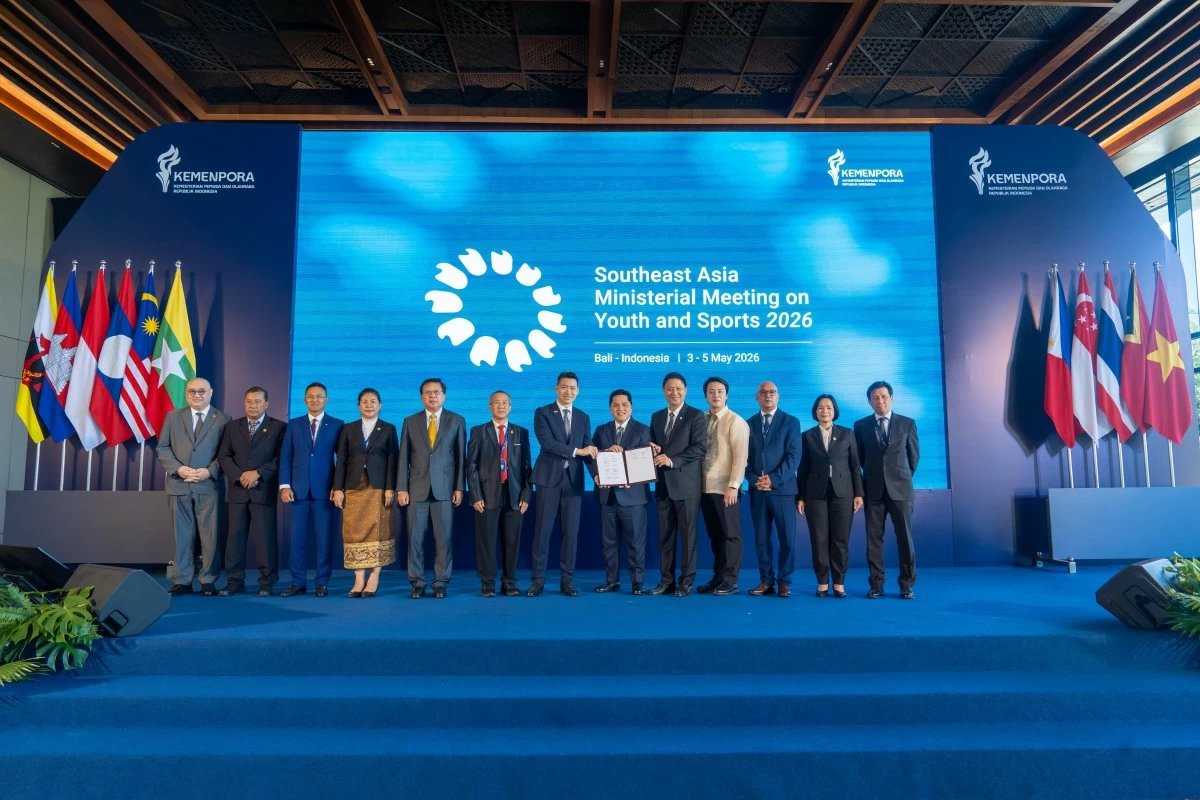
BALI, INDONESIA—Southeast Asia is taking bold steps to professionalize its sporting landscape, with regional leaders affirming the Bali Declaration on Youth and Sports and unveiling plans to elevate the Southeast Asian Games (SEA Games) to global standards.
The initiative includes the creation of new flagship competitions such as the Southeast Asia Marathon Series (SEAMS) and the Southeast Asia Pro Cycling Tour (SEA PCT), designed to push the region’s youth and athletes toward world-class performance.
Philippine Sports Commission Chairman Patrick C. Gregorio underscored the urgency of transforming Southeast Asia’s sports ecosystem into a structured economic and developmental powerhouse.
“The Philippines affirms the Bali Declaration and is ready to work with our Southeast Asian partners to elevate the region’s global positioning—leveraging sports tourism as a driver of economic growth, cultural exchange, and sports diplomacy for goodwill and peace,” said Gregorio.
Global figures highlight the scale of opportunity: the sports industry generated US$521 billion in sales in 2024, while sports tourism reached US$625 billion, accounting for 10 percent of the global tourism market. With an annual growth outlook of eight percent, Southeast Asia’s 650 million-strong population represents an enormous untapped market.
Gregorio emphasized that sports must be seen as an investment, not an expense. Indonesia Minister of Culture, Youth and Sports Erick Thohir, who is likewise an International Olympic Committee member, explained it best when he said that a stronger SEA Games means a stronger sports ecosystem.
Host of the first Southeast Asia Ministerial Meeting on Youth and Sports on Monday, Thohir pointed out that more consistent, higher-quality SEA Games can attract greater investment, generate sponsorship value, create employment opportunities, and strengthen sports tourism with cross-border visitors, longer stays, and sustained destination demand.
“Further, we affirm that investing in our youth—in their creativity, agency, and potential—remains our most strategic priority. Through sports, we empower young people with discipline, opportunity, and a sense of purpose—ensuring that as Southeast Asia rises on the world stage, our next generation rises with it,” added Gregorio.
The SEAMS aims to raise the bar and match the prestige of the Boston, New York, and London marathons, while the SEA PCT seeks to attract elite cyclists worldwide and provide a pathway for Southeast Asian riders to one day compete in cycling’s grand tours, including the Tour de France.
These events are envisioned as mechanisms for quality control and preparation for higher-level international competition, ensuring Southeast Asian athletes are not left behind.
Despite producing world-class champions such as Carlos Yulo (Philippines, gymnastics), Joseph Schooling (Singapore, swimming), Hoang Xuan Vinh (Vietnam, shooting), Veddriq Leonardo (Indonesia, sport climbing), and Panipak Wongpattanakit (Thailand, taekwondo), many top athletes skip the SEA Games due to limited and inconsistent sport selection.
This has led to lower competition quality, declining audience interest, and diminished overall value.
“If the scale and quality of our regional competitions remain limited, we limit the development of our athletes and the growth of our industry,” said Gregorio, stressing that the SEA Games must evolve into a strong regional intellectual property.
The Bali Declaration, adopted by the 11 Southeast Asian ministers, recognizes the strategic role of youth and sports in promoting peace, unity, and sustainable development. It calls for stronger cooperation in athlete development, sports governance, and hosting major international events.
“Let us build new dreams together as one region, and host the world as one community,’’ said Gregorio.
"When the day comes that Southeast Asia welcomes the Olympic Games—as one people—it will be one of the greatest stories ever told. Let that story be written by, and belong to, all of us,” added Gregorio.

Related Tags

Southeast Asia Bali Declaration on Youth and Sports Southeast Asian Games Games
ADVERTISEMENT
.most-popular .layout-ratio{ padding-bottom: 79.13%; } @media (min-width: 768px) and (max-width: 1024px) { .widget-title { font-size: 15px !important; } }

{{ articles_filter_1561_widget.title }}

.most-popular .layout-ratio{ padding-bottom: 79.13%; } @media (min-width: 768px) and (max-width: 1024px) { .widget-title { font-size: 15px !important; } }

{{ articles_filter_1562_widget.title }}

.most-popular .layout-ratio{ padding-bottom: 79.13%; } @media (min-width: 768px) and (max-width: 1024px) { .widget-title { font-size: 15px !important; } }

{{ articles_filter_1563_widget.title }}

{{ articles_filter_1564_widget.title }}

.mb-article-details { position: relative; } .mb-article-details .article-body-preview, .mb-article-details .article-body-summary{ font-size: 17px; line-height: 30px; font-family: "Libre Caslon Text", serif; color: #000; } .mb-article-details .article-body-preview iframe , .mb-article-details .article-body-summary iframe{ width: 100%; margin: auto; } .read-more-background { background: linear-gradient(180deg, color(display-p3 1.000 1.000 1.000 / 0) 13.75%, color(display-p3 1.000 1.000 1.000 / 0.8) 30.79%, color(display-p3 1.000 1.000 1.000) 72.5%); position: absolute; height: 200px; width: 100%; bottom: 0; display: flex; justify-content: center; align-items: center; padding: 0; } .read-more-background a{ color: #000; } .read-more-btn { padding: 17px 45px; font-family: Inter; font-weight: 700; font-size: 18px; line-height: 16px; text-align: center; vertical-align: middle; border: 1px solid black; background-color: white; } .hidden { display: none; }
function initializeAllSwipers() { // Get all hidden inputs with cms_article_id document.querySelectorAll('[id^="cms_article_id_"]').forEach(function (input) { const cmsArticleId = input.value; const articleSelector = '#article-' + cmsArticleId + ' .body_images'; const swiperElement = document.querySelector(articleSelector); if (swiperElement && !swiperElement.classList.contains('swiper-initialized')) { new Swiper(articleSelector, { loop: true, pagination: false, navigation: { nextEl: '#article-' + cmsArticleId + ' .swiper-button-next', prevEl: '#article-' + cmsArticleId + ' .swiper-button-prev', }, }); } }); } setTimeout(initializeAllSwipers, 3000); const intersectionObserver = new IntersectionObserver( (entries) => { entries.forEach((entry) => { if (entry.isIntersecting) { const newUrl = entry.target.getAttribute("data-url"); if (newUrl) { history.pushState(null, null, newUrl); let article = entry.target; // Extract metadata const author = article.querySelector('.author-section').textContent.replace('By', '').trim(); const section = article.querySelector('.section-info ').textContent.replace(' ', ' '); const title = article.querySelector('.article-title h1').textContent; // Parse URL for Chartbeat path format const parsedUrl = new URL(newUrl, window.location.origin); const cleanUrl = parsedUrl.host + parsedUrl.pathname; // Update Chartbeat configuration if (typeof window._sf_async_config !== 'undefined') { window._sf_async_config.path = cleanUrl; window._sf_async_config.sections = section; window._sf_async_config.authors = author; } // Track virtual page view with Chartbeat if (typeof pSUPERFLY !== 'undefined' && typeof pSUPERFLY.virtualPage === 'function') { try { pSUPERFLY.virtualPage({ path: cleanUrl, title: title, sections: section, authors: author }); } catch (error) { console.error('ping error', error); } } // Optional: Update document title if (title && title !== document.title) { document.title = title; } } } }); }, { threshold: 0.1 } ); function showArticleBody(button) { const article = button.closest("article"); const summary = article.querySelector(".article-body-summary"); const body = article.querySelector(".article-body-preview"); const readMoreSection = article.querySelector(".read-more-background"); // Hide summary and read-more section summary.style.display = "none"; readMoreSection.style.display = "none"; // Show the full article body body.classList.remove("hidden"); } document.addEventListener("DOMContentLoaded", () => { let loadCount = 0; // Track how many times articles are loaded const offset = [1, 2, 3, 4, 5, 6, 7, 8, 9, 10]; // Offset values const currentUrl = window.location.pathname.substring(1); let isLoading = false; // Prevent multiple calls if (!currentUrl) { console.log("Current URL is invalid."); return; } const sentinel = document.getElementById("load-more-sentinel"); if (!sentinel) { console.log("Sentinel element not found."); return; } function isSentinelVisible() { const rect = sentinel.getBoundingClientRect(); return ( rect.top < window.innerHeight && rect.bottom >= 0 ); } function onScroll() { if (isLoading) return; if (isSentinelVisible()) { if (loadCount >= offset.length) { console.log("Maximum load attempts reached."); window.removeEventListener("scroll", onScroll); return; } isLoading = true; const currentOffset = offset[loadCount]; window.loadMoreItems().then(() => { let article = document.querySelector('#widget_1690 > div:nth-last-of-type(2) article'); intersectionObserver.observe(article) loadCount++; }).catch(error => { console.error("Error loading more items:", error); }).finally(() => { isLoading = false; }); } } window.addEventListener("scroll", onScroll); });

Sign up by email to receive news.