






 Business
The Economy
Philippines calls for stronger ADB support amid climate, geopolitical shocks
Business
The Economy
Philippines calls for stronger ADB support amid climate, geopolitical shocks
Philippines calls for stronger ADB support amid climate, geopolitical shocks


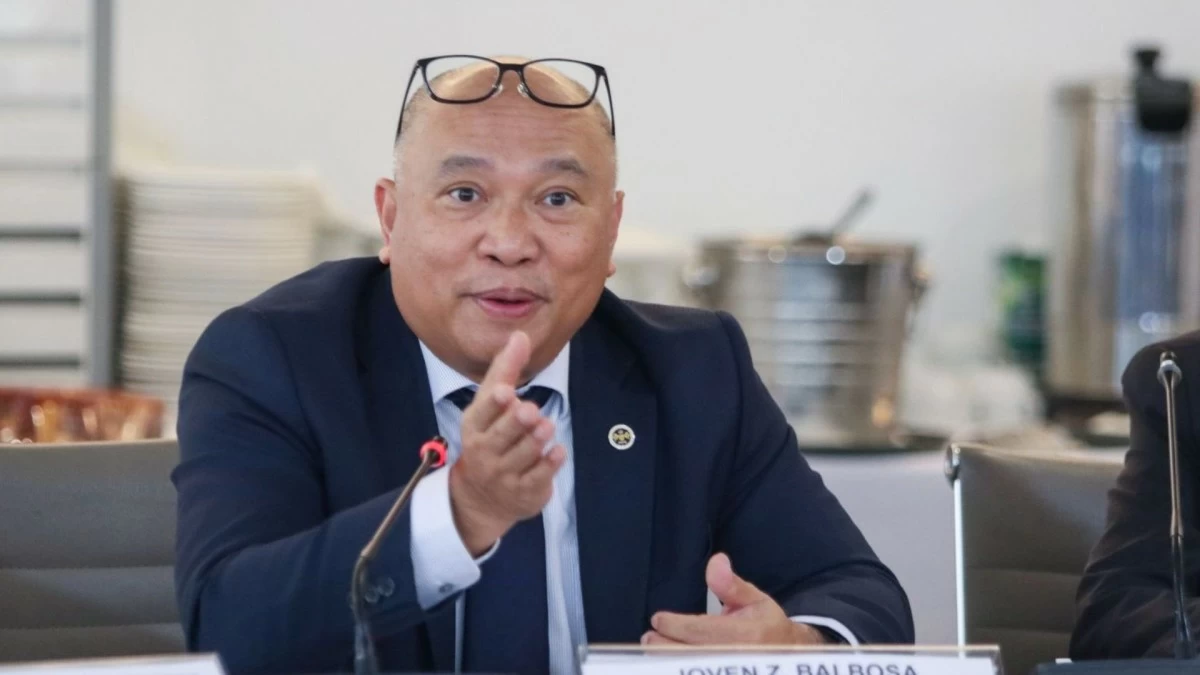
Samarkand, UZBEKISTAN — The Philippines urged the Manila-based Asian Development Bank (ADB) to ramp up assistance to its developing member countries (DMCs) amid a wave of climate and geopolitical challenges putting pressure on public finances.
Speaking at the Governors’ Business Session of the ADB’s 59th Annual Meeting here on Monday, May 4, Department of Finance (DOF) Undersecretary Joven Z. Balbosa, who is serving as the Philippines’ temporary alternate governor to the ADB, emphasized the need for stronger support from the multilateral lender as its DMCs grapple with overlapping external shocks.
“We call on the bank to further deepen its commitment to our development agenda and to address global challenges, such as ensuring the availability of climate financing and expanding blended financing for infrastructure, digitalization, and human capital initiatives,” Balbosa said.
“Even as the Philippines continues to make steady progress, we remain vulnerable to compounding external shocks. We urgently require sustained support from our development partners for a comprehensive response to these challenges that disproportionately affect emerging markets (EMs) and developing economies,” he added.
Balbosa said the Philippines and other ADB DMCs are navigating a more complex global environment marked by disruptions in supply chains, energy markets, and logistics amid the prolonged war in the Middle East.
“We gather today at a critical crossroad. Recent global shocks have exposed significant vulnerabilities in supply chains, highlighting the fragility of developing economies amid geopolitical and climate-related instability,” he said.
“For the Philippines, recent external volatilities have led to energy market fluctuations and logistical disruptions, which continue to drive up domestic prices. These pressures force us to confront the difficult balance of responding to emergencies today while investing in public services and infrastructure,” Balbosa added.
Amid these challenges, Balbosa stressed the importance of deeper regional cooperation and sustained engagement with multilateral development banks (MDBs) like the ADB.
“The complexity of today’s challenges reminds us that no nation can act in isolation. With this, the Philippines remains committed to working closely with the ADB to strengthen resilience, adapt to emerging technologies, and ensure that investments are sustainable and future-ready,” he said.
Balbosa said the Philippines is pushing forward with structural reforms to modernize its investment climate, improve the ease of doing business, and support long-term growth.
For one, the DOF official said a key priority is bridging the digital divide and leveraging digital innovation to drive economic expansion.
“We are continuously working to improve the digital delivery of services to businesses to enable them to perform within a more transparent, predictable, and efficient environment,” he said.
He added that the government’s digital transformation efforts are anchored on the recently enacted e-Governance Act, which seeks to establish a whole-of-government approach to digitalization. At end-2025, the Philippines has launched 25 e-government platforms, facilitating more than 650 million transactions as of November last year, Balbosa noted.
The DOF official explained that these platforms aim to address bureaucratic inefficiencies, redundant processes, and accessibility gaps, while supporting a more seamless business environment.
He also noted that the country has rolled out its National Artificial Intelligence (AI) Strategy Roadmap, which focuses on expanding data infrastructure, increasing cloud capacity, and upskilling the workforce to support an AI-enabled economy.
On the investment front, Balbosa highlighted the implementation of the Corporate Recovery and Tax Incentives for Enterprises to Maximize Opportunities for Reinvigorating the Economy (CREATE MORE) Act, which took effect in 2025 to provide a more competitive and predictable tax incentive regime.
He likewise cited the operationalization of the new Public-Private Partnership (PPP) Code, which has expanded the country’s infrastructure pipeline to more than 250 projects as of January 2026.
Alongside economic reforms, the Philippines is strengthening its climate resilience framework, Balbosa said.
The DOF official cited that the government completed the second operation of its Climate Change Action Program last year, supporting key reforms such as the institutionalization of the National Adaptation Plan 2023-2050 as well as the rollout of the Philippine Energy Plan and National Total Electrification Roadmap 2023-2032.
He said these initiatives aim to expand access to clean energy, incentivize electric vehicle (EV) adoption, and enhance climate risk protection, including expanded insurance coverage for high-value crops (HVCs) and the introduction of index-based insurance for rice production.
“Through these cross-sectoral reforms, our goal extends beyond withstanding shocks but building better forward,” Balbosa said.